Singapore
's Open Electricity Market Navigates a Turbulent World
Amid global energy shocks, Singapore's agile electricity market demonstrates the value of institutional design and execution.
As geopolitical tensions in the Middle East contribute to global energy price volatility, households in Singapore are seeking stability. According to a recent report from The Business Times, consumers are increasingly turning to fixed-price electricity plans to shield themselves from unpredictable costs. This shift in consumer behavior highlights the institutional architecture of Singapore's Open Electricity Market (OEM) and its ability to offer choice and predictability in a turbulent environment.
Institutions and market design
Singapore's approach to electricity is a clear example of market-based institutional design. By unbundling the generation and retail sectors, the Energy Market Authority (EMA) created a competitive space. The OEM allows consumers to choose from multiple retailers, each offering different pricing models and service packages. This structure contrasts with traditional, vertically integrated utility models where consumers have no choice.
The current demand for fixed-price plans shows the market responding to external shocks. Retailers are adapting their offerings to meet a specific consumer need for budget certainty. This is not an accident but a feature of a market designed to be responsive. It allows for a flexible consumer response to global price signals, filtered through a competitive retail layer that can absorb and manage risk.
Execution and infrastructure
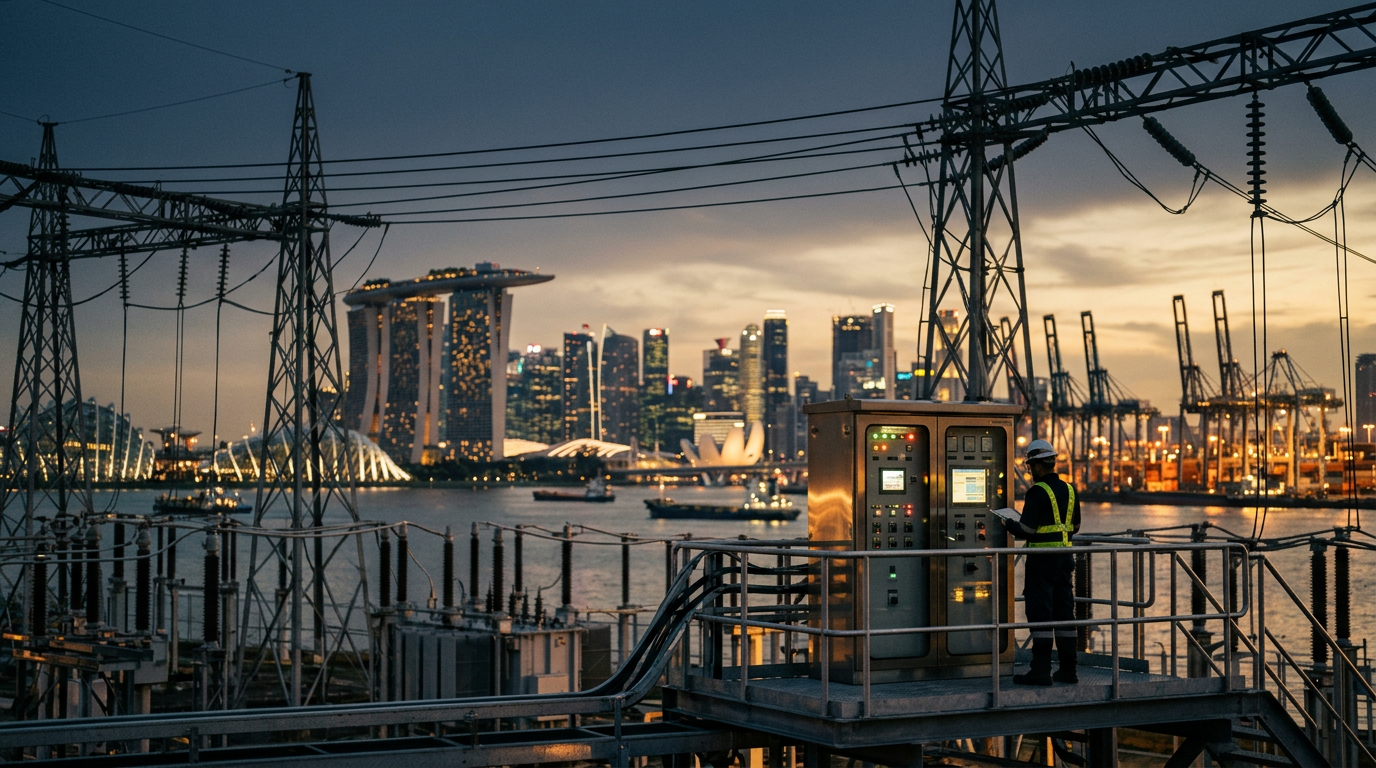
Market design alone is insufficient without effective execution. The OEM's functionality rests on a robust national power grid and a sophisticated wholesale market managed by the EMA. These elements ensure that regardless of which retailer a consumer chooses, the physical delivery of electricity remains seamless. This reliability is the foundation of consumer trust in the system.
As the book ASEAN Rising notes, dependable state capacity is a core component of economic competitiveness. The ability to deliver essential services reliably, even when market conditions are volatile, is a hallmark of a well-run system. Singapore's energy sector demonstrates that "a usable state is often more valuable than an exciting one." The smooth functioning of the OEM, allowing consumers to switch plans and retailers without any interruption to their power supply, is a testament to this principle. The infrastructure works as promised, building confidence in the market mechanism itself.
Capital and competition
The presence of multiple retailers, from larger incumbents to smaller independents, indicates a healthy flow of capital into the sector. These companies compete on price, service, and innovation, such as offering plans bundled with other services or those emphasizing green energy sources. While the current flight to the safety of fixed-price plans is a rational response to volatility, the underlying competitive dynamic remains. This competition ensures that retailers cannot afford to be complacent and must continually refine their offerings to attract and retain customers.
This system allows for price discovery and risk management. Retailers who are better able to hedge against wholesale price fluctuations can offer more attractive fixed-price contracts. Consumers, in turn, can select the plan that best suits their risk appetite. This sophisticated interplay of capital, competition, and consumer choice is a sign of a mature market that can navigate external pressures without resorting to broad, inefficient subsidies or price controls. What to watch
Observe how Singapore's electricity retailers adjust their hedging strategies and product offerings if global energy prices remain elevated for an extended period. The regulator's stance will also be important, particularly concerning market consolidation and consumer protection measures. The evolution of this market will offer lessons for other ASEAN nations considering or implementing similar liberalizations in their own energy sectors, especially in how to balance market competition with the need for stability during periods of global stress.