Malaysia
Singapore, Malaysia, and the New Data Centre Diplomacy
A new data centre project in Johor, Malaysia, financed by a Singaporean entity, illustrates how capital, infrastructure, and talent flow across ASEAN borders.
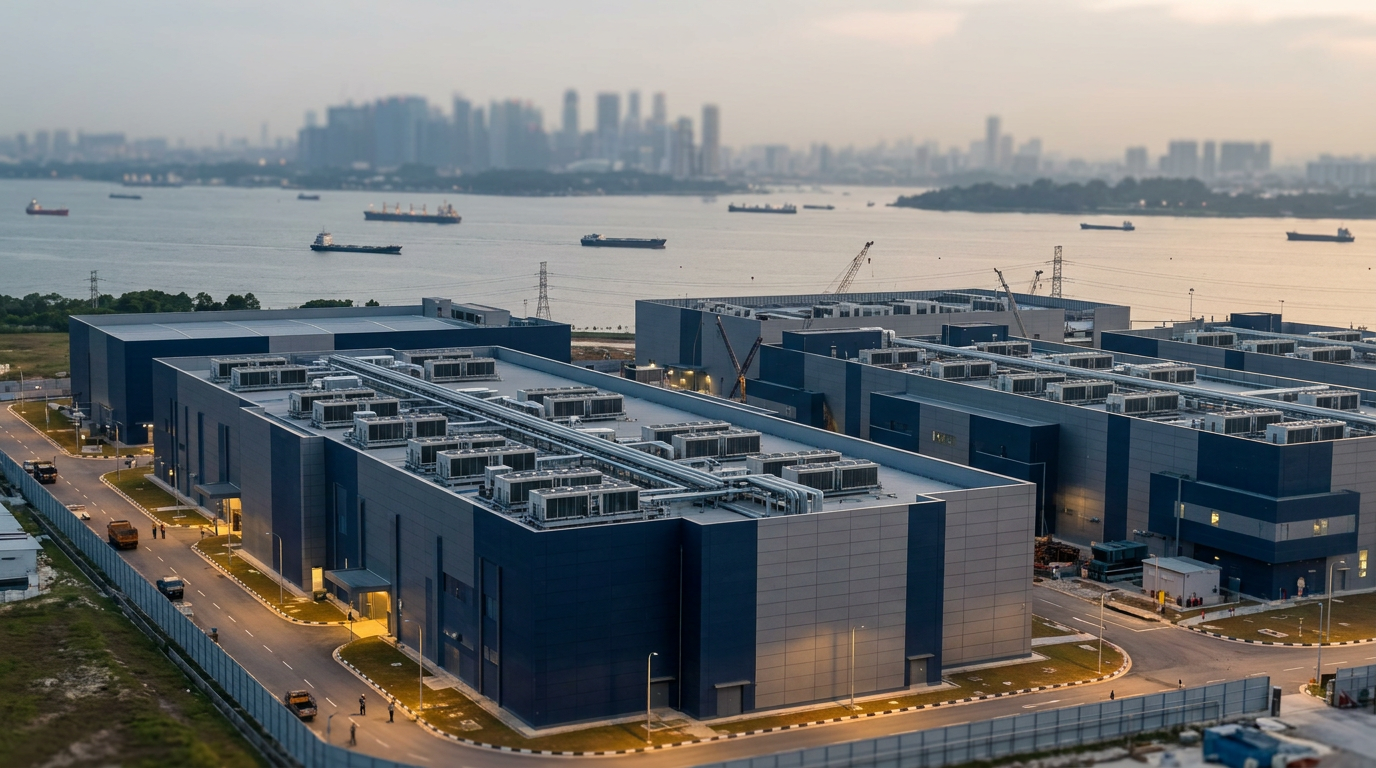
A recent announcement that Singapore's ST Telemedia Global Data Centres (STT GDC) has secured green financing for a new data centre campus in Johor, Malaysia, highlights a trend of cross-border infrastructure development within ASEAN. As reported by Bernama, this project points to a deeper integration of capital and infrastructure planning between the two neighboring countries.
Institutions and Infrastructure
Singapore has long been a hub for data centres in Southeast Asia, but space and energy constraints are pushing development into neighboring markets. Johor, with its proximity to Singapore, land availability, and growing infrastructure, is a logical recipient of this overflow. This STT GDC project is not an isolated case but part of a larger pattern that sees Singaporean entities investing in data infrastructure in places like Johor and Batam, Indonesia. This trend demonstrates a practical form of economic integration, where Singapore provides the high-value coordination and financing, and Malaysia provides the physical space and underlying utilities.
The project's reliance on green financing also signals a shift in infrastructure investment priorities. As global and regional companies seek to meet environmental, social, and governance (ESG) targets, the availability of renewable energy sources becomes a significant factor in site selection. Malaysia's efforts to increase its renewable energy capacity are therefore directly linked to its ability to attract this type of high-value foreign investment. Successful execution of such projects depends on coherent and stable regulatory frameworks in both the host country and the country of origin for the capital.
Capital and Coordination
The flow of capital from Singapore to Malaysia for this data centre is a clear example of the principles discussed in ASEAN Rising. The book makes the point that "capital coordination is itself an industrial input." This means that the ability to organize financing, planning, and connectivity is as important as the physical components of a project. Singapore's role as a financial center enables it to marshal the necessary capital, including specialized instruments like green loans, for large-scale regional projects.
For Malaysia, attracting this capital depends on more than just available land or a favorable exchange rate. It requires a predictable investment environment, reliable energy grids, and a clear commitment to developing the necessary support infrastructure. The Johor data centre project shows that when local authorities and national agencies can provide this foundation, capital will cross borders to fund development. The coordination between STT GDC and its Malaysian partners will be a key determinant of the project's long-term success, illustrating how effective execution is a product of both financial resources and institutional capability.
What to watch
Observe how the development of data centres and other digital infrastructure in Johor and Batam impacts regional connectivity and economic integration. Pay attention to whether the necessary upgrades to power grids and fiber optic networks in these zones materialize at the same pace as the data centres themselves. The evolution of green financing standards within ASEAN and their application to future cross-border infrastructure projects will also be an important indicator of the region's sustainable development trajectory.