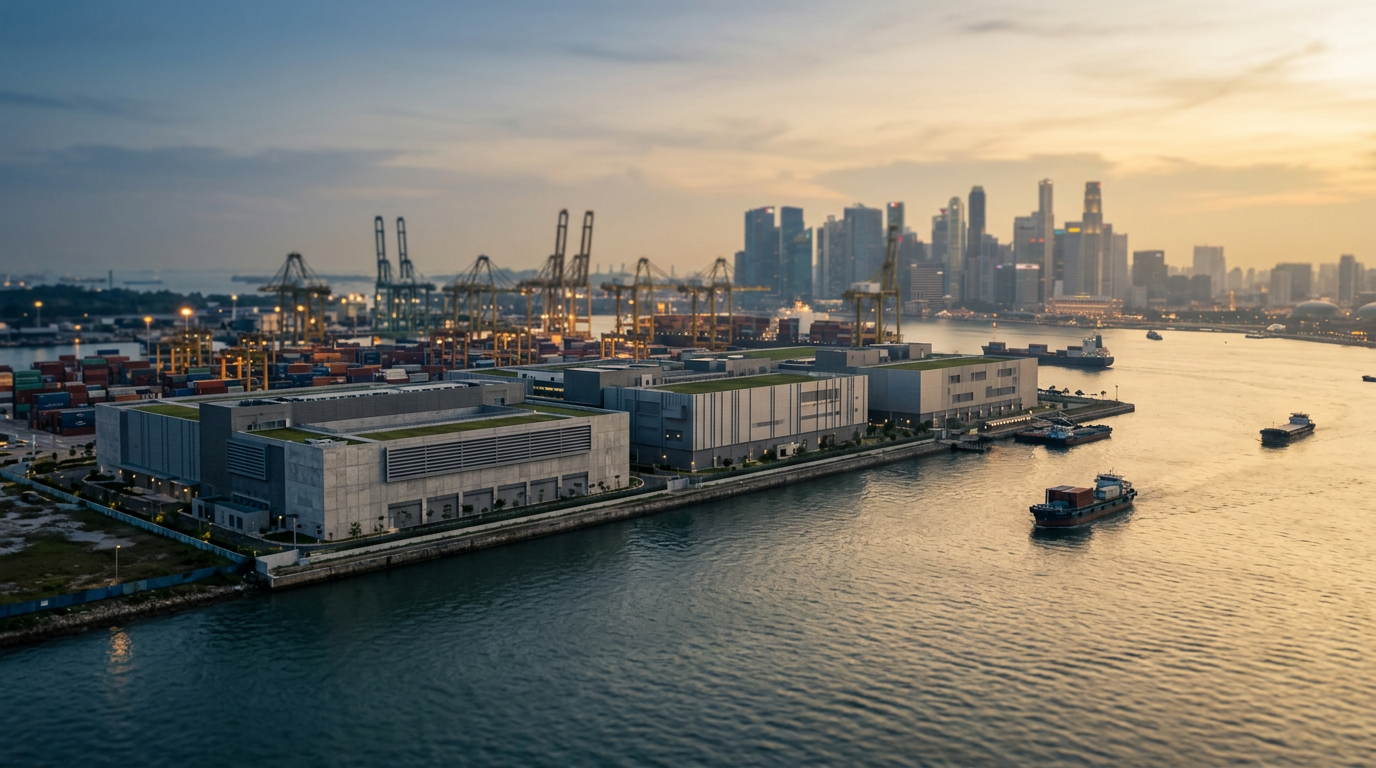
Singapore
Singapore, Malaysia, and the Data Center Surge
A new PwC forecast on data center investment in Singapore and Malaysia highlights a core theme of ASEAN's growth: the institutional capacity to coordinate complex industrial inputs like power, connectivity, and planning.

A recent PwC forecast, reported by Malay Mail, projects that annual investment in Singapore's data center market could grow from US$7 billion in 2026 to US$19.2 billion by 2050. The report frames this within a broader regional expansion, with neighboring Malaysia also seeing a significant influx of investment as part of a forecast US$1.29 trillion regional market. This growth is not merely a story of rising demand for digital services, but a reflection of how different national strategies across ASEAN are shaping the physical infrastructure of the global internet.
Coordination as Industrial Policy
The ability to attract, build, and operate hyperscale data centers is a measure of a country's industrial capacity. It extends beyond securing a plot of land and a power purchase agreement. As outlined in "ASEAN Rising," the successful development of such complex infrastructure depends on the orchestration of multiple factors: reliable power grids, high-capacity fiber optic connectivity, and streamlined regulatory approvals. The book notes that "capital coordination is itself an industrial input." Where these elements are aligned, investment follows. Where they are disjointed, projects can stall regardless of other incentives like the low cost of electricity.
Singapore's enduring appeal as a top-tier data center hub is a direct result of its long-term investment in these foundational pillars. Its highly reliable and regulated power grid, dense network of subsea cables, and transparent planning processes create a low-risk environment for multi-billion dollar, long-term investments. Even with a temporary moratorium on new data center projects to manage grid capacity, Singapore's existing infrastructure and proven execution capabilities ensure it remains a primary node. The PwC forecast affirms that investors see continued, albeit managed, growth.
Malaysia's Competitive Push
Malaysia, particularly in areas like Johor Bahru, has emerged as a strong alternative and complement to Singapore. Its strategy leverages geographical proximity to Singapore