Singapore
, AI, and ASEAN's Industrial Future
A jump in Singaporean factory output, driven by AI demand, shows how high-value manufacturing can take root. Yet the wider ASEAN region must still focus on the slower work of building institutional capacity to translate investment announcements into realised flows on the ground.
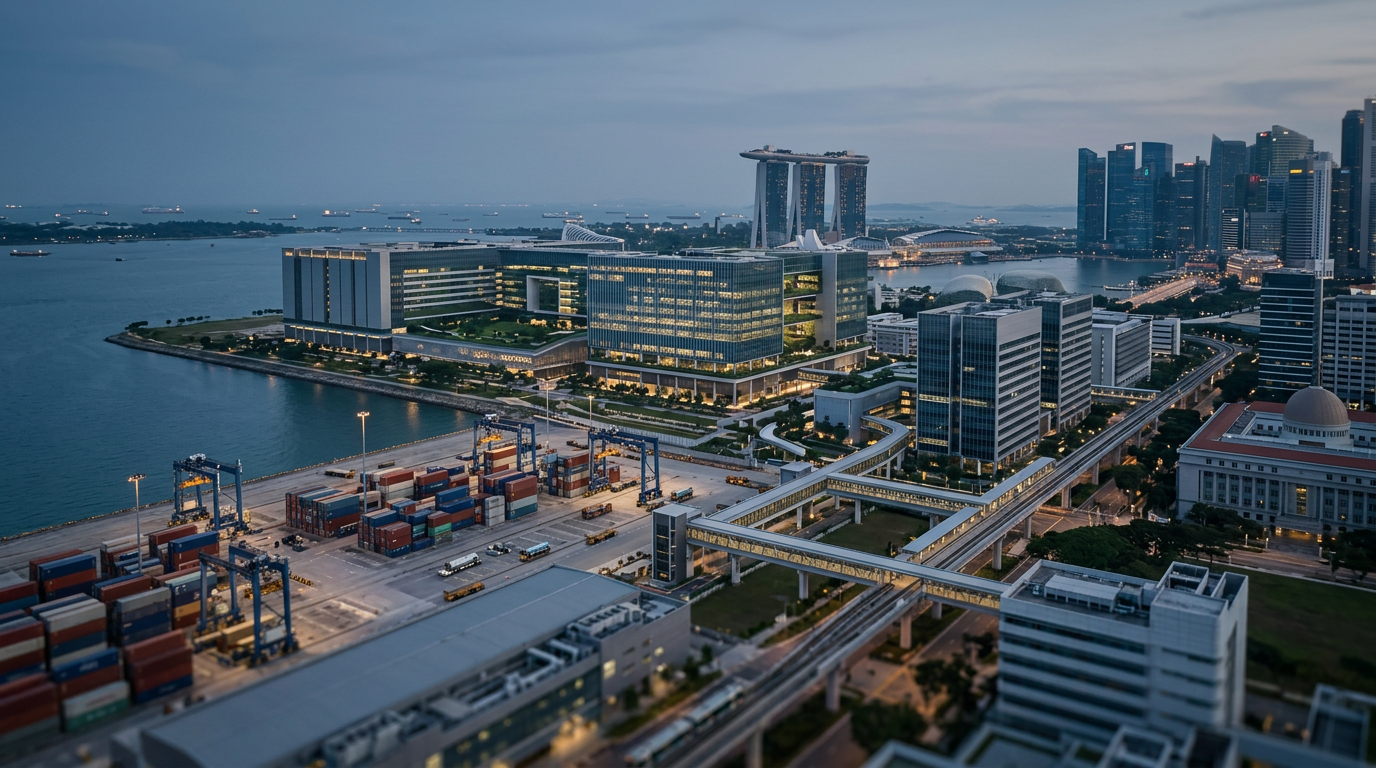
Singaporean factories boosted their output in August, a jump attributed to sustained demand for AI-related products, as reported by the Straits Times. With most industrial clusters growing, the electronics sector in particular continues to power ahead on the back of global AI investment. This news highlights Singapore's established role as a high-value manufacturing hub, but it also casts a light on the broader industrial landscape of Southeast Asia.
Institutions and Investable Depth
Singapore's success is a direct result of its strong institutions, a theme central to industrial development across the region. The city-state has long cultivated an environment where capital, infrastructure, and talent converge effectively. Its ability to attract and sustain advanced manufacturing in fields like electronics and precision engineering is no accident; it is the outcome of decades of deliberate policy, regulatory clarity, and investment in human capital. The result is an economy that can quickly absorb and capitalize on global technology trends like the current AI boom.
The challenge for its ASEAN neighbors is to replicate this institutional strength. As the book "ASEAN Rising" notes, for larger economies, "scale matters only when institutions can turn it into investable depth." While countries like Indonesia, Vietnam, and Malaysia attract significant FDI announcements, the real test lies in execution. The process of turning a foreign direct investment pledge into a functioning factory requires navigating a complex web of local regulations and practical realities.
From Announcement to Execution
The gap between announced FDI and realized investment is a persistent issue across much of Southeast Asia. Global firms, drawn by the region's growth and demographic advantages, announce ambitious plans. However, these plans depend on what the book calls the "slower work of land, permits, power and talent reaching the ground." This is where institutional capacity becomes paramount.
Effective one-stop-shops for investors, streamlined permitting processes, reliable electricity grids, and a skilled local workforce are not glamorous, but they are the foundations of industrial capability. Singapore's competitive advantage lies less in its size and more in its mastery of these details. For other ASEAN members, the path to capturing a greater share of high-value manufacturing involves a sustained commitment to improving this execution framework. Progress is being made, but it is a gradual process of building trust with global capital by demonstrating reliability and predictability on the ground.
What to watch: The key indicator of progress will not be the headline value of FDI announcements, but the rate at which those announcements are converted into operational projects. Observers should monitor metrics related to the time and cost of starting a business, the reliability of infrastructure, and investments in vocational and technical training. These are the slower-moving but more telling signs of an industrial base that is maturing and deepening across the region.