Malaysia
Philippines Tests its Institutions with Geothermal Push
The Department of Energy's P10 billion geothermal financing program is a significant test of the Philippines' institutional capacity to deliver on its energy transition goals. Execution, not just ambition, will determine its success.
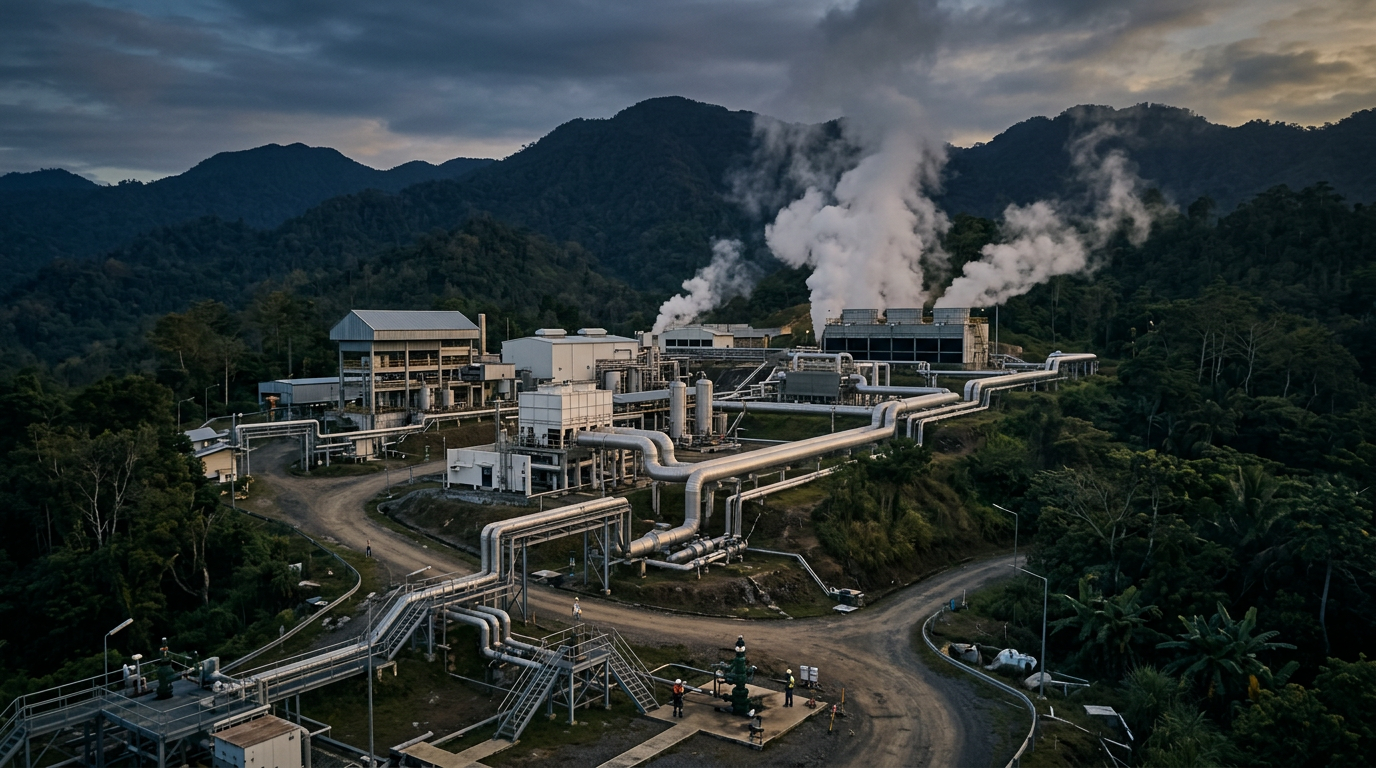
The Philippine Department of Energy is managing a new P10-billion financing program to spur geothermal energy exploration, with seventeen companies already applying for funds, according to a report in philstar.com. The initiative, aimed at de-risking early-stage exploration, represents a test of the government's ability to translate ambitious energy targets into operational projects.
Institutions as Infrastructure
Successful economic development depends on more than just vision; it requires effective execution. The Philippines, like many of its neighbors, has outlined extensive plans for a transition to renewable energy. Geothermal power is a logical focus, given the country's position in the Pacific Ring of Fire. However, the success of this P10-billion fund will hinge on the institutional capacity of the Department of Energy and related agencies to manage the allocation and oversight process efficiently and transparently.
As the book "ASEAN Rising" notes, the reliability of state institutions is a core component of national comparative advantage. The ability to deliver projects on schedule is often a more powerful signal to investors than ambitious announcements alone. For the international and domestic power companies that have lined up for this funding, the predictability and clarity of the selection process will be as important as the financial support itself. A well-administered program will build confidence in the Philippines' regulatory environment and attract further private capital into its energy sector.
De-risking and State Capacity
Geothermal exploration carries significant upfront financial risk. Early-stage survey and drilling operations are expensive and do not always result in a commercially viable resource. The government's decision to establish this fund is a direct intervention to mitigate these initial risks, thereby encouraging private sector investment that might otherwise be deterred. This is a classic example of the state using its resources to overcome market failures and catalyze growth in a strategic sector.
The challenge lies in the implementation. A transparent process for evaluating the 17 applicants is necessary to ensure that capital flows to the most promising projects with the highest probability of success. The speed at which these funds are disbursed and the clarity of the accompanying regulations will demonstrate the government's state capacity. "Infrastructure that arrives on time," as ASEAN Rising puts it, "signals more than infrastructure that is merely announced." Efficiently converting these financial commitments into active exploration projects is the immediate task.
Capital and Execution
The P10-billion fund is a meaningful, but ultimately modest, sum relative to the Philippines' long-term energy needs. Its true value may lie in its ability to serve as a proof of concept, demonstrating a functional partnership between the state and the private sector. If the government can prove itself a reliable partner, it can unlock much larger pools of private and international capital for geothermal development.
Investors will be watching the execution of this program as a barometer for the broader investment climate. A process bogged down by bureaucracy, delays, or a lack of transparency would dampen enthusiasm. Conversely, a smoothly executed program that leads to successful exploration would reinforce the case for the Philippines as a destination for energy investment. The fund is not just a financial instrument; it is a signal about the quality and reliability of the country's governing institutions.
What to watch: The key indicator of success in the coming months will be the speed and transparency with which the Department of Energy selects the recipients of the geothermal funds. Observers should also monitor the terms and conditions attached to the financing, as these will shape the risk-return calculation for the private firms and influence the long-term bankability of the projects that emerge.