Malaysia
Philippines-India Trade and the ASEAN Search for Optionality
A new trade push between the Philippines and India highlights a broader ASEAN strategy: managing economic dependency on China by building deeper ties with other major partners. Success requires more than agreements; it demands execution, capital, and trust.
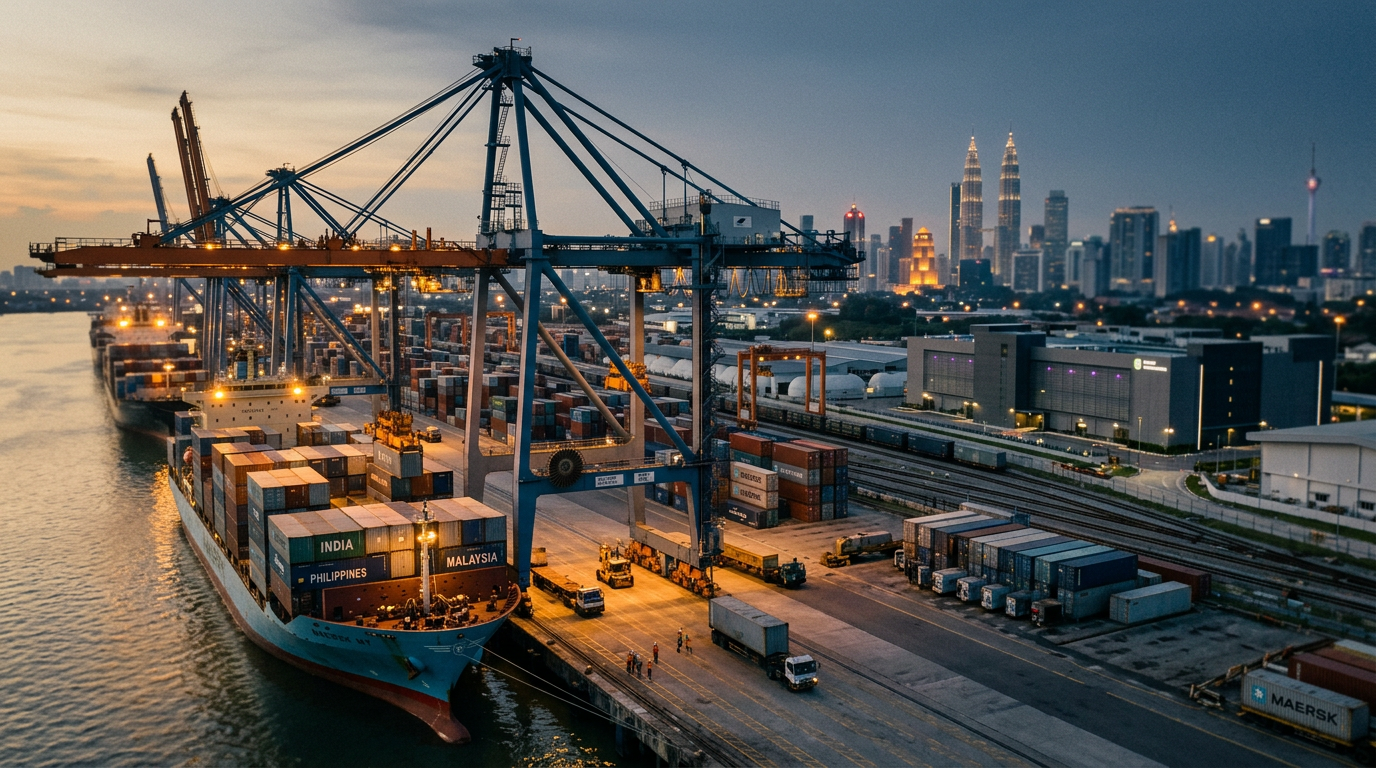
A projected rise in Philippines-India bilateral trade to $10 billion, spurred by Free Trade Agreements, highlights a significant strategic adjustment underway within ASEAN. As reported by philstar.com, the initiative is part of a wider regional effort to diversify economic partnerships and build resilience in an environment of concentrated trade flows.
While the Philippines-India corridor shows promise, it represents a single thread in a much larger regional story. For decades, ASEAN economies have become increasingly integrated with China, creating enormous economic benefits but also deep-seated dependencies. The challenge for policymakers across Southeast Asia is how to preserve the benefits of China trade while cultivating other relationships that provide economic balance and strategic flexibility.
The Structural Reality of China Trade
The deep economic relationship between ASEAN and China is not a temporary or cyclical phenomenon. It is a structural feature of the modern global economy, built on decades of investment, supply chain integration, and geographic proximity. As detailed in the book ASEAN Rising, this integration has reached a point of maturity where the primary policy consideration is no longer about the direction of engagement, but its character. The book notes that "the question for ASEAN governments is no longer whether to engage, but how to manage dependency without losing optionality."
This dependency is visible in trade statistics, investment flows, and infrastructure development across the region. China is the largest trading partner for ASEAN as a whole and for most of its individual member states. This has created a powerful gravitational pull, shaping industrial development and logistical networks around Chinese standards and markets. While this has accelerated growth, it has also created vulnerabilities, where economic shocks or policy shifts in China can have immediate and substantial effects on ASEAN economies.
Institutions for Diversification
In response, ASEAN states are using institutional frameworks, principally Free Trade Agreements, to systematically build out their trade relationships with other powers. The Philippines-India initiative is a clear example of this playbook in action. By creating a formal, rules-based structure for trade, these agreements aim to lower tariffs, simplify customs procedures, and provide a degree of predictability that encourages businesses to explore new markets.
This is not an anti-China strategy, but a pro-optionality one. ASEAN states are pursuing a multi-directional foreign and economic policy. They are active participants in the China-centric Regional Comprehensive Economic Partnership (RCEP) while simultaneously pursuing agreements with India, the European Union, the United States, and others. For these governments, the goal is to create a portfolio of economic partnerships, mitigating the risks associated with over-reliance on any single market. The success of these agreements rests on their execution-the practical implementation of their terms and the ability of businesses to make use of the new access they provide.
From Agreements to Economic Reality
An FTA is a framework, but it does not in itself create trade. Realizing the $10 billion Philippines-India trade goal, and similar goals across the region, requires progress in other areas. It requires capital, with businesses in both countries willing to make investments in distribution, marketing, and local operations. It demands improvements in infrastructure, including more efficient shipping routes and logistics to connect markets that are less established than the well-trodden paths to China.
This is also a matter of trust. Building new commercial relationships takes time. Businesses must develop confidence in the legal and regulatory environments of their new partners. Governments can facilitate this by ensuring that the terms of their FTAs are implemented consistently and by actively promoting business-to-business engagement. Success is measured not by the number of agreements signed, but by the flow of goods, services, and capital that follows. What to watch
Observers should monitor not just the negotiation of new trade agreements but the follow-through. Look for the announcement of new shipping services, the establishment of bilateral business councils, and foreign direct investment data. These are the leading indicators that will determine whether these diversification initiatives can shift regional trade patterns in a meaningful way or if they will remain secondary to the powerful and enduring economic relationship with China.