Philippines
Philippines Growth Revision and the FDI Realization Gap
The World Bank's downward revision of its Philippine growth forecast is a sober reminder for all of ASEAN. Investment announcements are one thing; turning them into productive assets requires a concerted focus on institutions, infrastructure, and talent.
The World Bank has lowered its economic growth projections for the Philippines for 2027 and 2028, citing global uncertainties, according to a report from philstar.com. While the forecast for the current year remains steady, the revision for the medium term serves as a note of caution. It suggests that translating economic interest into sustained growth is not automatic, reflecting a persistent challenge not just for the Philippines but for the entire ASEAN region.
From Pledges to Projects
High-profile announcements of foreign direct investment (FDI) often generate positive headlines. For any government, attracting capital is a sign of confidence in its economic stewardship. Yet, as the book "ASEAN Rising" notes, there is a significant difference between announced and realized investment flows. The initial enthusiasm following a memorandum of understanding or a press conference can fade when confronted with the realities of execution. Scale, whether in population or market size, only becomes an economic advantage when effective institutions can translate it into investable depth for businesses.
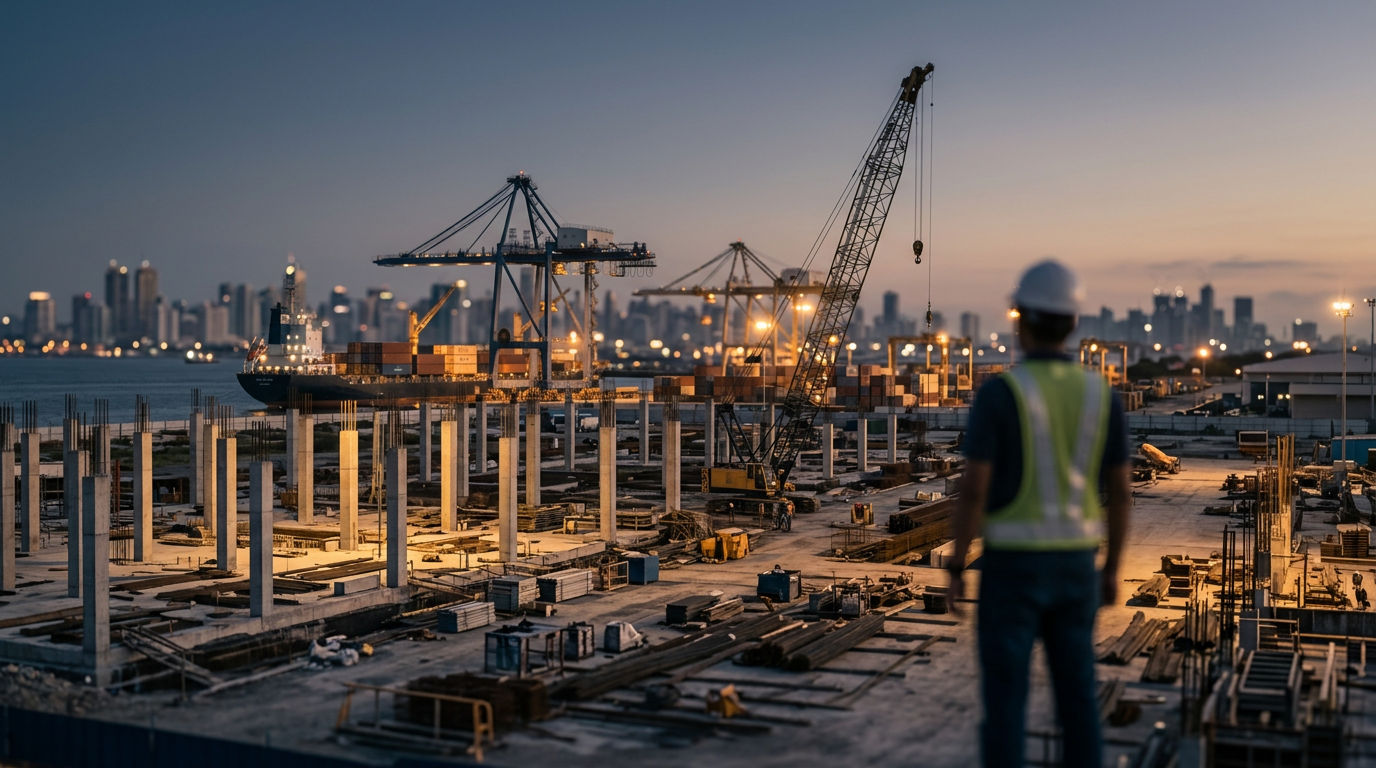
This gap between pledges and projects on the ground is where growth forecasts meet reality. An investment pledge represents intent. Realized investment, however, is the result of capital being deployed into buildings, machinery, and payrolls. This conversion is often slowed by structural and bureaucratic impediments. The World Bank's tempered outlook for the Philippines, even as the country continues to attract investment interest, points to these underlying frictions.
The Execution Deficit
The core of the issue lies in what the book refers to as the "slower work of land, permits, power and talent reaching the ground." These four elements represent the foundational pillars of investment realization. In many ASEAN economies, the process for securing land titles can be opaque and lengthy. Navigating the bureaucracy for business permits, licenses, and environmental clearances can involve multiple agencies at national and local levels, often with overlapping or unclear jurisdictions. This is not a failure of strategy, but of execution.
Furthermore, the availability of reliable and competitively priced infrastructure, particularly electricity, is a primary concern for investors. A manufacturing plant or a data center cannot operate without a stable power supply. Insufficient grid capacity or high energy costs can render an otherwise attractive project non-viable. These on-the-ground factors are what determine the pace and scale of real investment, and by extension, the trajectory of economic growth. Improving the institutional machinery that governs these areas is less glamorous than announcing a multi-billion dollar investment, but it is far more consequential for long-term development.
The Human Capital Constraint
The final component, talent, is becoming an increasingly important differentiator. As ASEAN countries aim to move up the value chain, the nature of incoming FDI is changing. Assembly-line manufacturing is being complemented by more sophisticated operations in research, design, and services. These investments require a workforce with technical skills and advanced training.
A mismatch between the skills available in the labor market and the needs of new industries can act as a brake on growth. It limits the economy's absorptive capacity for high-value investment. A sober assessment of a country's human capital readiness, therefore, is a necessary input for any credible economic forecast. For the Philippines and its neighbors, nurturing a skilled workforce is not just a matter of education policy but a direct prerequisite for converting investment interest into broad-based prosperity.
What to watch
Looking ahead, observers should monitor the ratio of realized FDI to investment pledges as a key indicator of institutional effectiveness in the Philippines. Progress on governmental initiatives designed to streamline bureaucracy and shorten approval times for permits will be telling. Additionally, developments in the energy sector, specifically projects aimed at increasing power generation capacity and grid reliability, will directly influence the country's ability to absorb large-scale industrial and digital investments and meet its growth aspirations.