Philippines
Philippines Geothermal: Good Money Chasing Bad Rules
Foreign capital is keen on Philippine renewables. The slow work of getting land, permits, power, and talent on the ground is where announced FDI meets the reality of execution.
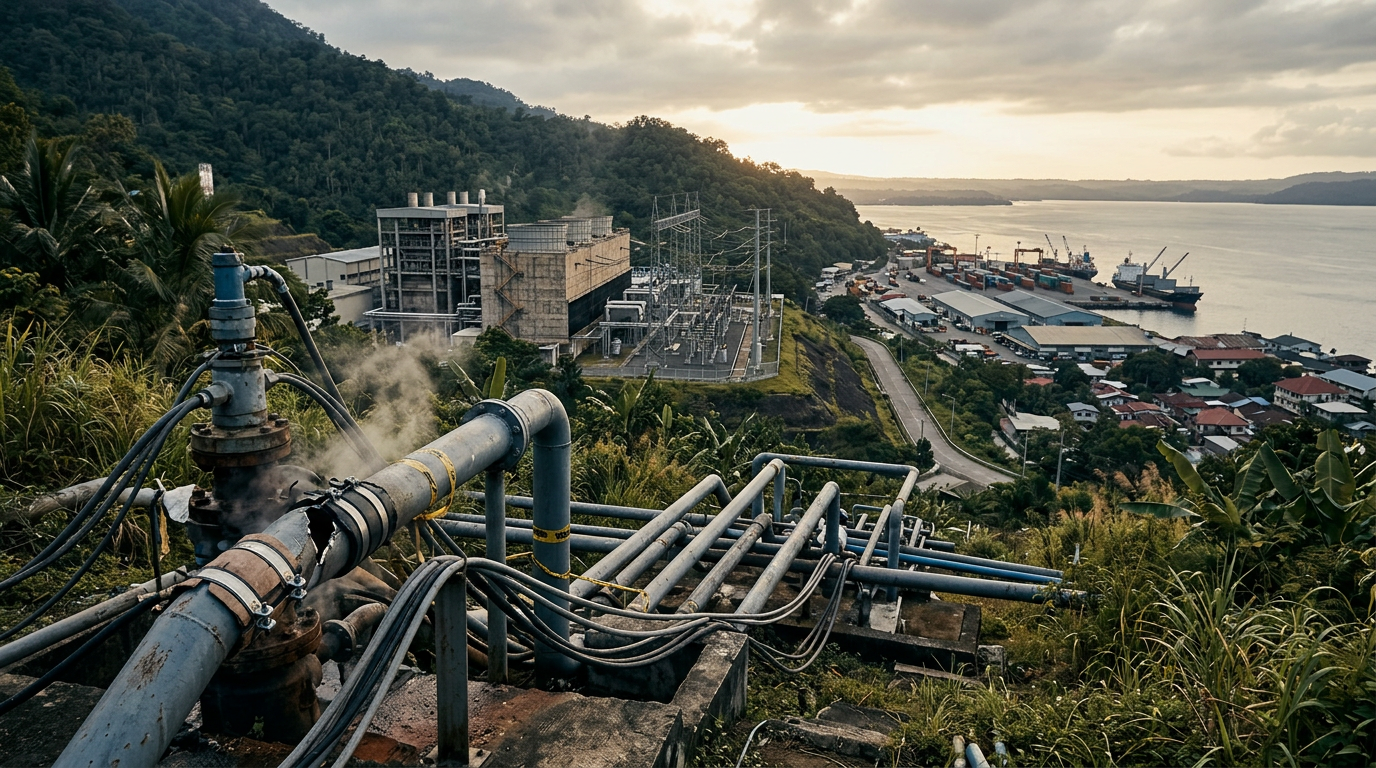
The National Geothermal Association of the Philippines (NGAP) is pushing for a revamp of the pricing mechanism for geothermal projects, following a government auction that saw a poor turnout. The association's president, speaking to philstar.com, flagged the need for a policy framework that better reflects the high upfront costs and operational risks of geothermal exploration and development.
This situation in the Philippines highlights a recurring theme across Southeast Asia: the gap between attracting investment and realizing it. Announced foreign direct investment (FDI) often hits headlines, but the actual flow of capital is contingent on the groundwork of implementation. As the book "ASEAN Rising" notes, "realised flows depend on the slower work of land, permits, power and talent reaching the ground."
Institutions and Execution
The Philippines possesses significant geothermal potential, estimated to be the second largest in the world. However, harnessing this resource requires more than just geological advantage; it requires robust institutional frameworks. The NGAP's call for auction reform is a direct response to a system that is not delivering the expected investment. The current pricing, determined through a uniform bidding process, fails to account for the specific financial structures of geothermal projects, which involve long development timelines and substantial initial capital outlay before any revenue is generated.
Effective institutions create predictable, transparent, and stable rules that allow investors to model risk and return accurately. When auction and pricing rules are misaligned with the commercial realities of an industry, as is currently the case with Philippine geothermal, capital will hesitate. This is not a failure of market appetite but a failure of institutional design. The government's Green Energy Auction Program is a step in the right direction, but its execution needs refinement to match policy goals with market mechanics.
Capital and Infrastructure
Attracting the right kind of capital is essential for infrastructure-heavy sectors like geothermal energy. These projects are not short-term ventures; they are long-term commitments that require patient capital willing to wait years for a return. The NGAP has pointed out that the risk-reward balance under the current auction system is skewed. Developers bear the full risk of unsuccessful exploration while the pricing ceiling limits potential returns, discouraging bids.
This is where the link between capital and infrastructure becomes clear. To build the necessary power plants and transmission lines, the Philippines needs policies that offer competitive and predictable returns. Revising the auction rules to allow for more flexible or favorable pricing, such as a two-tier system that differentiates between exploration and development phases, could unlock the investment needed. Without a clear path to profitability, announced FDI in the renewable sector will not translate into megawatts on the grid.
What to watch
Watch how the Philippine Department of Energy responds to the industry's request for policy adjustments. The outcome will signal whether the government can create the institutional conditions necessary to turn the nation's natural resource advantages into tangible energy infrastructure. The success or failure of the next geothermal auction will be a clear indicator of the country's ability to align its investment climate with its ambitious renewable energy targets.