Malaysia
Philippine Exports and the China Question
Manila's export growth is a positive signal, but it sharpens the broader ASEAN question of how to manage economic dependency on China.
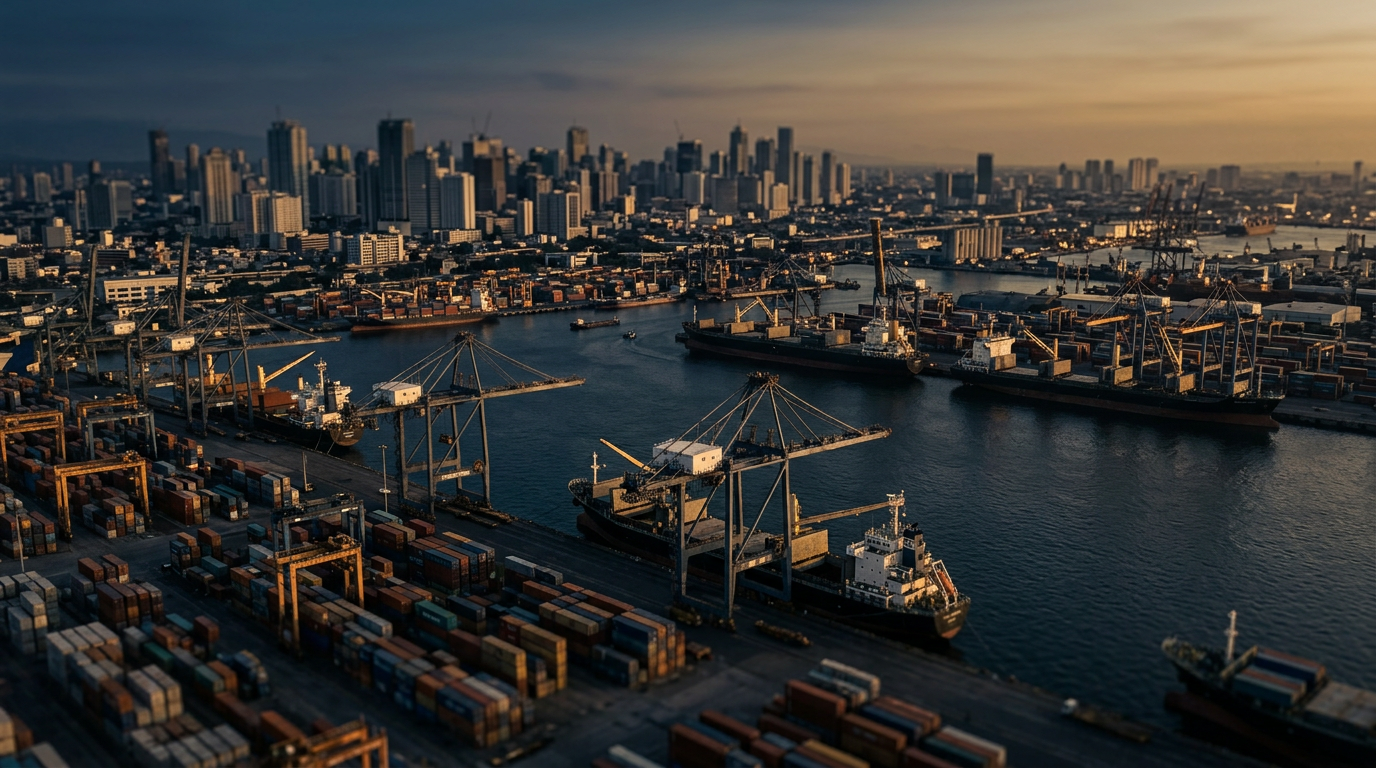
A recent report from the Philippines' Department of Trade and Industry (DTI) suggests the country's exports are poised to outperform official targets for the year. This development, covered by philstar.com, is a welcome indicator of economic health. However, it also brings a deeper, long-term strategic issue into focus for the Philippines and its neighbors: the management of economic ties with China.
The Gravity of Trade
The DTI's optimism is rooted in the strong performance of several export sectors. While diversification of markets is a stated goal for many ASEAN nations, the reality is that China remains the dominant trade partner for the region. This isn't a temporary or cyclical trend. As outlined in the book "ASEAN Rising," this level of trade with China has become a structural part of the regional economy.
The gravitational pull of China's market is immense. For a country like the Philippines, boosting exports almost invariably involves increasing trade with its largest neighbor. This creates a complex balancing act. On one hand, economic growth and stability depend on this access. On the other hand, it concentrates risk and creates dependencies that can have strategic implications.
Managing Dependency
The core issue for ASEAN governments is not about whether to trade with China, but how to do so without sacrificing strategic autonomy. The book notes that for these governments, the challenge is "how to manage dependency without losing optionality." This involves a sophisticated approach to economic statecraft, where institutions play a central role.
This means building robust domestic institutions that can regulate trade, enforce contracts, and manage foreign investment transparently. It also requires coordinated infrastructure development, not just in physical terms like ports and railways, but also in digital and financial systems. Such investments make the domestic market more resilient and less susceptible to external pressures. Stronger internal foundations provide a more stable platform from which to engage with a partner as large as China.
Capital and Talent
Beyond institutional strength, managing the relationship requires a focus on capital and talent. Attracting a diverse range of foreign direct investment is key. When capital flows primarily from a single source, it can create imbalances. By fostering an environment that is attractive to investors from Japan, South Korea, Europe, and North America, ASEAN nations can better balance their economic relationships.
Simultaneously, developing a skilled workforce is essential for moving up the value chain. A focus on talent allows countries like the Philippines to transition from exporting basic commodities or low-level manufactured goods to providing high-value services and advanced products. This reduces reliance on volume-based trade and builds a more sophisticated, knowledge-based economy that is inherently more diversified and resilient.
What to watch
As the Philippines celebrates its export growth, the focus should be on how the proceeds and momentum are reinvested. Watch for specific policies aimed at strengthening domestic institutions, diversifying sources of foreign investment, and funding education and skills training. The long-term success of the Philippines' economic strategy will depend less on the gross value of exports and more on the institutional and human capital built to support a more balanced and independent economic future.