Philippines
Philippine EV Push Hinges on Infrastructure Execution
The growth of electric vehicles in the Philippines highlights a gap between private sector ambition and public sector delivery, a test of the institutional capacity to build infrastructure rather than just announce it.
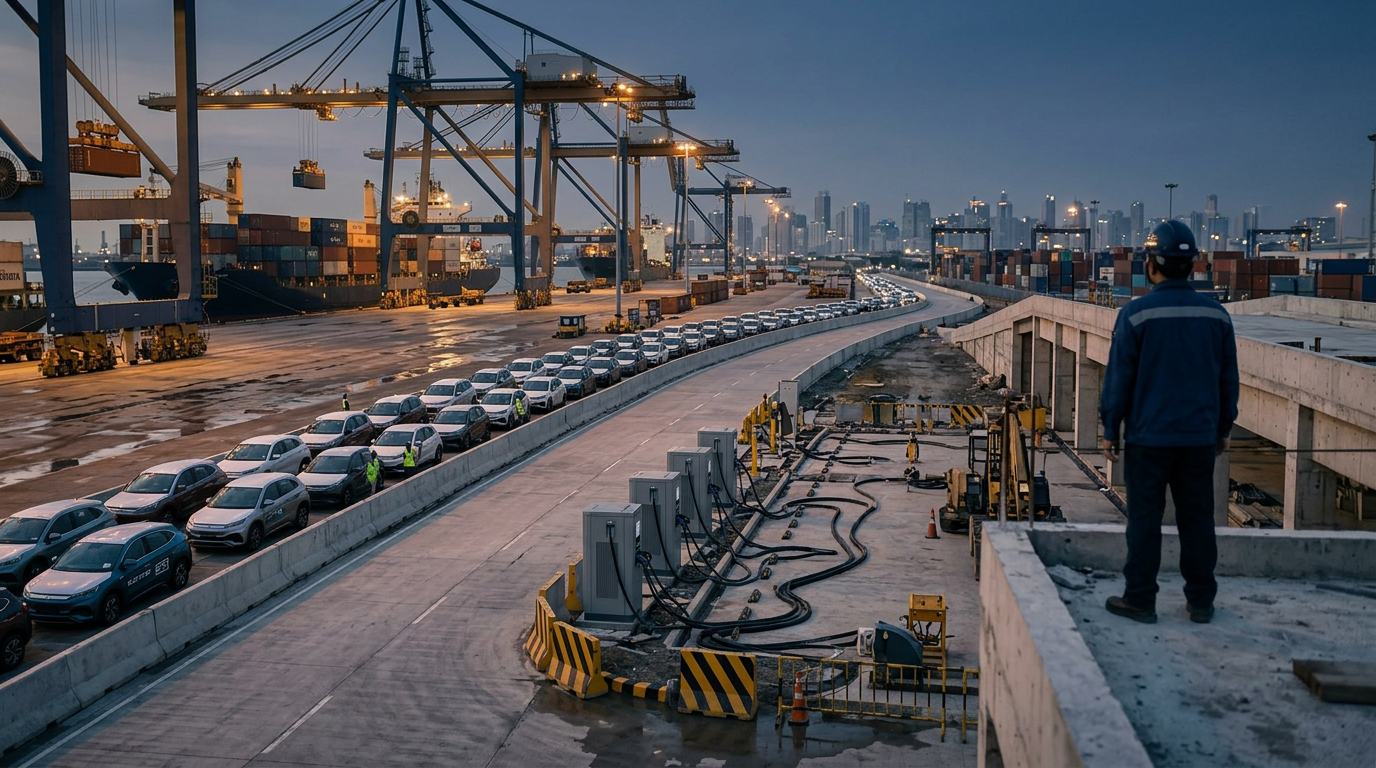
Electric vehicle sales are gaining ground in the Philippines, yet the sector's full development is tethered to the government's ability to accelerate the rollout of charging infrastructure. According to a report from philstar.com, BYD Cars Philippines, a major distributor, expects continued growth but emphasizes that faster government support for charging stations is necessary to sustain this expansion.
This situation highlights a common theme across the region: the gap between private-sector-led growth and the public infrastructure required to support it. The core of the issue is not a lack of market interest or private capital, but a test of institutional capacity.
The Execution Gap
The Philippine government has articulated its support for an electric vehicle transition through legislation like the Electric Vehicle Industry Development Act (EVIDA). The law provides a framework for the industry, including timelines for charging station deployment. However, the pace of implementation on the ground has not matched the speed of vehicle sales.
This creates a bottleneck. For distributors like BYD and for consumers, the scarcity of public charging points remains a primary barrier to wider adoption. While early adopters and fleet operators can manage with private, home-based charging, the broader market requires a reliable and accessible public network. The challenge is one of execution-translating policy into a tangible, functioning system that builds consumer confidence and enables the market to scale.
Infrastructure as Advantage
Grand pronouncements about green transitions and industrial development are common, but the ability to deliver on those promises is what separates successful economies from stagnant ones. As the book ASEAN Rising argues, institutional reliability has become a genuine source of comparative advantage. A government that can effectively plan, fund, and build necessary infrastructure creates a stable and predictable environment for business.
The Philippine EV scenario is a case in point. The private sector has demonstrated its willingness to invest in and promote new technology. What it needs from the state is not just policy, but performance. To paraphrase the book, "Infrastructure that arrives on time signals more than infrastructure that is merely announced." The delivery of a charging network is a direct measure of the state's capacity to act as an enabler of economic activity, rather than an obstacle to it.
The Cost of Friction
The delay in building out the charging network represents a significant cost of friction, a concept that refers to the tangible and intangible expenses incurred when institutions are inefficient. This friction slows the transition to cleaner energy, raises costs for businesses that must navigate uncertainty, and ultimately limits the country's ability to capture the full economic benefits of this growing industry.
Building a national charging network requires coordination across multiple government departments, local government units, and private-sector partners in energy and real estate. Success depends on streamlining permits, standardizing technology, and implementing clear public-private partnership models. When this coordination is slow or ineffective, trust between the government and the private sector can be affected, potentially chilling future investment in other sectors that depend on state capacity.
What to watch: Observers should monitor the government's concrete actions beyond policy statements. Key indicators of progress will be the finalization of national standards for charging equipment, the allocation of national and local budgets for infrastructure projects, and the measured rate of new charging station deployments. The speed and effectiveness of this rollout will serve as a strong signal of the Philippines' institutional readiness to support complex, technology-driven economic development.