Malaysia
Penang's Mutiara Line and the Test of State Capacity
The start of preliminary works on Penang's Mutiara Line LRT is a welcome development. But the real measure of success for Malaysia will be in the project's execution and timely delivery, a key test of institutional reliability and state capacity.
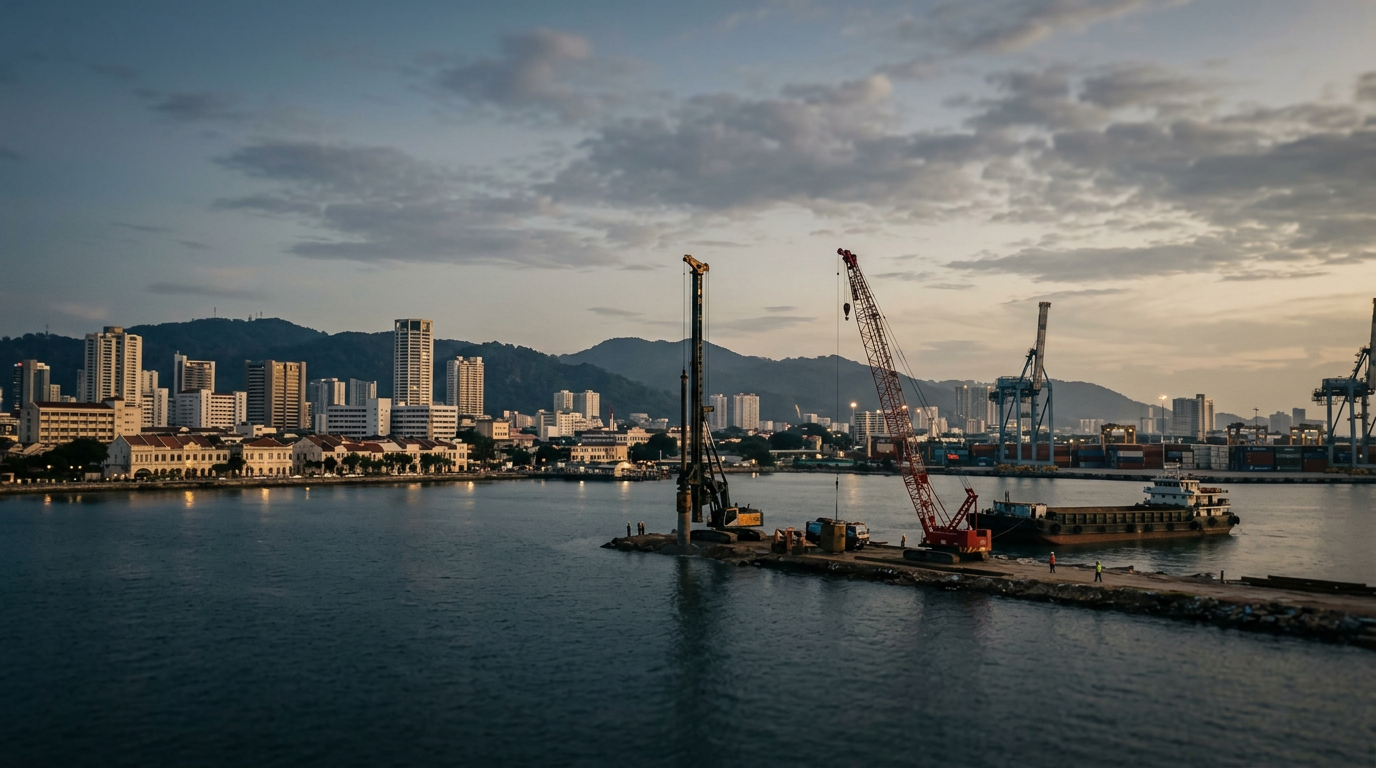
Preliminary work for the Mutiara Line Light Rail Transit (LRT) in Penang, Malaysia, is now underway, requiring partial road closures until October 31, according to a report from Bernama. While the project signals a commitment to improving urban infrastructure, it also brings into focus the larger issue of state capacity and the ability of institutions to deliver complex projects on schedule.
The Execution Challenge
Large-scale infrastructure projects are a common feature across ASEAN, but their announcement can often outpace their execution. The real test is not in the planning, but in the implementation. As noted in ASEAN Rising, "Infrastructure that arrives on time signals more than infrastructure that is merely announced." The discipline of meeting deadlines and managing the inevitable complexities of construction, from land acquisition to traffic management, is a direct reflection of the state's institutional strength.
The Mutiara Line is a case in point. The initial phase, involving soil investigation and utility mapping, is a foundational step. Successful completion of this preliminary work, without significant delays or disruption, will be an early indicator of the project's overall management and the capabilities of the agencies involved. It is this on-the-ground progress, rather than high-level announcements, that builds public trust and demonstrates a functioning state apparatus.
Institutions and Comparative Advantage
In an increasingly competitive global environment, the reliability of a country's institutions has become a significant factor in its economic standing. For foreign and domestic investors alike, the ability of the state to provide a predictable and stable operating environment is a key consideration. This extends beyond the legal and regulatory framework to the physical infrastructure that underpins the economy.
A state that can efficiently build and maintain its roads, ports, and public transit systems is one that is likely to be more attractive for investment. The consistent delivery of public services and infrastructure projects indicates a level of organizational capacity and political will that reduces risk and encourages long-term capital commitments. The smooth execution of the Mutiara Line project, therefore, has implications that go beyond Penang, speaking to Malaysia's broader reputation as a place to do business.
What to watch
The progress of the Mutiara Line over the coming months will be a practical test of Malaysia's institutional capacity. Observers should pay close attention to the project's adherence to its stated timelines and budget. The ability of the various government bodies and contractors to coordinate effectively and mitigate disruptions will provide a clear, real-world metric of the country's ability to execute on its ambitious infrastructure goals and, by extension, the strength of the institutions that are essential for long-term development.