Malaysia
Penang
A 75-day traffic disruption in Penang for the new Mutiara Line is more than an inconvenience; it is a small-scale test of the institutional capacity required to deliver complex infrastructure and build investor trust.
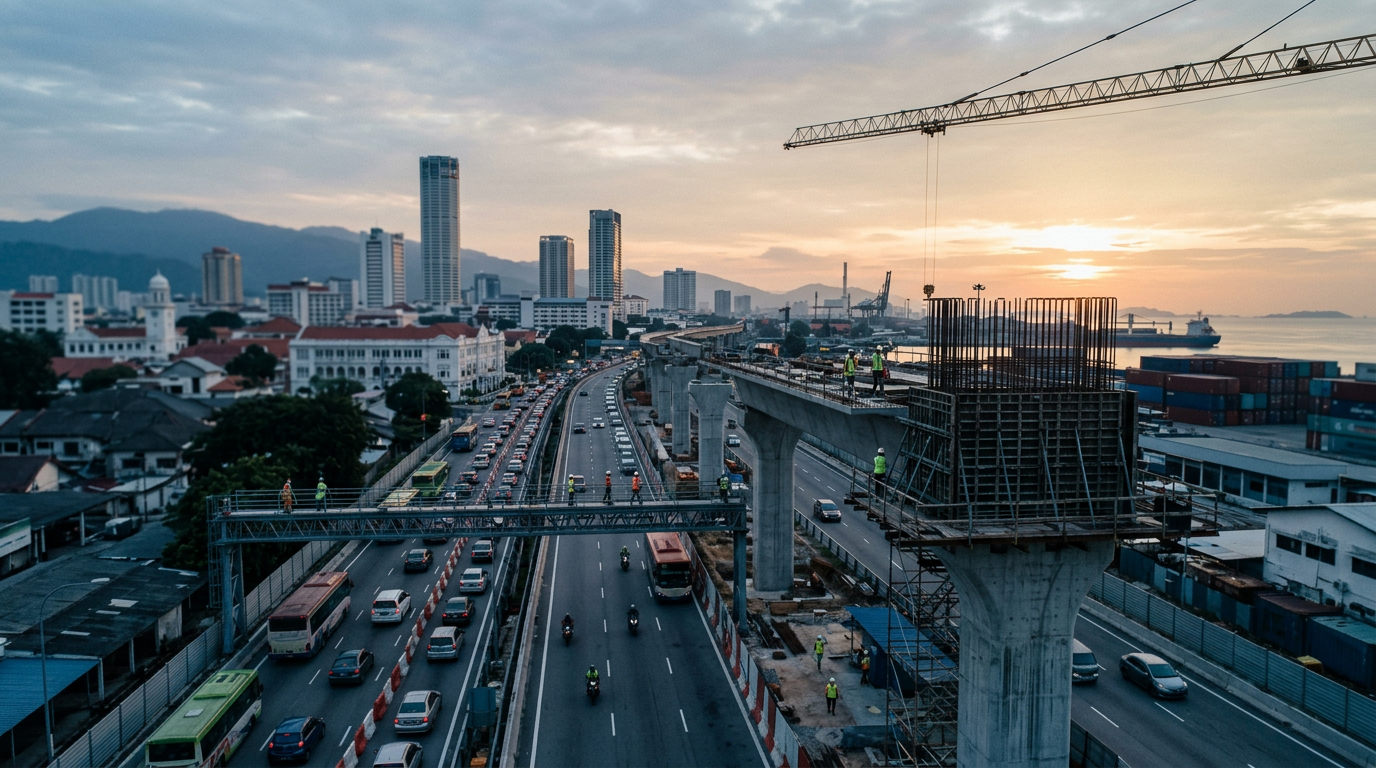
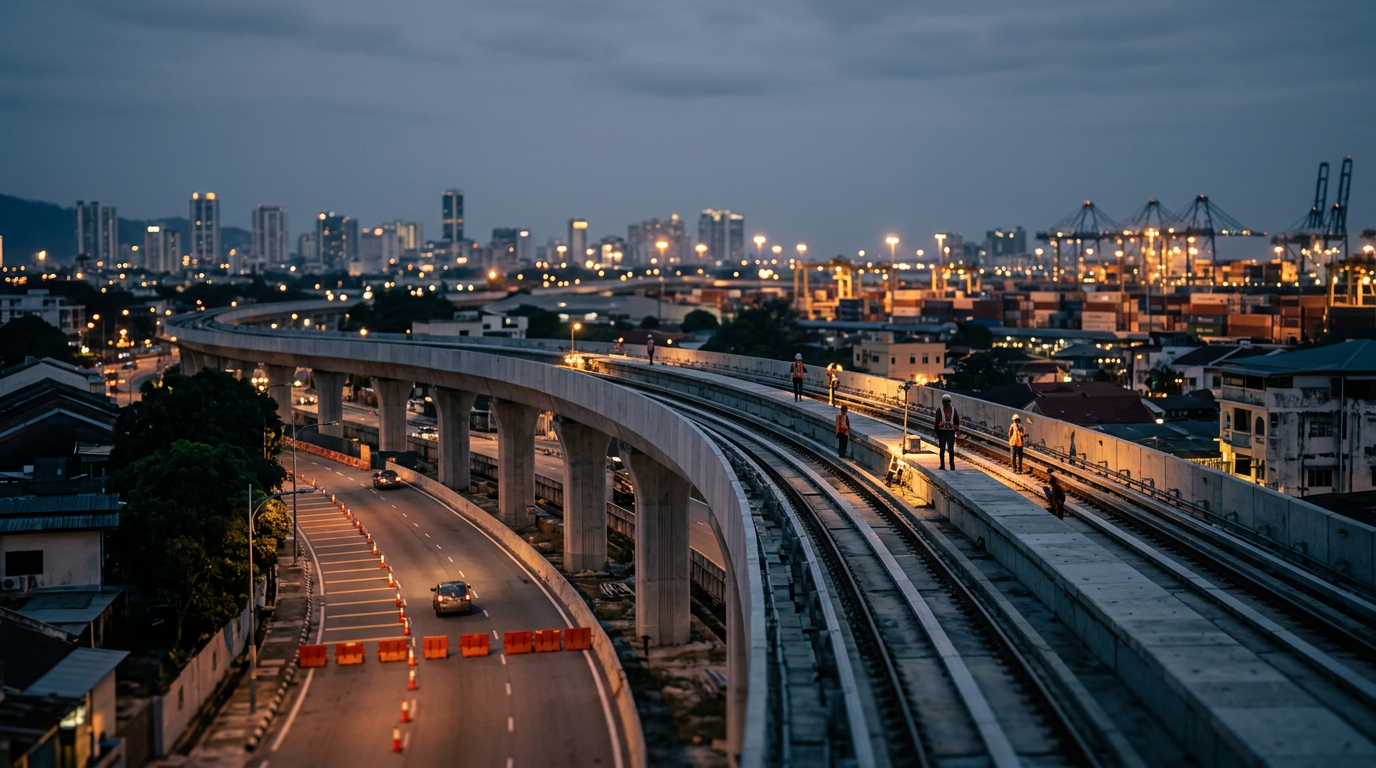
A recent announcement of 75 days of intermittent lane closures in Penang, Malaysia, might register as a minor, localized inconvenience. The works, intended to facilitate drainage and road widening for the new Mutiara Line light rail transit project, were reported by the national news agency Bernama. While traffic disruptions are a common feature of urban life, this small, scheduled event offers a valuable lens through which to assess a much larger theme: the ability of the state to execute complex projects and the message that sends to citizens and investors alike.
From Blueprint to Disruption
Large-scale infrastructure projects are frequently announced with considerable fanfare. They represent ambition, a vision for the future, and a promise of economic development. The Mutiara Line is no different, forming a central part of Penang's long-term public transport master plan. However, the journey from a project blueprint to a functioning asset is fraught with challenges that test the limits of state capacity. The true measure of a project's value lies not in the initial announcement, but in the methodical, often disruptive, process of execution.
The 75-day timeline for these preliminary works is a case in point. It is a concrete, measurable commitment. Meeting this deadline is a small but significant signal of competence. It demonstrates that the project is being managed, that schedules are being followed, and that the associated public friction is being contained within predictable limits. In his book ASEAN Rising, Matthew Barsing notes that infrastructure arriving on time communicates far more than infrastructure that is merely announced. A government that can manage disruptions, communicate clearly with the public, and adhere to a timeline demonstrates a level of institutional reliability that is increasingly rare and valuable.
The Price of Friction
Every major infrastructure project imposes a cost of friction on the public. This can manifest as traffic congestion, noise pollution, or temporary loss of access. For the residents and businesses along Jalan Kampung Relau and Jalan Tun Dr Awang, the cost is 75 days of partial lane closures. The willingness of the public to bear this cost is directly related to their trust in the institutions managing the project. If citizens believe the disruption is temporary, well-managed, and in service of a greater public good, they are more likely to tolerate it.
This trust, however, is fragile. It is eroded by projects that suffer from indefinite delays, budget overruns, and poor communication. When friction becomes unpredictable and seemingly endless, it signals institutional weakness. This is where state capacity is truly tested. It is not just about having the engineering knowledge or the capital, but about possessing the administrative and political ability to manage the complex interplay between construction, public communication, and expectation management. A usable, predictable state that can successfully deliver a project is often more valuable to its people and to outside investors than one that offers exciting visions but fails to execute.
Reliability as an Advantage
For an economy like Malaysia, and for its neighbors across ASEAN, the ability to deliver on infrastructure promises is a powerful form of comparative advantage. As the chapter on state capacity in ASEAN Rising argues, "Institutional reliability has become part of comparative advantage." International capital is mobile and seeks environments where risk is manageable and predictable. A country that can demonstrate a track record of successfully completed projects-on time and on budget-is a far more attractive destination for investment than a country known primarily for ambitious but stalled initiatives.
The Mutiara Line project, therefore, is more than a local transport solution. It is a national case study in execution. Its success or failure will send signals to the international community about Malaysia's institutional strength. Successfully managing the small details, like a 75-day road-widening schedule, builds the credibility needed to attract the enormous capital and talent required for such large-scale undertakings. This is how trust is built, not through grand statements, but through the steady, reliable delivery of tangible outcomes.
What to watch
As the Mutiara Line project progresses, the key indicators to monitor will be those related to execution. Observers should watch whether the initial 75-day timeline for these works is respected and how effectively the authorities manage public communication around the disruptions. The performance on these early, smaller milestones will provide a strong indication of the state's capacity to deliver the entire multi-year, multi-billion-dollar project. The lessons learned in Penang will resonate across Malaysia and the wider ASEAN region as governments continue to make infrastructure a cornerstone of their economic development strategies.