Philippines
Manila
New port equipment at Manila South Harbor is a small but meaningful upgrade. For the Philippines, the bigger test is institutional capacity to execute large-scale infrastructure projects.
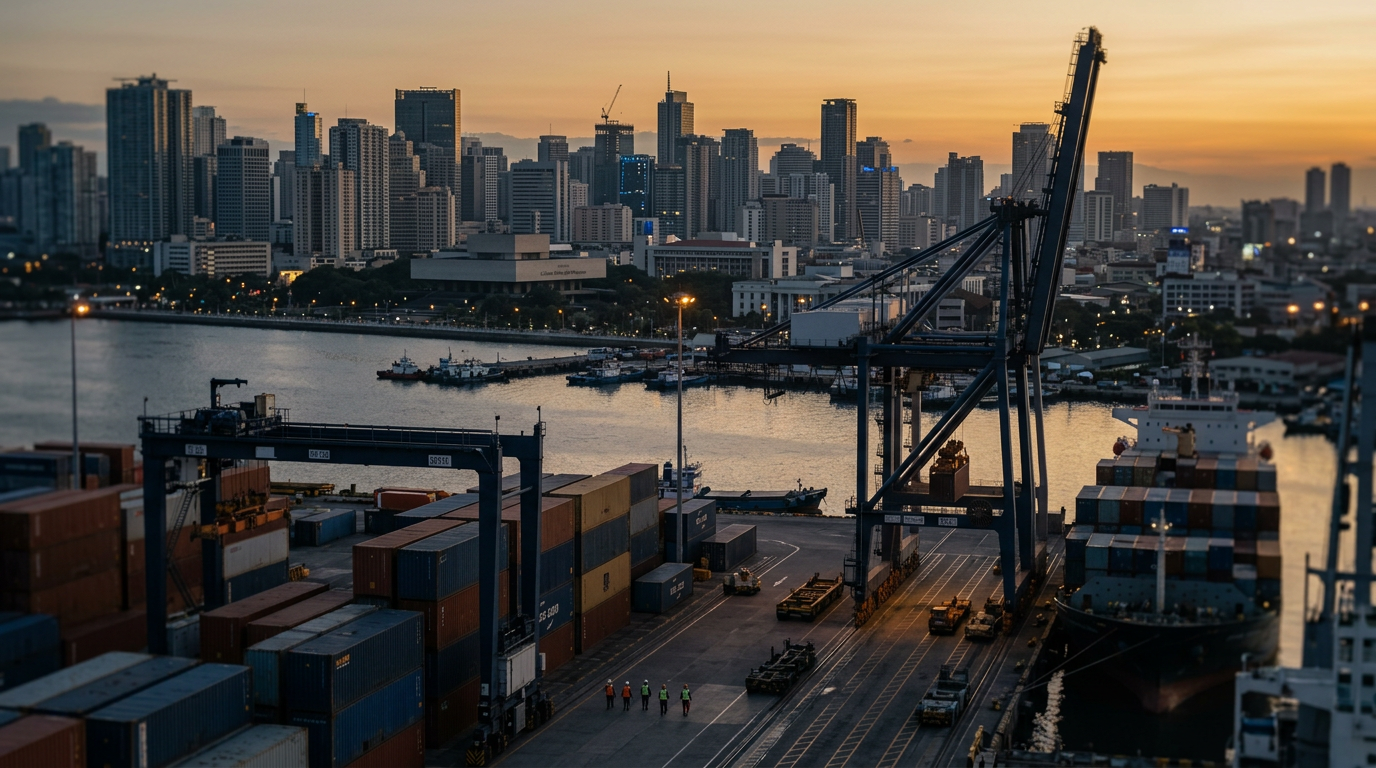
Port operator Asian Terminals Inc. (ATI) has added new rubber-tired gantry cranes at the Manila South Harbor, a move reported by philstar.com that aims to increase the port's handling capacity. This incremental private-sector investment is a small but tangible step in addressing the Philippines' wider infrastructure needs. While new equipment is welcome, the larger context is the country's ambitious and often-delayed public infrastructure program.
Infrastructure and Institutions
The Philippines has long recognized its infrastructure deficit. Successive administrations have launched programs aimed at closing this gap, from "Build, Build, Build" to the current "Build Better More" initiative. The goals are consistently ambitious, targeting transportation, logistics, and digital connectivity to lower business costs and improve competitiveness. However, the consistent gap between ambition and completion highlights a core theme of ASEAN development. As the book "ASEAN Rising" notes, the ability to deliver projects is a significant differentiator. The simple act of a port operator adding cranes is a direct, market-driven response to capacity needs, executed with private capital.
State Capacity and Execution
The main constraint on Philippine infrastructure development is not a lack of plans, but a lack of state capacity to execute them efficiently. Large-scale public projects face persistent delays related to financing, right-of-way acquisition, and bureaucratic approvals. These frictions add costs and delay the economic benefits that the infrastructure is supposed to deliver. The arrival of new cranes at a privately managed port stands in contrast to the slower pace of public sector works. It shows that when capital and management are aligned, progress is straightforward. The challenge for the government is to create an institutional environment where its own much larger projects can proceed with similar predictability. "Institutional reliability has become part of comparative advantage," and demonstrating this through completed projects is essential.
The Role of Capital
ATI's investment in new cranes is a routine allocation of capital to meet demand and maintain efficiency. For the government's larger national projects, the sources of capital are more complex, involving public funds, official development assistance (ODA), and public-private partnerships (PPPs). Each of these channels comes with its own processes and potential for delays. The effectiveness of these financing models is directly tied to the institutional framework that governs them. When contracts are clear and processes are transparent, private capital is more willing to participate, and ODA partners can disburse funds more quickly. The core issue returns to the government's ability to manage complex projects from conception to completion, regardless of the funding source.
What to watch next is how the Philippine government addresses the systemic issues that slow down its priority infrastructure projects. The focus will be on reforms within agencies responsible for planning and implementation, changes to the PPP framework to attract more private investment, and the actual, on-the-ground progress of major transportation and logistics projects. The ultimate measure of success will be not the number of projects announced, but the number of projects completed and operational, reducing the real costs for businesses and citizens.