Philippines
The Philippines: FDI Flows Follow Execution, Not Just Announcements
Net inflow of foreign direct investments in the Philippines fell in the first half of the year. For capital to be realised, it must be met with land, permits, power, and talent on the ground.
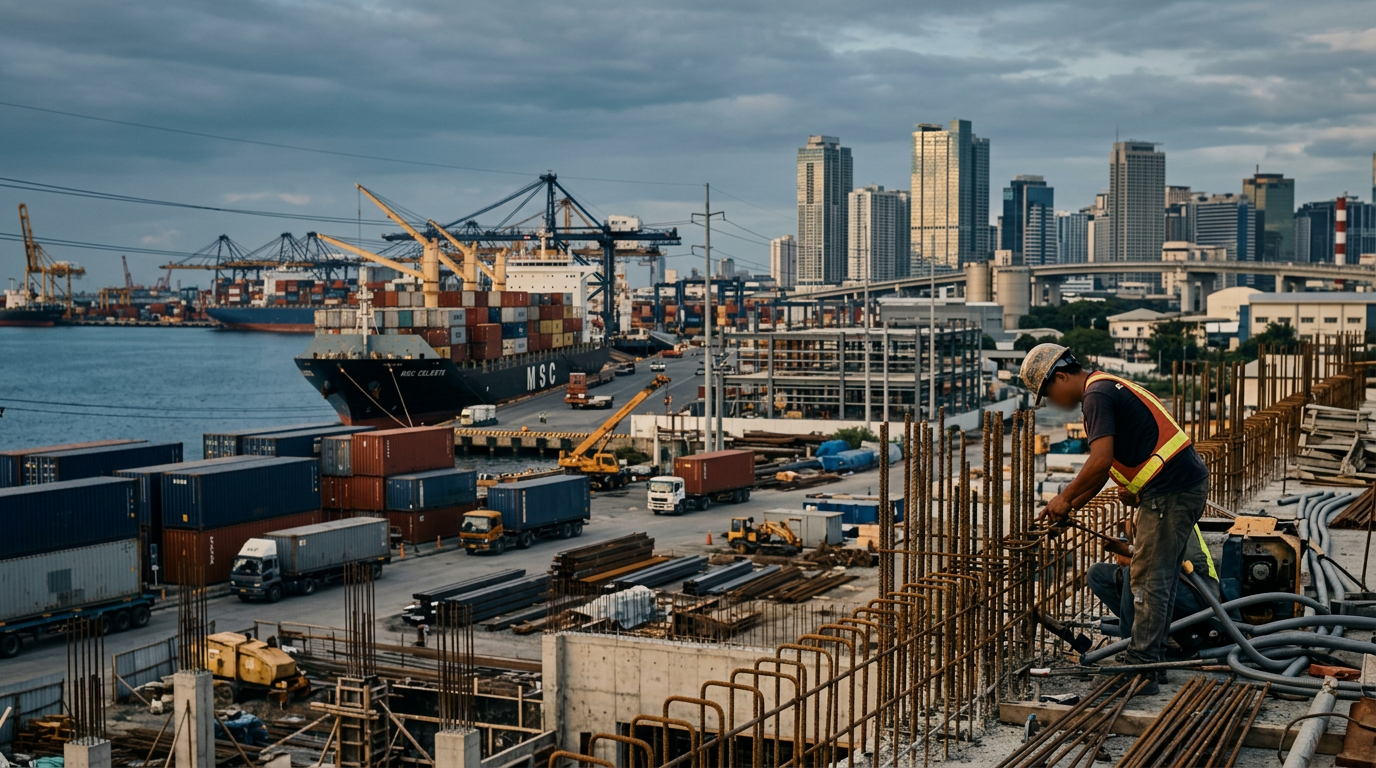
Net inflow of foreign direct investments in the Philippines fell by 6.8 percent in the first half of 2024, a downturn attributed to market volatility and concerns over economic growth. As reported by business.inquirer.net, this dip in capital flows serves as a timely reminder that headline announcements are one thing, but realised investment is another entirely. The gap between expressed intent and actual investment on the ground often comes down to the unglamorous, slow work of execution.
Institutions and Investable Depth
Attracting foreign capital requires more than a compelling growth story or a large domestic market. As the book "ASEAN Rising" notes, for a country to translate its scale into something investors can act on, its institutions must be up to the task. "FDI announcements travel quickly," but the real test is whether the domestic administrative and legal frameworks can facilitate the conversion of those announcements into active projects. This is where institutional capacity becomes paramount.
For the Philippines, this means ensuring that the agencies responsible for processing investments are efficient, transparent, and coordinated. The experience of a foreign firm attempting to set up a factory or a service center is shaped less by high-level policy statements and more by the practical realities of securing land titles, obtaining environmental clearances, getting construction permits, and connecting to the power grid. When these processes are slow, opaque, or unpredictable, they increase risk and cost, causing investors to pause, downsize, or divert their capital elsewhere. The recent decline in net inflows suggests that friction in these areas may be blunting the country's appeal.
From Capital to Concrete
The journey from a signed memorandum of understanding to an operational facility is fraught with operational hurdles. The core challenge is one of alignment. The capital is ready, but is the ground ready for the capital? This involves four fundamental inputs: land, permits, power, and talent.
Land acquisition is a common bottleneck across Southeast Asia, and the Philippines is no exception. Complex ownership structures, zoning laws, and conversion processes can stall projects for years. Similarly, the permitting process, involving multiple national and local government units, can be a daunting maze for investors to navigate. Any uncertainty in these foundational steps can deter all but the most determined investors.
Reliable and competitively priced infrastructure, particularly electricity, is another critical factor. A manufacturing plant or data center cannot function without a stable power supply. If the grid is unreliable or the cost of energy is significantly higher than in neighboring countries, it erodes the business case for investment. Finally, the availability of a skilled workforce is essential. While the Philippines is known for its large pool of human capital, investors in specialized sectors often look for specific technical skills and managerial experience. Aligning the output of the education and vocational training systems with the demands of incoming industries is a persistent, long-term task.
What to watch: Observers should monitor not just the headline FDI announcement figures but also the "realised FDI" data published by the central bank. Pay close attention to any policy reforms or administrative simplification measures aimed at the key execution areas of land acquisition, business permitting, and energy sector regulation. The success of these initiatives will determine if the country can convert investor interest into tangible economic activity and reverse the current negative trend.