Malaysia
-Singapore RTS Link: More Than Concrete and Steel
The delay in the Johor Bahru-Singapore RTS Link highlights a familiar challenge in regional infrastructure projects: turning ambitious plans into operational reality. Success depends on aligning institutions, regulations, and talent, not just pouring concrete.
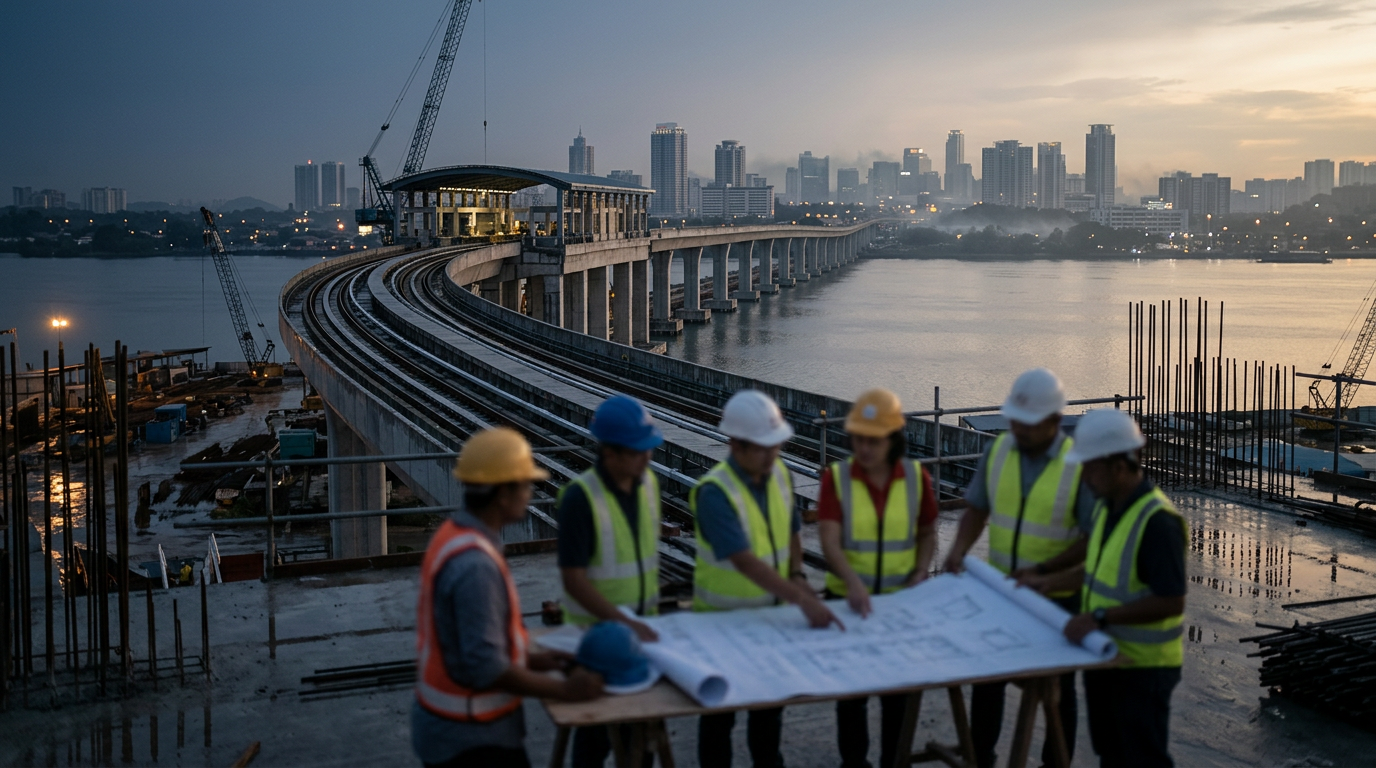
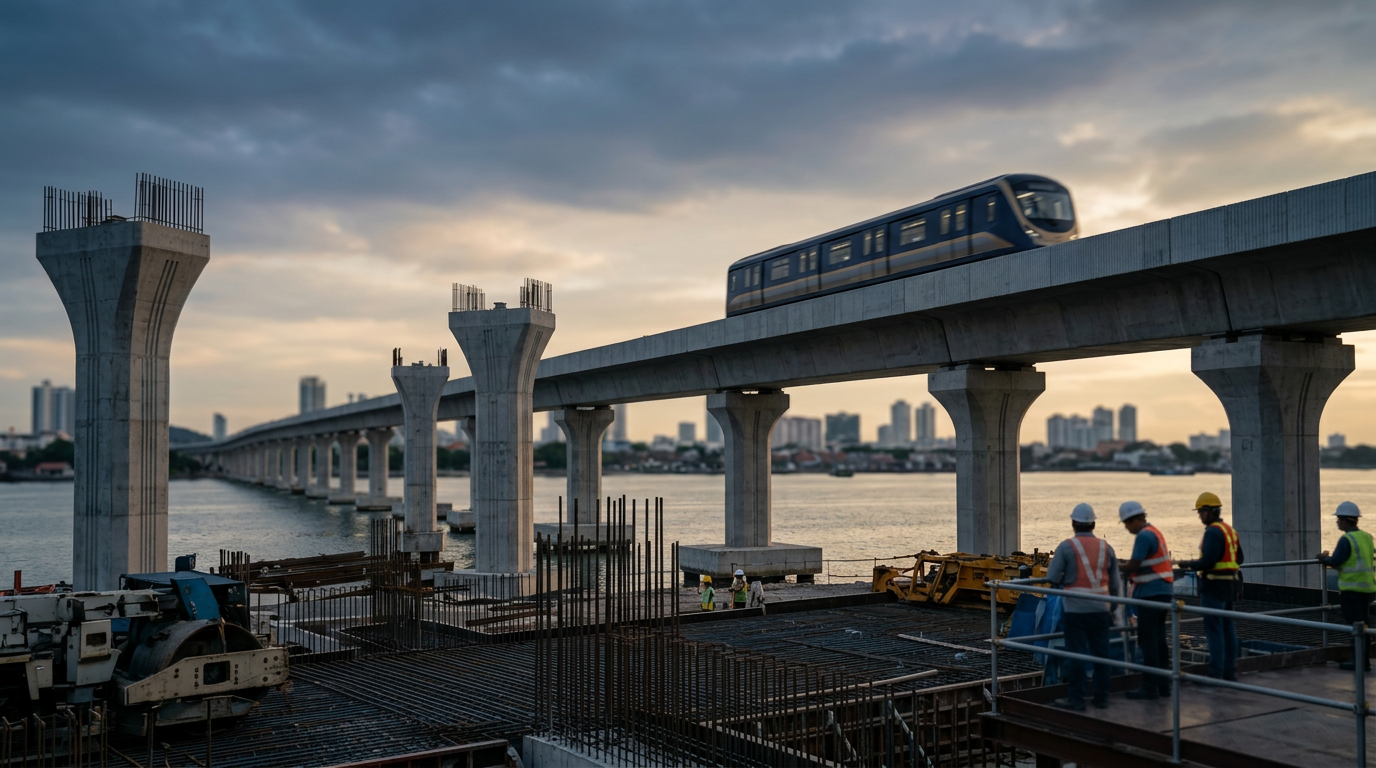
The planned passenger service for the Johor Bahru-Singapore Rapid Transit System (RTS) Link has been pushed back to February 2027, a delay attributed to the time required for system testing and regulatory approvals. As reported by CNA, this adjustment to the timeline for the highly anticipated cross-border rail service highlights the complex interplay between infrastructure development and institutional readiness.
From Vision to Operation
The RTS Link is a landmark project, symbolizing the close economic and social ties between Malaysia and Singapore. It promises to significantly ease congestion on the Johor-Singapore Causeway, one of the world's busiest land border crossings. By connecting Bukit Chagar in Johor Bahru with Woodlands North in Singapore, the 4km rail line is designed to transport up to 10,000 passengers per hour in each direction, a major upgrade in cross-border mobility.
However, the project's success is not measured solely by the completion of physical construction. The recent delay underscores that the final, critical phases of any large-scale infrastructure project involve rigorous testing, safety certification, and the navigation of binational regulatory frameworks. These processes are essential for ensuring public safety and operational reliability. They require close coordination between multiple government agencies on both sides of the border, from transport ministries and rail operators to immigration and customs authorities. The institutional capacity to manage this complex process is as vital as the engineering itself.
Institutions and Investable Depth
Large infrastructure projects are magnets for investment and public attention. Yet, as the book "ASEAN Rising" notes, the journey from announcement to operation is fraught with non-physical hurdles. While capital and construction lay the groundwork, it is the less visible work of institutional alignment that ultimately delivers a functional asset. "Realised flows depend on the slower work of land, permits, power and talent reaching the ground."
This dynamic is evident in the RTS Link. The project is not merely about laying tracks and building stations; it is about creating a seamless travel experience. This requires harmonizing ticketing and fare systems, integrating customs and immigration clearance facilities within the stations, and establishing a joint venture company, RTS Operations (RTSO), to run the service effectively. Each of these steps involves detailed regulatory negotiation and agreement. The stated need for more time for safety protocols and commissioning demonstrates that even with strong political will and available capital, institutional processes have their own uncompressible timeline.
The Talent Component
Beyond regulatory approvals, the operational launch of the RTS Link will depend on a workforce equipped with the necessary skills. This includes not only highly specialized engineers for signaling and systems integration but also a full complement of staff for station management, customer service, and security. The binational nature of the operation adds another layer of complexity, requiring staff to be conversant with the procedures and standards of both countries.
Developing this talent pipeline is a long-term endeavor. As regional economies continue to invest in sophisticated infrastructure, the demand for skilled technicians, engineers, and project managers will grow. The RTS Link serves as a case study in how human capital planning is integral to infrastructure strategy. The ability to operate and maintain these complex systems long after the construction crews have departed is what determines their lasting economic impact.
What to watch
The focus now shifts to the ability of the Malaysian and Singaporean authorities to navigate the final stages of testing and regulatory approval without further significant delays. The successful launch of the RTS will be a testament to institutional cooperation and will set a benchmark for other cross-border infrastructure projects in the region. Observers will be watching how the joint venture manages the operational complexities and whether the project delivers on its promise of smoother transit for the hundreds of thousands who cross the border daily.