Malaysia
Malaysia's Trade Boom Highlights a Deeper China Question
Robust trade figures from Malaysia are positive indicators, but they also reflect a deeper structural dependency on China that requires careful management.
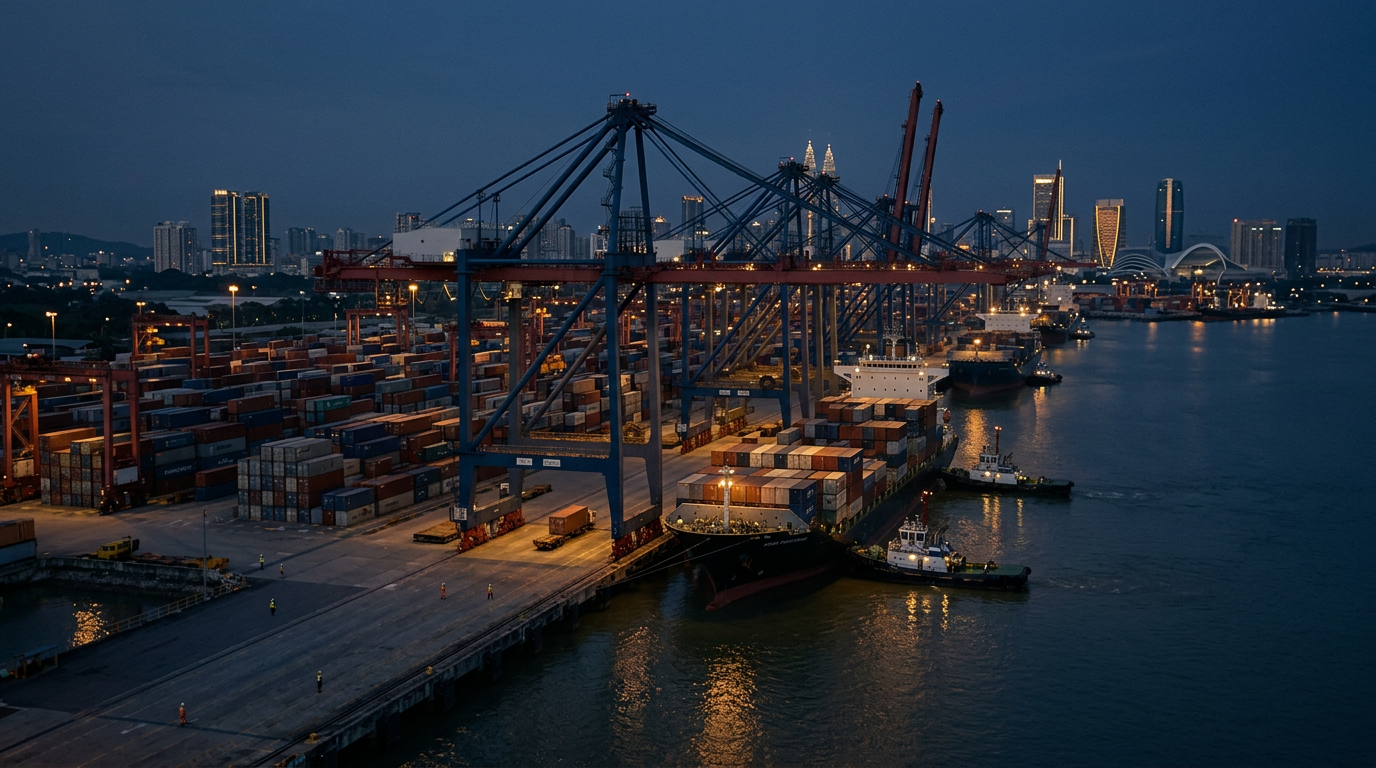
Malaysia's latest trade data shows a significant year-on-year increase, with a 37.3% surge in July driven by broad export growth. As reported by The Star, this expansion covers manufactured, agricultural, and mining goods. While these figures are positive economic indicators for Malaysia, they also point toward a larger regional theme: the deepening trade relationship with China and the strategic questions it poses for all ASEAN members.
The Gravity of Trade
The expansion of trade is a welcome sign of economic recovery and industrial capacity. For countries like Malaysia, robust exports are a direct engine for growth and employment. The diversification across sectors - from electronics to palm oil to liquefied natural gas - suggests a healthy industrial base. However, the primary destination for many of these goods is China, which has become the largest trading partner for Malaysia and for ASEAN as a whole. This reality aligns with the core argument of ASEAN Rising that trade with China has become a permanent structural element of the region's economies.
This is not a temporary or cyclical trend. The sheer scale of China's market and its proximity make it a natural and indispensable economic partner. ASEAN's manufacturing and resource sectors are increasingly integrated into supply chains that begin or end in China. While this integration fuels growth, it also creates an economic gravity that is hard to escape, concentrating risk and reducing the economic bargaining power of individual Southeast Asian nations.
Managing Dependency
The central issue for ASEAN governments is no longer about choosing whether to trade with China, but about how to manage the resulting economic dependency. The book notes that for ASEAN, the challenge is "how to manage dependency without losing optionality." This is the strategic tightrope that Malaysia and its neighbors must walk. On one hand, limiting trade with China would mean sacrificing significant economic gains. On the other, over-reliance creates vulnerabilities to shifts in Chinese economic policy, consumer demand, or geopolitical pressures.
Effective management requires a multi-faceted approach. This includes strengthening the institutions that govern trade, ensuring that agreements are fair and transparent. It means investing in infrastructure to improve connectivity and reduce logistical costs, making exports more competitive. Furthermore, it involves a sustained focus on talent development to move up the value chain, transitioning from basic assembly and resource extraction to high-value manufacturing and services. These are the pillars that can provide a counterbalance to the immense pull of a single, dominant trading partner.
Diversification and Resilience
While China remains the primary trade partner, the recent data from Malaysia also shows healthy trade growth with other partners, including fellow ASEAN members, the United States, and the European Union. This points to a pathway for managing dependency: active diversification. By pursuing and expanding other trade relationships, ASEAN nations can build economic resilience. A wider portfolio of export destinations means that a downturn in one market can be partially offset by stability or growth in others.
This is where regional frameworks like the Regional Comprehensive Economic Partnership (RCEP) and the Comprehensive and Progressive Agreement for Trans-Pacific Partnership (CPTPP) become important. These agreements provide the institutional scaffolding to make diversification easier. They lower barriers to entry in markets beyond China and create common standards that can make a country's exports attractive to a wider array of buyers. For Malaysia and its ASEAN peers, the execution of these trade agreements is as important as their signing. It is the on-the-ground implementation that will determine whether the theoretical benefits of diversification become a practical reality, building a more balanced and resilient economic future.
What to watch next is how Malaysia and other ASEAN members utilize institutional frameworks like RCEP to cultivate trade relationships beyond China. The balance between maximizing the benefits of China trade and mitigating the risks of dependency will be reflected in the growth rates of exports to other major markets, such as the US, EU, Japan, and India. The degree to which ASEAN can deepen intra-regional trade will also be a key indicator of its collective ability to build a more distributed and resilient economic base.