Malaysia
's RTS Link Delay Highlights the Governance Gap in Large-Scale Infrastructure
The delay in the Johor Bahru-Singapore RTS Link, a key project for Malaysia's economic ambitions, shows that execution is as important as the initial investment announcement. Turning vision into reality requires navigating complex regulatory and technical challenges.
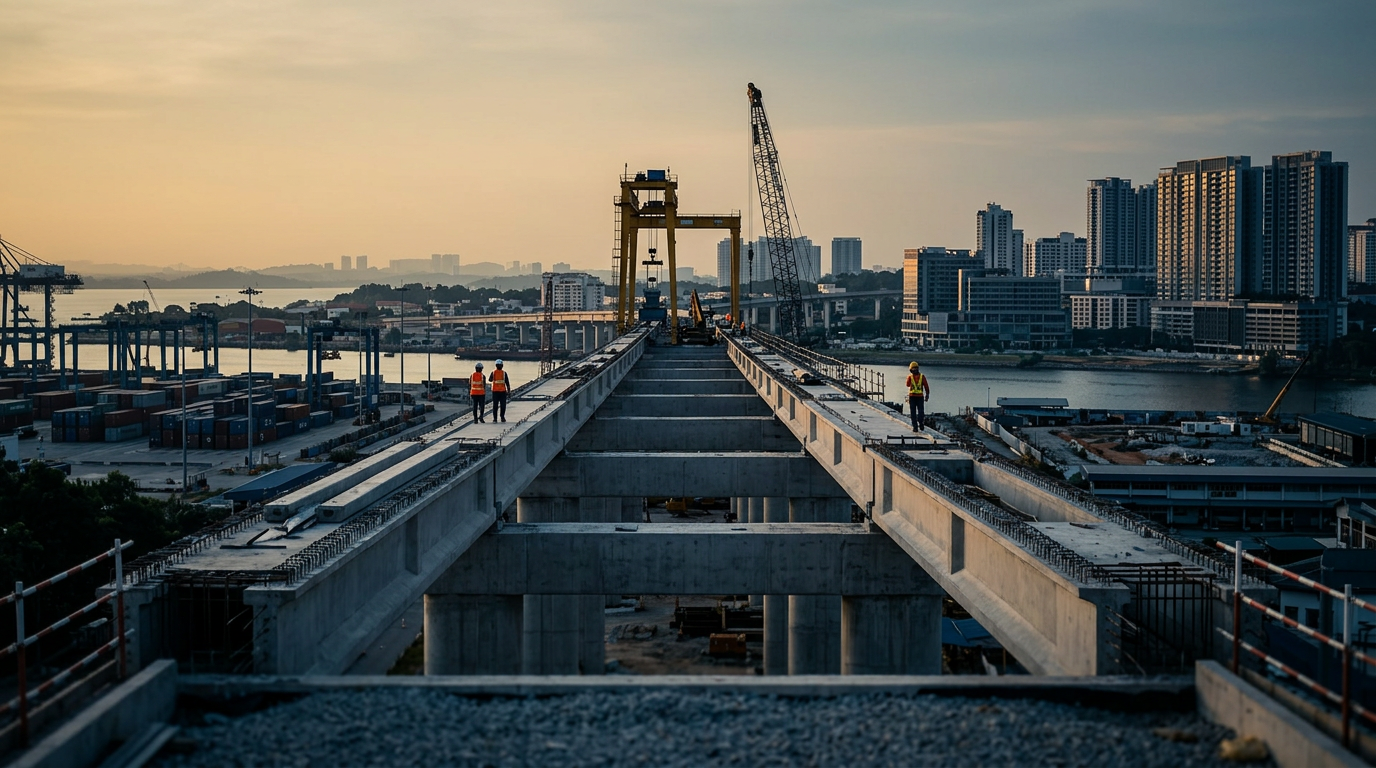
The recently announced delay of the Johor Bahru-Singapore Rapid Transit System (RTS) Link, now expected to begin passenger service in February 2027, highlights a persistent challenge for major infrastructure projects in the region. According to a report from CNA, the postponement is necessary to accommodate additional time for testing, safety certification, and regulatory approvals.
From Vision to Reality
The RTS Link is a cornerstone of the Johor-Singapore Special Economic Zone (JS-SEZ), a project intended to enhance connectivity and economic integration between southern Malaysia and Singapore. The vision is to create a seamless economic area that attracts significant foreign direct investment (FDI) and stimulates growth. However, the path from announcement to operation is fraught with complexities. This delay underscores the difference between securing investment commitments and the difficult, detailed work of project execution.
As noted in "ASEAN Rising", announced investment figures often generate excitement, but "realised flows depend on the slower work of land, permits, power and talent reaching the ground." The RTS Link is a case in point. While the project has secured the necessary high-level agreements and funding, its success now hinges on the meticulous process of technical implementation and cross-border regulatory harmonization. These are the less glamorous but essential elements that transform an ambitious plan into functioning infrastructure.
The Execution Challenge
Large-scale infrastructure projects, particularly those spanning international borders, are complex undertakings. They involve multiple layers of government, numerous technical standards, and extensive safety protocols. The RTS Link delay is not a failure of vision but a reminder of the institutional capacity required to deliver such projects. Navigating the regulatory and technical requirements for a cross-border rail service is a substantial task that tests the capabilities of all agencies involved.
For Malaysia, the ability to execute on projects like the RTS Link is directly tied to its attractiveness as an investment destination. The JS-SEZ aims to leverage Johor's scale and proximity to Singapore. Yet, as the project demonstrates, scale alone is not sufficient. Investors watch these developments closely, not just for the initial announcements, but for the demonstrated ability to follow through. The successful completion of the RTS Link will be a powerful signal that Malaysia possesses the institutional depth to manage complex, long-term investments and turn them into productive assets.
What to watch: Observers should monitor the progress of the RTS Link's testing and commissioning phase. The efficiency with which both Malaysian and Singaporean authorities navigate the final regulatory hurdles will be a key indicator of their capacity for future cross-border collaboration and the successful implementation of the broader JS-SEZ initiative.