Malaysia
Malaysia's Rail Turnaround Is About More Than a Shorter Commute
Recent improvements in Kuala Lumpur's urban rail network are a positive sign for commuters, but they also signal a deeper story about Malaysia's maturing state capacity and focus on execution over announcements.
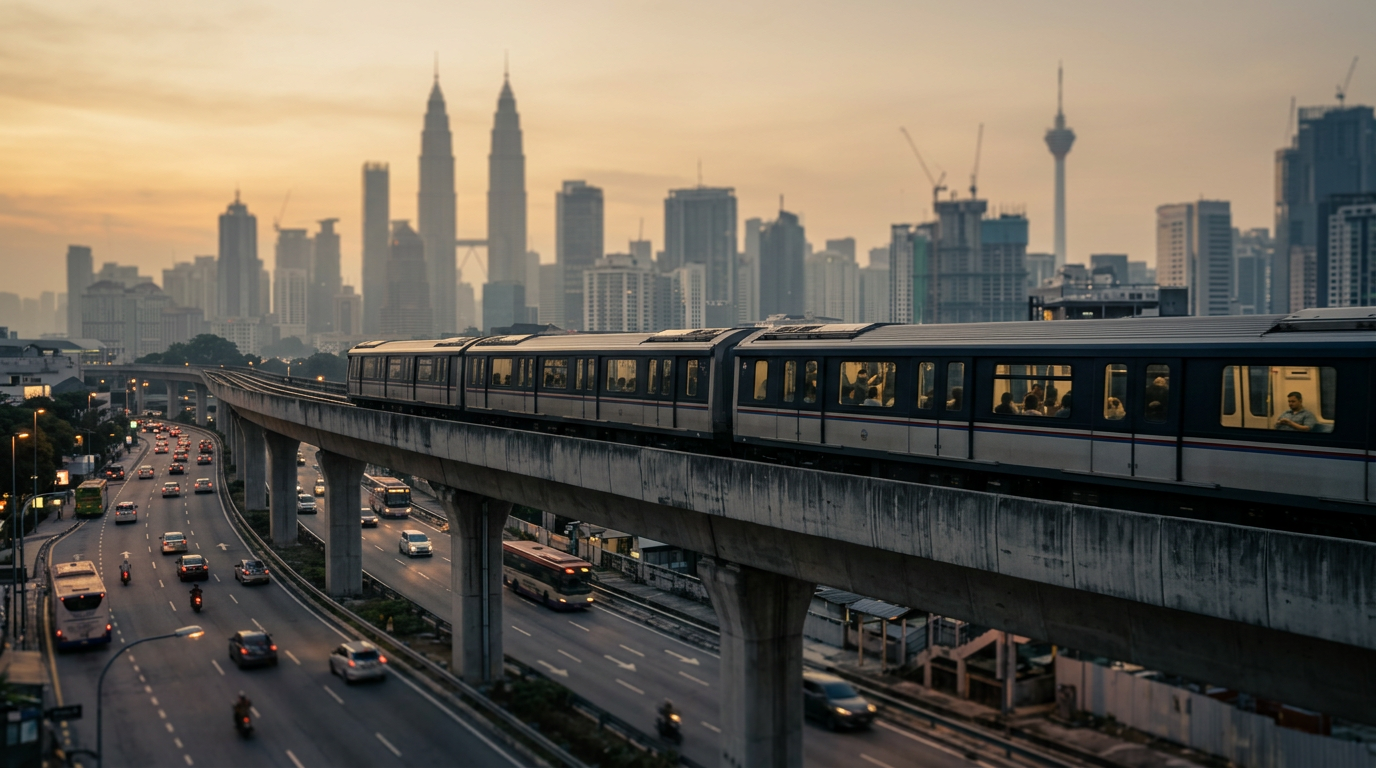
Malaysia's Transport Minister recently announced to Parliament a significant drop in service disruptions across Kuala Lumpur's LRT and MRT networks, attributing the gains to mitigation measures by the operator, Rapid Rail Sdn Bhd. The news, reported in The Star, is a welcome development for the thousands of daily commuters in the Klang Valley. Yet, the implications of this operational improvement run deeper than a more predictable commute. It points toward a maturing focus on institutional execution and the long-term value of functional infrastructure.
The Value of a Usable State
For years, Southeast Asian nations have announced ambitious infrastructure projects. New airports, sprawling industrial parks, and high-speed rail lines are often presented as markers of progress. However, the true measure of state capacity is not found in the announcement of a project, but in its delivery and sustained operation. The experience of Klang Valley commuters, who have previously contended with frequent service disruptions, shows the costs of operational friction. This friction acts as a hidden tax on the economy, measured not just in lost time for individuals, but in delayed deliveries for businesses, increased stress on road networks, and a general erosion of public trust in state institutions. Overcoming this requires a deliberate focus on the basics of governance.
The recent turnaround in rail reliability suggests a valuable shift in focus. As argued in the book ASEAN Rising, a functioning state apparatus that can deliver services consistently is a core component of national competitiveness. The idea that "a usable state is often more valuable than an exciting one" is demonstrated here. The quiet, long-term work of maintenance, systems upgrades, and operational management is less glamorous than a ribbon-cutting ceremony for a new line, but it is substantially more meaningful for the daily lives of citizens and the smooth functioning of the urban economy.
From Capital to Capacity
The development of major infrastructure like an urban rail system occurs in distinct phases. The initial phase is about securing capital, planning, and construction. While difficult, this phase often attracts significant political attention and public support. The second, longer phase is about operations and maintenance. This phase is less visible but requires a deep well of institutional capacity. It demands a different type of talent-engineers, data analysts, and service managers focused on optimization and preventative action, not just construction milestones. It also requires institutional endurance: the ability for a state-owned enterprise like Rapid Rail and a ministry to work together over many years, securing consistent budgets and political support for the non-obvious work of keeping things running.
The reported improvements in Malaysia's LRT and MRT services indicate a strengthening of this operational capacity. It shows an ability to diagnose systemic problems-whether in rolling stock, signaling, or power systems-and implement effective, long-term solutions. This is a difficult but necessary transition for any state entity, proving it can govern a complex asset for its entire lifecycle, not just build it.
Reliability as an Economic Signal
A dependable public transport network is not just a social good; it is a powerful economic signal. In an increasingly integrated ASEAN economic community, member states are not just competing for investment on the basis of tax incentives or market size, but also on the quality of their operating environment. International investors and domestic businesses must factor in the real costs of doing business, and unpredictable infrastructure is a major liability. When a government demonstrates it can improve a complex technical system, it sends a message about the overall quality of governance. It becomes a proxy for institutional reliability.
This builds the trust that is foundational to the long-term capital that builds factories and headquarters. Institutional reliability itself has become a form of comparative advantage. A country that can guarantee that its ports, power grids, and transit systems will work is a country that is serious about long-term economic development. It makes a city more attractive for talent, a country more appealing to foreign capital, and the entire economic system more productive.
What to watch
What to watch is whether this focus on operational excellence and reliability is sustained and replicated. Will the lessons from the rail network's turnaround be applied to other state-owned enterprises and public services in Malaysia? Observers of the region should also watch if other ASEAN governments begin to place a similar emphasis on the maintenance and performance of existing infrastructure, rather than focusing primarily on the announcement of new projects. This shift from visibility to usability is a quiet but profound indicator of maturing state capacity across Southeast Asia.