Malaysia
Malaysia's Rail Fix Is About More Than Just Fewer Delays
Recent improvements in Kuala Lumpur's urban rail reliability point to a deeper story about institutional capacity and the economic value of dependable infrastructure.
From Disruption to Dependability
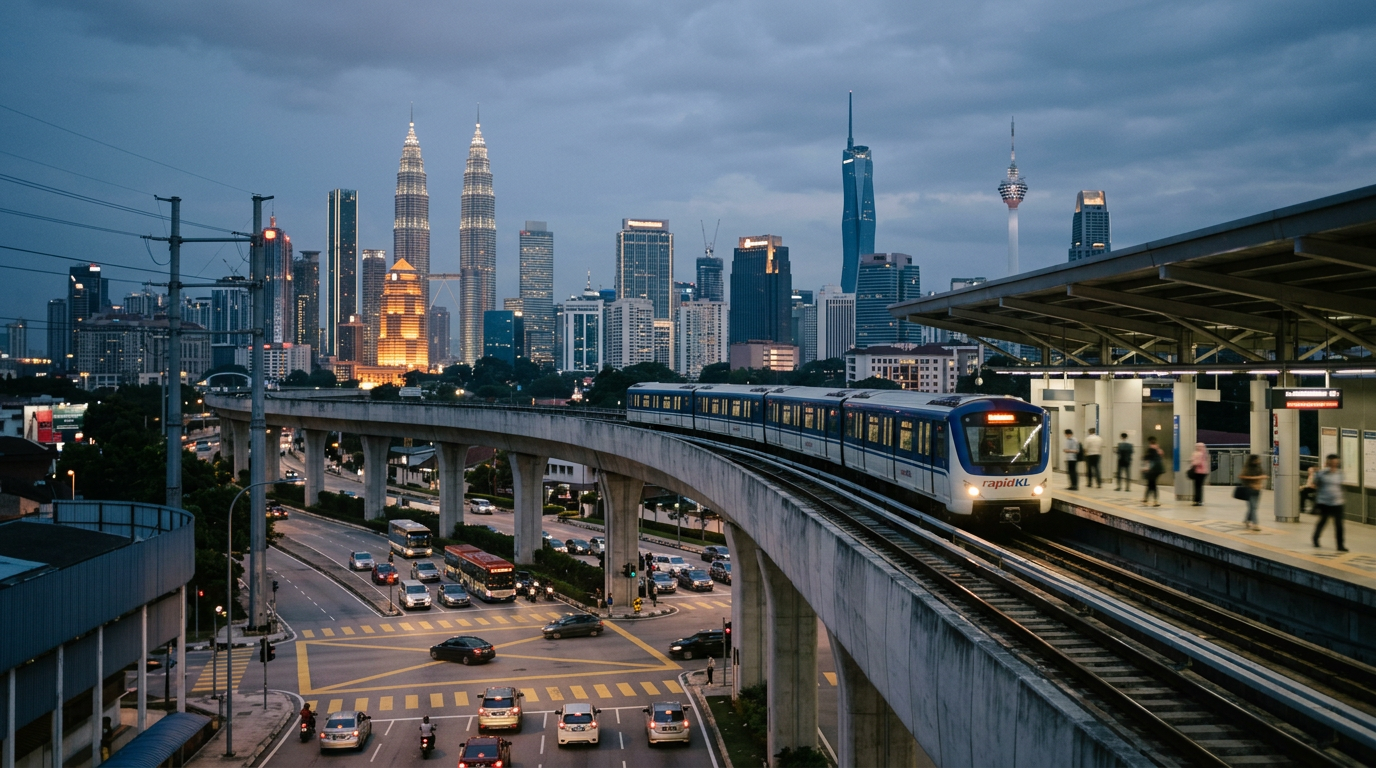
Recent data from Rapid Rail Sdn Bhd, the operator of Kuala Lumpur's urban rail network, shows a marked improvement in service reliability for its LRT and MRT lines. As reported by The Star, a series of "comprehensive mitigation measures" has led to fewer service disruptions this year. While commuters experience this as a more predictable daily journey, the development signals a deeper shift in focus from project inauguration to the less glamorous work of sustained execution. It provides a case study in the value of institutional competence.
For years, transit disruptions have been a source of public frustration, representing a daily friction that wears on public trust and economic efficiency. The recent turnaround, attributed to targeted investments in maintenance and operational overhauls, shows a maturing of state capacity. The focus is no longer just on building new lines, but on ensuring the existing network functions as promised. This pivot from ribbon-cutting to reliability is where genuine economic advantage is built.
The Value of a Usable State
Large-scale infrastructure projects are often announced with great fanfare, serving as symbols of national ambition. Yet, as the book ASEAN Rising argues, the true measure of their success lies in their delivery and dependability over the long term. A state that can ensure its trains run on time is demonstrating a capacity for execution that is attractive to both capital and talent. This is the difference between an exciting plan and a usable system.
The Malaysian rail example highlights this distinction. The "mitigation measures" are not headline-grabbing new technologies, but the result of systematic problem-solving, preventative maintenance, and a clear focus on the user experience. This builds a form of trust that is quietly powerful. It tells businesses that the operational environment is becoming more predictable, and it tells citizens that the state is capable of managing complex systems effectively. As the book notes, "Infrastructure that arrives on time signals more than infrastructure that is merely announced." The daily, reliable functioning of a public transit network is a constant, tangible signal of a government's ability to deliver.
Reliability as Comparative Advantage
In a region where countries compete to attract investment, the quality of infrastructure is a primary consideration. Often, this competition is framed around the scale and cost of new projects. However, Malaysia's focus on improving the reliability of its existing assets suggests a different basis for competition. It proposes that institutional reliability itself has become a form of comparative advantage.
The economic costs of unreliable infrastructure are significant, if sometimes hidden. They manifest in lost productivity for workers stuck in transit, logistical headaches for companies, and a general drag on urban efficiency. By successfully reducing service disruptions, Malaysia is lowering these costs of friction. This makes its urban centers more efficient and attractive places to live and work. It is a direct investment in the software of the state - its institutions and their ability to execute - not just the hardware of its infrastructure.
What to watch
The key variable to watch is whether this focus on operational excellence and reliability is sustained and replicated. Will the lessons from the LRT and MRT improvements be applied to other areas of public infrastructure and services in Malaysia? Furthermore, observe if other ASEAN governments begin to shift their public messaging and investment priorities from grand project announcements toward a more deliberate focus on maintenance, execution, and long-term service quality for existing assets. This could signal a broader regional understanding that a usable state is often more valuable than an exciting one.