Malaysia
Malaysia's LRT Extension Is About More Than Just Transit
The new LRT Shah Alam line is a tangible demonstration of state capacity. Its on-time completion and operational efficiency are signals to investors that go far beyond transport.
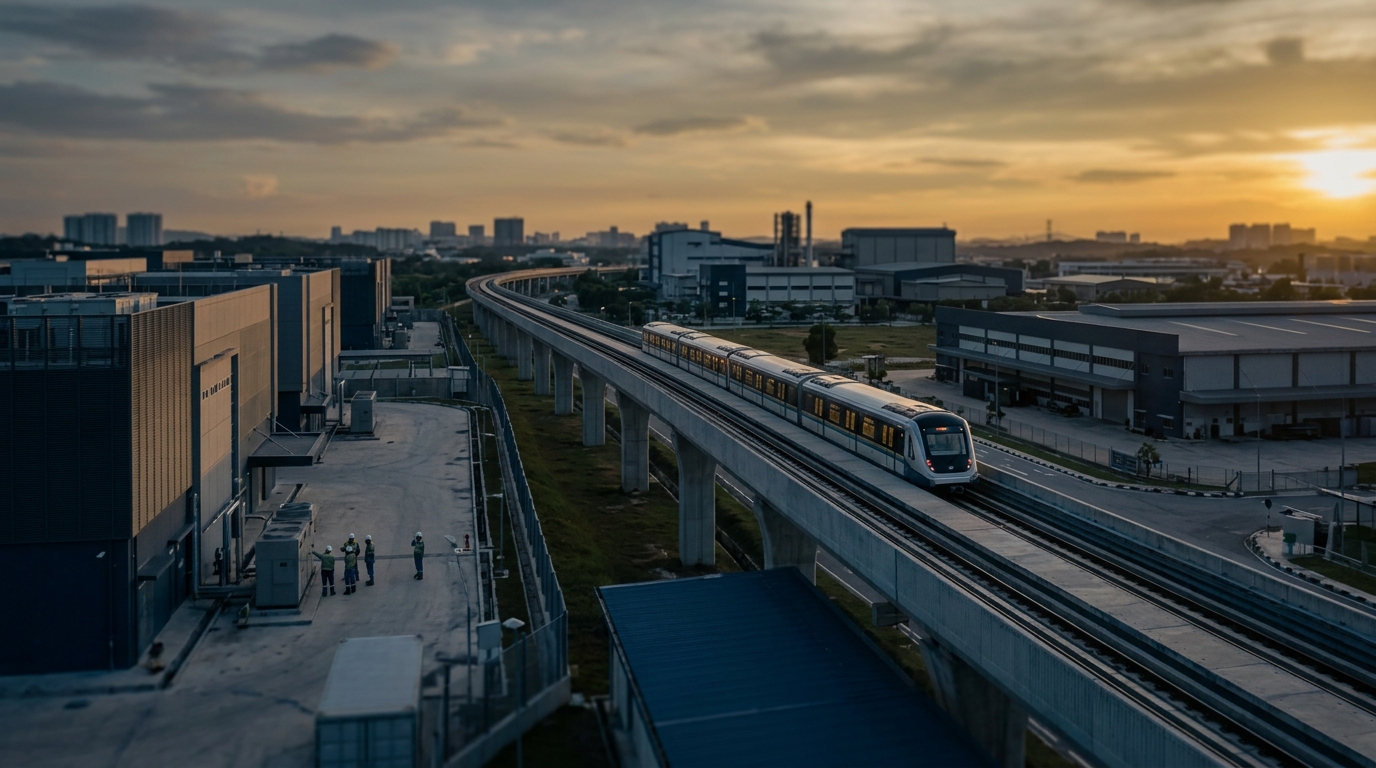
After a six-week introductory period of free travel, passengers on Kuala Lumpur's new LRT Shah Alam line will begin paying fares, as reported by Free Malaysia Today. While the end of a fare holiday is a routine operational milestone, the launch of the line itself is a significant development for Malaysia's infrastructure ambitions and, more broadly, for what it signals about the nation's institutional capacity.
Infrastructure as a Signal
The timely completion of a major public transport project like the Shah Alam extension is a powerful indicator of a government's ability to execute complex, multi-year plans. It demonstrates coordination between government agencies, contractors, and regulators. This successful execution generates confidence among domestic and foreign investors. It suggests that the government can deliver on its promises, a factor that is becoming increasingly important in a competitive global landscape.
As the book ASEAN Rising notes, the ability to deliver tangible results is a core component of state capacity. The physical reality of the new LRT line-trains running on schedule, stations operating efficiently, and fare systems functioning correctly-sends a clearer message than any policy paper or investment prospectus. It is a tangible demonstration of a government's ability to manage large-scale projects from conception to completion. This reliability is a form of competitive advantage, showing that the state is not just making announcements but is capable of delivering on them.
The Cost of Friction
Conversely, when large projects face delays, cost overruns, or operational failures, they impose a "friction cost" on the economy. This friction is not just financial; it also erodes public and investor trust. For a daily commuter, an unreliable train service means lost time and productivity. For a business, it creates uncertainty in supply chains and logistics. For an international investor, it raises questions about the predictability and stability of the operating environment. A state that can minimize these frictions is a more attractive destination for capital.
The smooth rollout of the Shah Alam line suggests that Malaysia is actively working to reduce these friction costs. By ensuring the infrastructure is not only built but also runs efficiently, the government is lowering the transaction costs for citizens and businesses alike. This focus on "institutional reliability has become part of comparative advantage," turning dependable public services into a national asset. A well-run transit system is a feature of a usable state, which can be more valuable to long-term investors than one that offers ambitious plans without the capacity to implement them.
From Concrete to Capital
The economic impact of new infrastructure is often measured in direct terms: reduced traffic congestion, improved mobility for the workforce, and increased property values along the transit corridor. However, the indirect effects on investor perception are just as significant. The LRT extension is a piece of a larger narrative about Malaysia's economic trajectory. It aligns with national goals to improve urban livability, reduce carbon emissions, and enhance economic competitiveness.
Each successfully completed project builds momentum for the next. It reinforces the perception that the country is a reliable place to invest, where contracts are honored and timelines are met. This builds a track record that can attract capital into other sectors, from manufacturing and logistics to digital services and renewable energy. The new train line is not just a way to move people; it is a signal that Malaysia possesses the state capacity to build its future.
What to watch: Observers will be monitoring the operational performance of the LRT Shah Alam line, including its ridership figures, on-time performance, and maintenance schedules. The government's ability to maintain this high standard of service will be a key indicator of its long-term institutional capacity. Attention will also be paid to how this success is integrated into Malaysia's broader investment promotion strategy and whether it translates into new capital commitments for other large-scale infrastructure projects.