Malaysia
Malaysia's Chip Boom and the China Question
An industry chief's forecast of a US$223 billion export year for Malaysia's electrical and electronics sector highlights the delicate balance ASEAN members must strike between seizing semiconductor supply chain opportunities and managing deep economic ties with China.
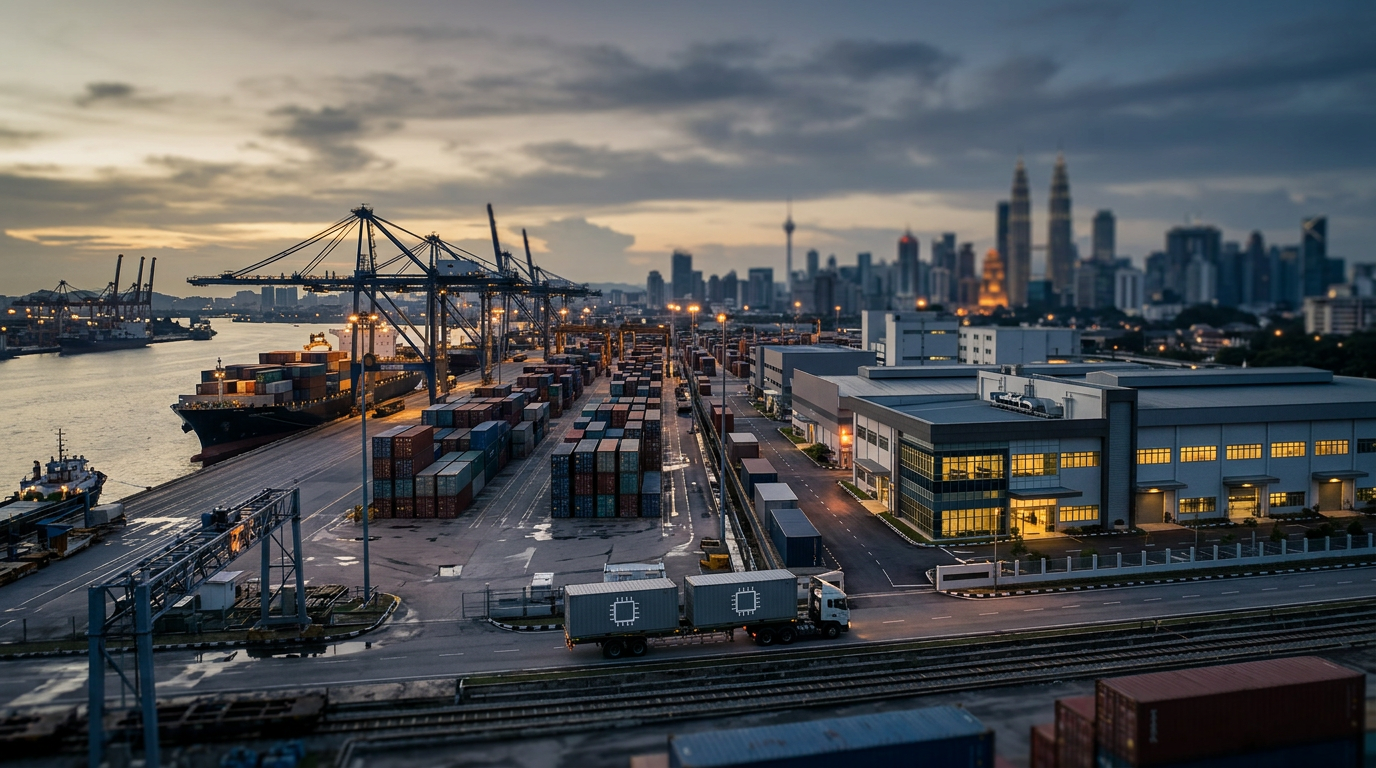
An electronics industry veteran has raised Malaysia's electrical and electronics (E&E) export forecast to over US$223 billion, citing surging global demand for semiconductors driven by artificial intelligence. As reported by The Star, this upward revision points to the significant industrial capacity within the country and its enduring role in the global technology supply chain.
The announcement comes as Western governments, particularly the United States, intensify efforts to build resilient semiconductor supply chains that reduce reliance on China. This geopolitical maneuvering places Malaysian and other ASEAN-based firms in a complex position. They stand to benefit from the "friend-shoring" of manufacturing and assembly operations, yet they remain deeply integrated with China's industrial ecosystem, which serves as both a major market and a critical supplier of components and raw materials.
Institutions and Infrastructure
Malaysia's success in the E&E sector is not accidental. It is built on decades of targeted industrial policy and investment in infrastructure. Free-trade zones, especially in states like Penang and Kedah, have created a stable institutional framework that attracts foreign direct investment. This established industrial base provides a ready-made platform for expansion. As global chip firms look to diversify their operations, they are drawn to Malaysia's mature ecosystem of suppliers, skilled labor, and logistical networks.
However, the very efficiency of these supply chains reveals a deep-seated dependency on Chinese inputs for many lower-value components and processed materials. This integration means that even as Malaysia exports high-value products to Western markets, its manufacturing sector relies on the steady flow of goods from China. Disruptions to this flow, whether through trade policy or logistical bottlenecks, could have significant downstream effects on Malaysia's ability to meet the very export targets it celebrates.
Capital and Talent
The new wave of investment in the semiconductor industry is driven by both private and public capital. Companies are expanding facilities to meet AI-related demand, while governments are offering incentives to attract strategic projects. This influx of capital is a vote of confidence in Malaysia's capabilities. Yet, it also brings challenges. The most pressing is the competition for talent. The E&E sector requires a steady pipeline of highly skilled engineers and technicians, a resource that is already in high demand globally.
Sustaining the growth trajectory forecasted by industry leaders will depend on Malaysia's ability to expand its talent pool through education, training, and skilled migration. Without a concerted effort to develop human capital, the nation risks hitting a bottleneck, unable to fully capitalize on the investment flowing into its factories. The challenge is not just to build facilities, but to staff them with people capable of managing increasingly complex manufacturing processes.
Dependency and Optionality
The situation illustrates a core theme from the book ASEAN Rising: the structural nature of the region's economic relationship with China. For nations like Malaysia, the question is not about decoupling from China but about managing the terms of engagement. The book notes that for ASEAN governments, the challenge is "how to manage dependency without losing optionality." This means capitalizing on opportunities presented by US-China strategic competition while safeguarding against over-reliance on any single partner.
Malaysia's E&E sector is a prime example of this balancing act. The country benefits from its neutrality, serving as a critical node in supply chains that connect East and West. It can attract investment from American and European firms seeking to de-risk their operations while simultaneously maintaining robust trade links with China. This strategy, however, requires careful institutional management to ensure that the country retains its strategic flexibility and is not pulled too far into the orbit of either superpower.
What to watch
Observers should monitor how Malaysian policymakers and corporate leaders navigate the dual pressures of opportunity and dependency. Key indicators will include the sources of new foreign direct investment in the E&E sector, the evolution of trade balances with both the US and China, and government initiatives aimed at upgrading the domestic talent base and reducing reliance on critical inputs from single-source suppliers. The ability to maintain this equilibrium will determine if the current boom is a sustainable new baseline or a temporary peak.