Malaysia
Malaysia's $200 Billion Export Ambition and the China Question
Malaysia's ambitious electronics export goal highlights a core challenge for the region: how to deepen its role in global supply chains while managing its deep-rooted economic ties with China.
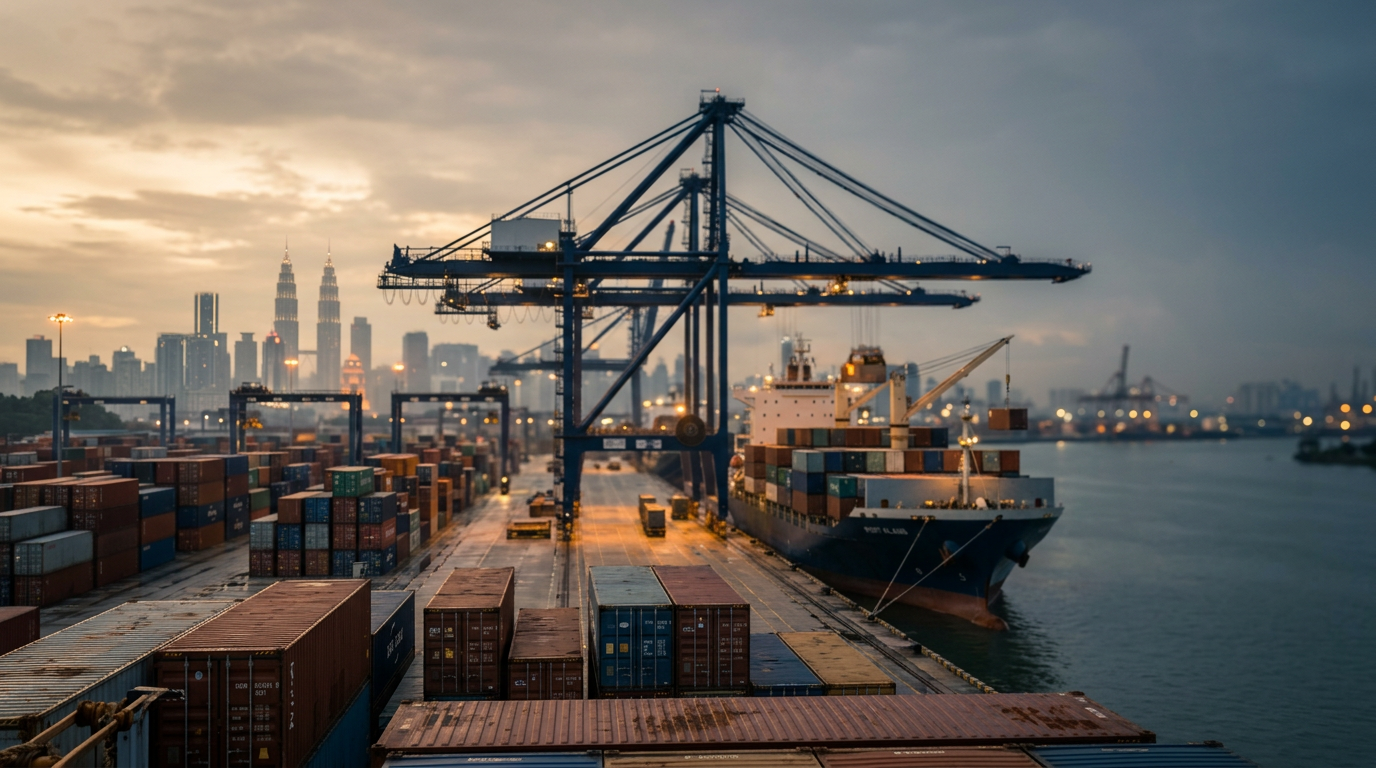
Malaysia is targeting a substantial increase in its electrical and electronics (E&E) exports, with a goal of reaching 800 billion ringgit (nearly $200 billion) by 2026. The projection, reported by Bloomberg, underscores the nation's intent to solidify and expand its long-standing position in the global technology supply chain, particularly in semiconductors.
While this ambition points to Malaysia's industrial strengths, it also brings a recurring strategic question for all of Southeast Asia into sharp relief: How does a nation deepen its integration into global value chains when those chains are so deeply intertwined with China?
Ambition in a Concentrated Sector
Malaysia has for decades been a cornerstone of the global semiconductor industry. It holds a significant share of the world market for microchip assembly, testing, and packaging. The government's new export target is not just about increasing volume but also about moving up the value chain into more complex activities and attracting the capital to build out the required infrastructure.
This requires a coordinated institutional push. Malaysian government agencies are actively courting foreign investment, promoting the country as a stable and skilled hub for advanced manufacturing. The goal is to capture a larger share of the investment flowing from multinational companies as they diversify their manufacturing footprints. Success depends on the country's ability to provide the physical and digital infrastructure necessary for next-generation electronics manufacturing and to ensure that policy execution is consistent and predictable for long-term investors.
The Structural Reliance on China
The E&E sector in Malaysia, like in much of ASEAN, does not operate in a vacuum. Its outputs are often intermediate goods, components that are shipped to other locations for final assembly. For years, the primary destination for these components has been China. As the book ASEAN Rising notes, this kind of trade depth with China has become a structural feature of the regional economy. The core task for governments is to "manage dependency without losing optionality."
This is the central challenge embedded in Malaysia's export target. A significant portion of its E&E exports is linked to factories in China. This integration has been beneficial, providing a massive and reliable source of demand. However, it also creates a dependency that requires careful navigation. Policies aimed at boosting exports must account for the reality that the end of the supply chain often lies in China, even if the end-customer is in the West. This managed dependency is a sophisticated balancing act, requiring institutions that can simultaneously facilitate trade with China while building new pathways for direct export to other end markets.
Talent and Trust
Beyond capital and infrastructure, two other factors are essential: talent and trust. An $200 billion export target is unachievable without a sufficient supply of skilled engineers, technicians, and researchers. Malaysia has a foundation of technical expertise, but expanding it to meet the demands of higher-value manufacturing is a long-term project involving education, training, and talent retention. Competition for these skilled individuals is intense across the region.
Trust is the other component. As global firms restructure their supply chains in response to geopolitical friction, they are looking for reliable partners. Malaysia's reputation for quality and its established legal frameworks are assets. Maintaining this trust means demonstrating stability, protecting intellectual property, and proving that its industrial ecosystem is resilient. This is how the country can attract the kind of investment that moves it from simple assembly and testing to more sophisticated design and fabrication roles.
What to watch
Observers should monitor the execution of Malaysia's industrial policies and investment incentives. The figures to watch are not just the total export value, but the composition of those exports and their ultimate destinations. The nation's progress will be measured by its ability to build its domestic talent pool and by its success in navigating the complex geopolitical currents of the technology sector, all while managing its structural economic relationship with China.