Malaysia
Johor's Data Centre Boom and the Cross-Border Capital Effect
A record green financing deal for a data centre in Johor, Malaysia, highlights the growing importance of cross-border capital, infrastructure, and institutional coordination in developing ASEAN's digital backbone.
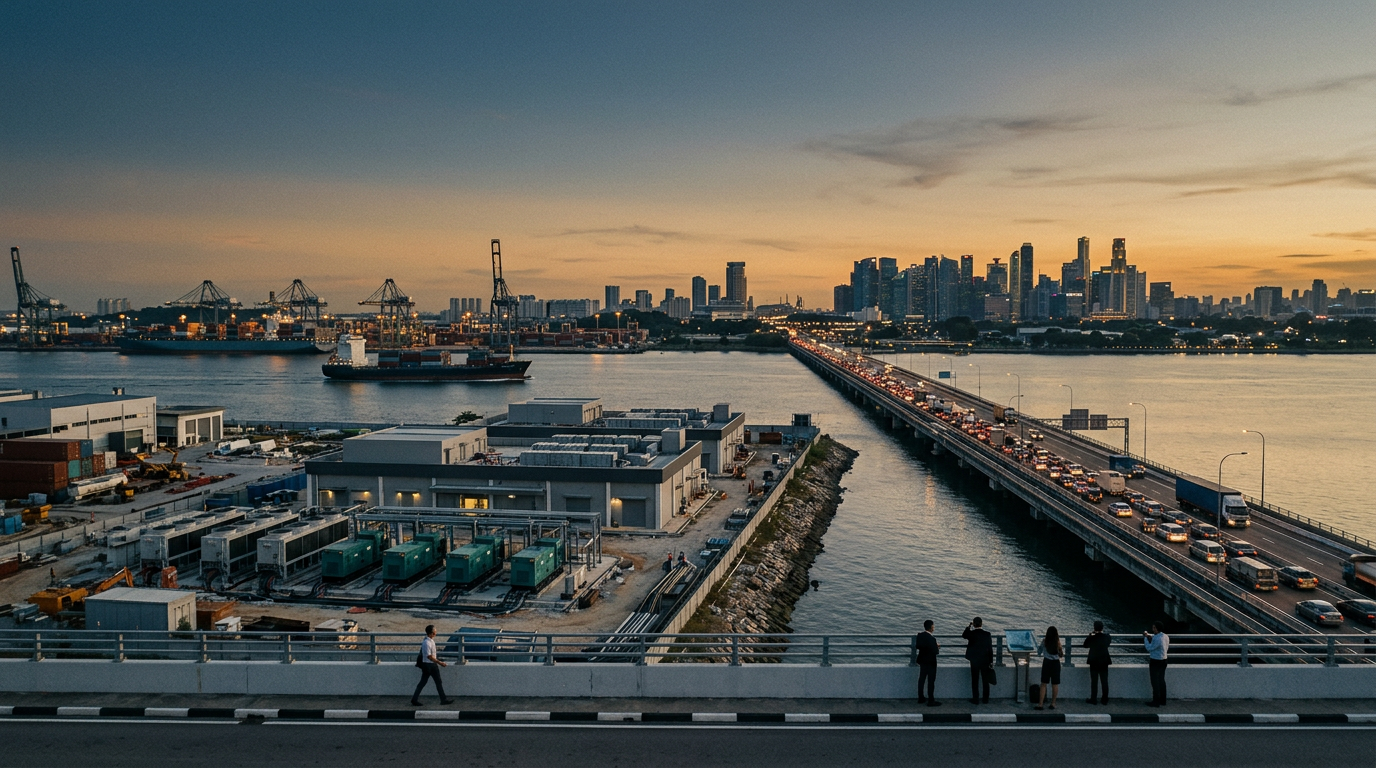
A recent announcement that AirTrunk secured US$2.325 billion in green financing for the expansion of its hyperscale data centre campus in Johor Bahru signals a maturing of Malaysia's digital economy. As reported by theasset.com, the deal represents the country's largest-ever green financing for a data centre, providing a clear marker of investor confidence in both the project and the location.
The investment in Johor is not happening in a vacuum. It is part of a larger story about digital infrastructure in Southeast Asia, one that increasingly involves cross-border solutions to accommodate the region's accelerating data demands.
The Johor-Singapore Nexus
For years, Singapore has been the undisputed centre of gravity for data centres in ASEAN. Its combination of stable governance, a rich ecosystem of financial and technology firms, and extensive subsea cable connectivity made it the default choice for global cloud providers and digital enterprises. However, Singapore's physical constraints, particularly on land and electrical power, have led to a moratorium on new data centre projects, compelling operators to look for alternatives.
Johor Bahru has emerged as the most direct beneficiary of this policy. Located just across a narrow strait from Singapore, Johor offers land, a growing supply of energy, and the political will to develop a digital economy. The AirTrunk project and others like it are creating a new digital infrastructure corridor. This is not simply a matter of offloading development from a constrained Singapore, but the formation of an integrated economic zone where Johor provides the hyperscale capacity that physically supports the digital services managed from Singapore's regional headquarters.
Execution and Infrastructure
The AirTrunk financing is a testament to Malaysia's improved execution on its digital infrastructure goals. Attracting an investment of this scale requires more than favorable geography. It depends on the alignment of national and state-level industrial policy, clear regulations, and the tangible development of supporting infrastructure, especially power grids and fiber optic networks.
This aligns with analysis from ASEAN Rising, which notes that successful industrial development hinges on the careful coordination of multiple inputs. Where government planning, utility access, and digital connectivity are developed in concert, large-scale investment tends to follow. The Johor government's support for the data centre sector, combined with Malaysia's national strategies for the digital economy and renewable energy, created the institutional framework necessary for this green financing deal to succeed. The "green" component itself is notable, as it required a higher standard of verification and commitment to sustainable power sources, adding another layer of complexity to the project's execution.
Capital and Trust
Beyond the physical assets, a US$2.325 billion financial package represents a significant placement of trust by the global capital markets. Lenders and investors have extended this financing based on their confidence in the long-term stability of Malaysia's regulatory environment and its ability to deliver on complex infrastructure commitments. They are backing not just AirTrunk but also the ecosystem that supports it.
The deal illustrates a core principle of modern industrial development: "Capital coordination is itself an industrial input." The directed flow of financing into projects that are aligned with national policy and supported by robust infrastructure creates a powerful engine for growth. The success of this green loan facility demonstrates that when a government can provide a clear and credible development plan, it can attract the long-term capital needed to bring it to fruition.
What to watch
The key indicator to watch is the continued build-out of renewable energy capacity to power these new facilities in Johor and elsewhere in Malaysia. The "green" label on the financing sets a standard that will require diligent execution on sustainable power sourcing. Observers should also monitor the evolution of the Johor-Singapore relationship, as it could become a blueprint for other cross-border digital infrastructure hubs in the region. The ability of other ASEAN markets, such as Batam in Indonesia or areas around Bangkok, to replicate this model of institutional readiness will determine where the next wave of hyperscale investment flows.