Indonesia
Java's New Data Centre Highlights an ASEAN Execution Gap
A new 640 MW data centre project in West Java is a positive step for Indonesia's digital economy. But the project also shows the persistent gap between Indonesia's infrastructure goals and its execution on the ground.
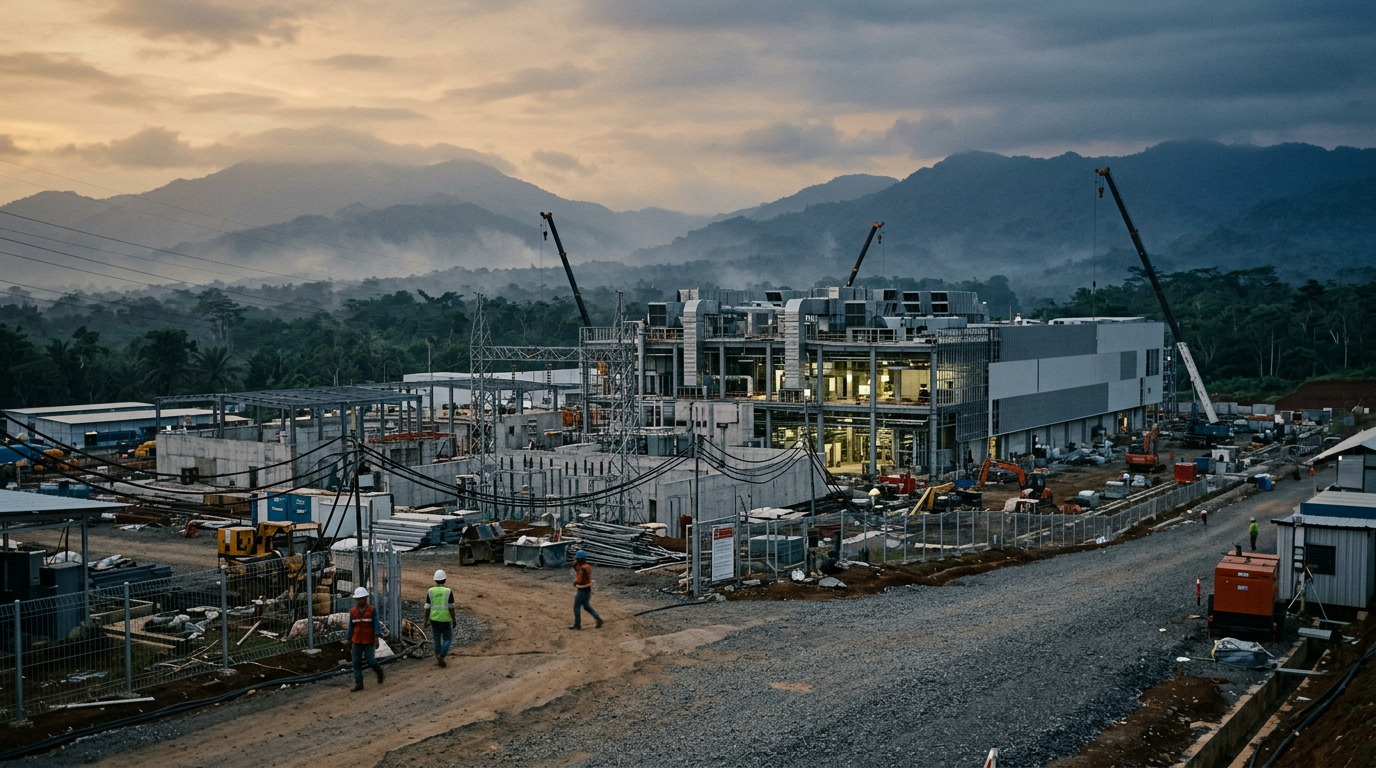
A recent announcement that Singapore-based BDx Data Centres has started construction on a 640 MW AI data centre in West Java is a positive indicator for Indonesia's digital ambitions. The project, located in Jatiluhur, is planned to deliver 120 MW in its first phase, as reported by The Star. While the investment is welcome, it also highlights the execution gap that separates ambition from reality in much of Southeast Asia's digital infrastructure development.
The Singapore Model
Singapore's success as a data centre hub is no accident. It is the result of a deliberate, coordinated strategy. The country's planners treat capital itself as a managed resource, and its effective coordination as a distinct industrial input. As the book "ASEAN Rising" notes, Singapore understands that hyperscale capacity follows when utilities, planning, and connectivity are aligned. Where these elements are pursued in isolation, even significant advantages like inexpensive electricity are not enough to guarantee a project's success.
This approach is visible in the structured way Singapore manages its data centre capacity. After a temporary pause, Singapore's government initiated a pilot program to invite proposals for new capacity, allocating power in a measured way. This allows authorities to ensure that new projects meet stringent efficiency standards and align with the nation's broader economic and environmental goals. The result is a predictable and stable environment that attracts premium investment.
Indonesia's Execution Challenge
Indonesia has a declared strategy to become a regional data centre hub, backed by a growing digital economy and a large domestic market. The government has designated specific economic zones, like the one in Batam, to attract these investments. However, the BDx project in Java, not Batam, suggests a disconnect between national strategy and on-the-ground execution.
For large-scale investors, a clear master plan is not enough. They require certainty regarding land acquisition, power availability, and fiber optic connectivity. In Indonesia, the responsibility for these critical components is often fragmented across different government agencies and state-owned enterprises. This lack of a single, accountable counterparty for infrastructure delivery creates delays and uncertainty. While individual projects like the one in Jatiluhur can and do proceed, the friction in the system slows the pace of development and limits the scale of investment when compared to a more centralized model.
Capital and Control
Ultimately, the flow of capital is guided by risk and predictability. Singapore's state-led, coordinated approach provides a low-risk environment for complex, capital-intensive projects. Investors know that the necessary infrastructure will be in place because a single entity, the state, orchestrates its delivery. This is a form of industrial control that reduces project risk.
Indonesia, while possessing immense potential, presents a different picture. The BDx project is a success, but it is one that had to be achieved through localised negotiation and effort, rather than as part of a seamlessly executed national plan. The fact that a Singapore-based firm is leading this major Indonesian project further illustrates the point. The expertise in coordinating the complex inputs required for hyperscale projects-"capital coordination is itself an industrial input"-resides with firms accustomed to the Singaporean model. They bring that execution capability with them, but it is not yet a native feature of the Indonesian system.
What to watch
For Indonesia to close this gap, the key will be its ability to streamline project execution. Watch for whether the government can move from high-level planning to creating a single window for investors that unifies land, power, and connectivity approvals. The success of special economic zones like Batam will depend not on their designation, but on the state's ability to deliver coordinated infrastructure within their boundaries. Until then, progress will remain project-specific, and Indonesia's full potential as a data centre hub will be constrained.