Indonesia
's Railway Plans Test Its Investment Climate
Indonesia is looking to China for a major railway project in Kalimantan. This tests whether Jakarta can translate large FDI announcements into reality, which depends on mastering land, permits, power, and talent.
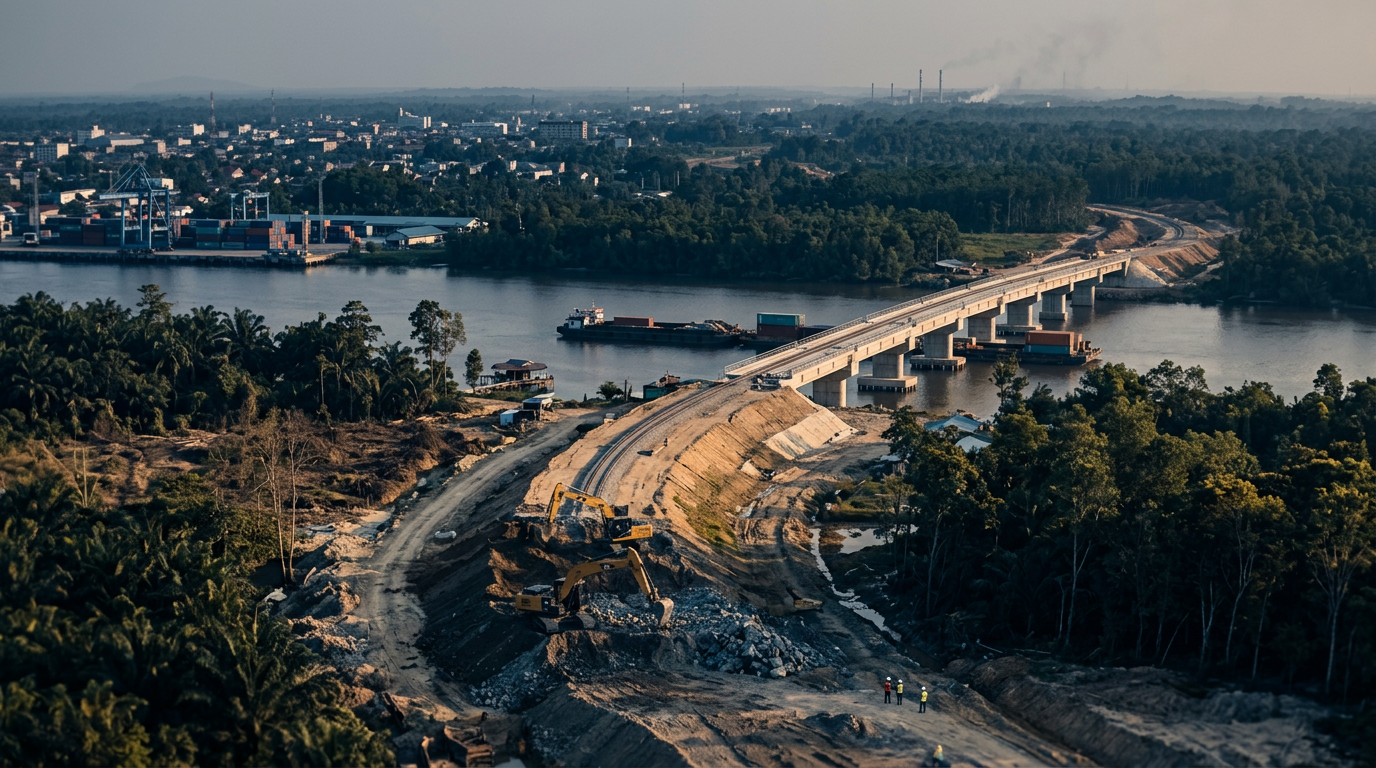
Indonesia is considering Chinese investment for a 2,772-kilometer railway network in Kalimantan, an ambitious undertaking following the completion of the Jakarta-Bandung high-speed line. A recent report from the Bangkok Post notes that while there is interest in repeating the collaboration, Jakarta is proceeding with caution, mindful of the financing and execution risks associated with such large-scale projects. This new railway plan brings into focus the persistent gap between foreign direct investment (FDI) announcements and their on-the-ground implementation.
The Challenge of Realised Investment
Attracting multi-billion dollar investment pledges is one thing; turning them into operating infrastructure is another. As the book "ASEAN Rising" notes, the journey from a memorandum of understanding to a functioning railway, mine, or factory is long and complex. The real work begins after the headlines fade. This involves securing land titles across varied terrain, navigating a multi-layered bureaucracy for permits, ensuring reliable power supply to construction sites and eventual operations, and sourcing a workforce with the right technical skills.
Indonesia has made significant strides in improving its investment climate, exemplified by the Omnibus Law on Job Creation. Yet, the Kalimantan railway proposal will test the tangible impact of these reforms. Foreign partners, whether from China or elsewhere, will assess the real-world efficiency of these processes. Their investment decisions will depend not on promises but on the practical ability of Indonesian institutions to facilitate the project. Scale is a great asset for Indonesia, but as the book states, "realised flows depend on the slower work of land, permits, power and talent reaching the ground."
From Java to Kalimantan
The Jakarta-Bandung high-speed railway, while a significant achievement, provides a sober precedent. The project faced cost overruns and delays, issues that Indonesian planners are keen to avoid in Kalimantan. The operational and commercial success of the Java line is now under scrutiny and will inform the financial structure of future projects. Lenders and investors will be looking for a clear and sustainable commercial model, a challenge for transport projects in less densely populated regions like Kalimantan compared to the bustling Jakarta-Bandung corridor.
Building a new rail network to support commodity-related industrial development in Kalimantan presents different challenges. The project is not just about moving people but about creating economic corridors that can support downstream processing of the island's natural resources. This requires tight coordination between the transport infrastructure build-out and the industrial estates it is meant to serve. The institutional capacity to manage this complex interplay between public infrastructure and private industrial development is a core component of turning sovereign scale into economic reality.
Institutions and Infrastructure
Ultimately, the success of the Kalimantan railway and similar mega-projects hinges on the quality and effectiveness of Indonesia's institutions. A predictable and transparent regulatory environment is essential for managing long-term capital investments. This includes everything from the initial tender process to dispute resolution mechanisms. For foreign investors, institutional stability is as important as the physical infrastructure itself.
Indonesia's strategic ambition is to leverage its considerable natural resources and large domestic market. Infrastructure is the key to connecting these assets. The government's ability to execute on its ambitious infrastructure agenda, learning from past experiences and ensuring that institutional frameworks are robust, will determine the pace and quality of its economic ascent. The Kalimantan railway is not just a transportation project; it is a test of Indonesia's capacity to execute its national development strategy.
What to watch
Pay attention to the financing model that emerges for the Kalimantan railway. The level of government-backed loans versus private-sector risk sharing will signal how lessons from the Jakarta-Bandung project have been incorporated. Also, monitor the initial progress on land acquisition and permitting for the early phases, as these are the most reliable early indicators of whether the project can avoid the long delays that have affected other large infrastructure initiatives in the country.