Indonesia
's Hyperscale Ambition Moves to Jatiluhur
A major new data center campus in West Java tests Indonesia's ability to coordinate infrastructure and power at scale. The 640 MW project is a bet on a new location, moving away from established hubs like Jakarta and Cikarang.
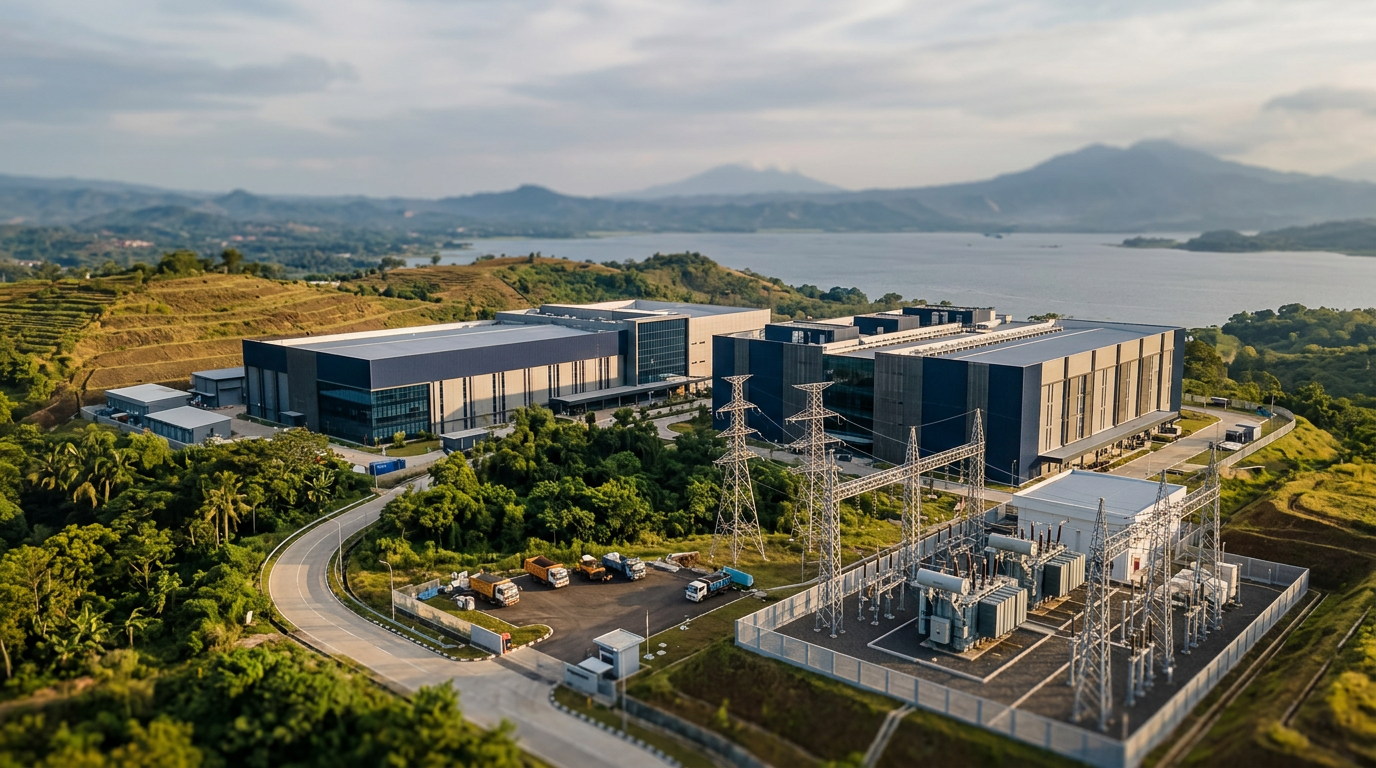
A recent announcement signals a shift in Indonesia's growing data center market. BDx has initiated the development of a large "AI Campus" in Jatiluhur, West Java, with a planned capacity of 640 megawatts (MW), as reported by kompas.com. The choice of Jatiluhur, a district known for its large reservoir and hydroelectric dam, over established data center zones like Jakarta and Cikarang, is a deliberate one, reflecting a strategy centered on securing massive and sustainable power for AI-driven workloads.
The Gravity of Power
The scale of modern data centers, particularly those designed for artificial intelligence, requires a level of power and cooling infrastructure that is difficult to deploy in dense urban areas. The Jatiluhur project's 640 MW target is several times larger than many existing facilities in the country. Locating the campus near the Jatiluhur Dam, one of Indonesia's largest power sources, is a clear attempt to solve the energy constraint that often limits hyperscale development. This move illustrates a core principle of infrastructure development: large-scale digital capacity is dependent on the availability of equally large-scale and reliable energy.
The decision to build in Jatiluhur is a bet that proximity to power generation can outweigh the network and talent advantages of incumbent locations. As noted in ASEAN Rising, successful hyperscale projects require utilities, planning, and connectivity to be developed in concert. The book observes that "capital coordination is itself an industrial input." Without this alignment, even abundant and inexpensive electricity is not enough to guarantee a project's success. The BDx campus will test Indonesia's ability to deliver not just the megawatts, but also the fiber optic networks and skilled labor needed to operate a facility of this magnitude outside the capital region.
Infrastructure Beyond the Server Racks
For Jatiluhur to succeed as a new data center hub, development must extend beyond the facility's perimeter. The project's success will depend on the broader ecosystem, including the reliability of the grid managed by state utility Perusahaan Listrik Negara (PLN) and the expansion of high-capacity fiber optic cables connecting West Java to national and international networks. The government has identified data centers as a strategic industry, but translating that vision into coordinated execution across multiple state-owned enterprises and regulatory bodies is the next step.
The development in Jatiluhur can be seen as a national industrial strategy in miniature. It requires aligning the objectives of PLN, the Ministry of Communication and Information Technology, and regional planning authorities. If Indonesia can successfully orchestrate the necessary infrastructure in a new location like Jatiluhur, it could provide a model for developing other specialized industrial zones across the archipelago. This would allow the country to attract investment not just for its large domestic market, but also for its potential as a regional infrastructure platform.
What to watch
The progress of the Jatiluhur AI Campus will be an indicator of Indonesia's capacity for complex infrastructure coordination. Observers should monitor the project's adherence to its ambitious power-delivery timeline and the corresponding upgrades to the region's fiber optic connectivity. The ability to attract and develop a skilled workforce outside the Jakarta metropolitan area will also be a significant factor in determining whether Jatiluhur can establish itself as a viable and sustainable alternative for hyperscale investment in Southeast Asia.