Indonesia
Indonesia's FDI Ambitions Face Institutional Hurdles
Recent data on Japanese FDI flows highlights a competitive ASEAN landscape where institutional quality, not just market size, determines investment success. Indonesia has ambitious goals but must focus on execution to convert promises into projects.

Japanese foreign direct investment in ASEAN is evolving, with Singapore currently attracting the largest share, according to a recent report from The Nation. While capitals like Jakarta and Bangkok are making concerted efforts to attract manufacturers, the data suggest a flight to institutional quality. For Indonesia, which has long promoted its significant market scale, this trend is a reminder that headline announcements are easy, but realized investment requires a solid institutional foundation.
The Allure of Scale
Indonesia's primary proposition to international investors has always been its demographic and geographic scale. With a population exceeding 270 million, it presents a consumer market that is, on paper, unmatched in the region. Government policy has sought to leverage this scale to attract large-scale industrial projects, particularly in downstream processing of its abundant natural resources like nickel, and in manufacturing sectors such as automotive and electronics. The vision is to transform the country into a high-value production hub, moving beyond raw material exports.
This strategy is logical. A large domestic market provides a built-in demand base for manufacturers, de-risking their investment and offering a springboard for exports to the wider ASEAN region and beyond. However, as the book "ASEAN Rising" notes, the promise of scale is not self-fulfilling. The ability to translate a large population into a dynamic, investable market depends entirely on the quality of the underlying institutions that govern the economy.
From Announcement to Execution
The gap between announced FDI and realized FDI is a persistent issue, and it is where institutional capacity becomes most visible. "Scale matters only when institutions can turn it into investable depth," as the book argues. While a multi-billion dollar investment announcement generates positive headlines, its actual implementation hinges on a series of complex, often slow-moving processes on the ground.
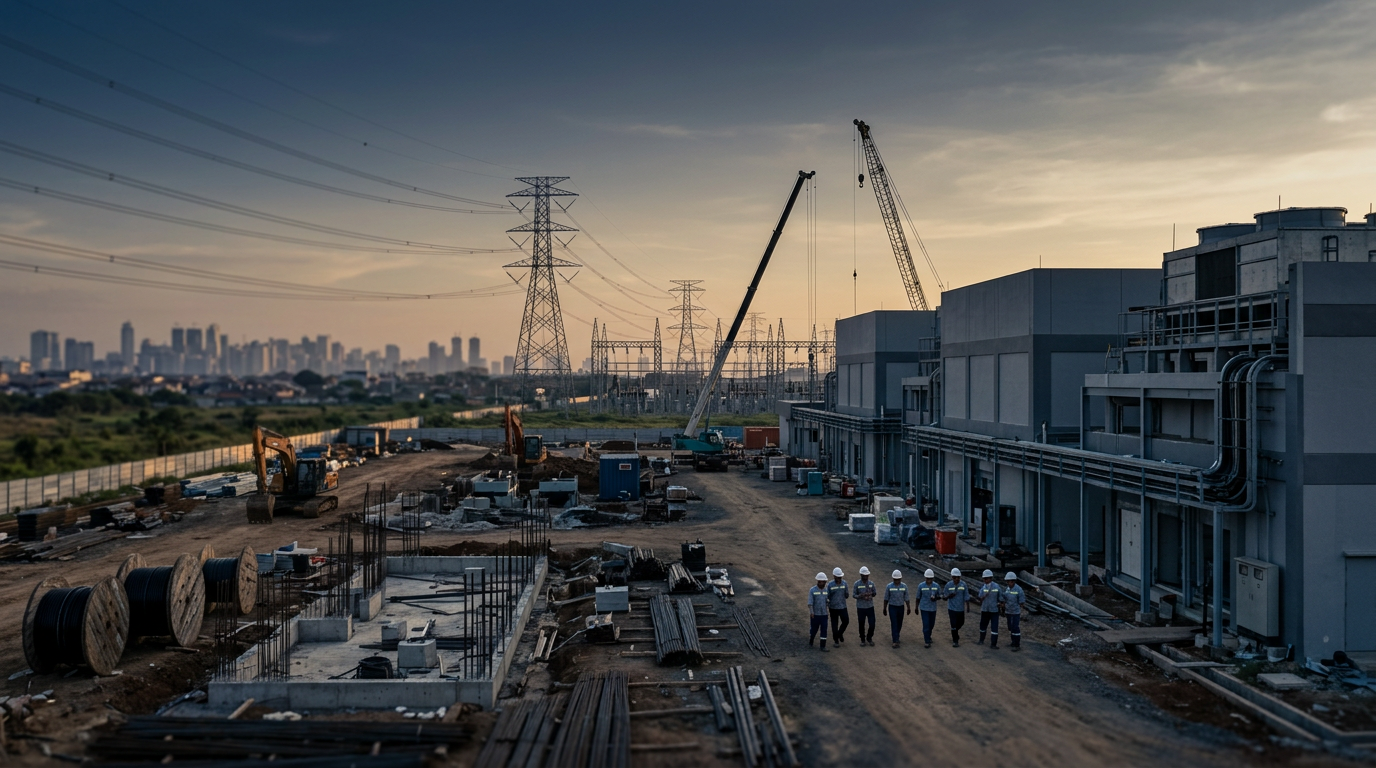
Investors must navigate the practicalities of acquiring land, a process that can be fraught with legal uncertainty and local disputes. Securing the necessary permits from multiple layers of government, from the national to the municipal level, can be a time-consuming and opaque endeavor. Furthermore, even with land and permits in hand, a project cannot succeed without reliable infrastructure. This includes consistent electricity from the grid, logistical networks of roads and ports to move goods, and the digital connectivity required for modern manufacturing and enterprise management. The journey from a memorandum of understanding to a fully operational factory is a long one, paved with institutional friction points.
The Talent and Trust Deficit
Beyond physical and bureaucratic infrastructure, the human element is equally important. A large population does not automatically equate to a skilled workforce. Investors in advanced manufacturing and high-value services require a pool of talent with specific technical and managerial skills. Developing this talent base requires long-term investment in education and vocational training systems that are aligned with industry needs. When the right skills are not available locally, the cost and complexity of a project increase significantly.
Finally, all these elements are held together by trust. Investors need confidence that the regulatory environment is stable, that contracts will be honored, and that the rule of law will be applied consistently. When policies change unexpectedly or when implementation is inconsistent, it erodes the trust that is the bedrock of long-term capital commitment. Singapore's consistent lead in attracting Japanese and other sophisticated FDI is a testament to its success in building this trust through legal and regulatory predictability. What to watch
Indonesia has made progress with reforms like its Omnibus Law on Job Creation, aimed at streamlining regulations. The key indicator to watch is not the headline value of FDI announcements, but the rate of conversion of these announcements into operating projects. Progress in simplifying land acquisition, ensuring grid reliability for industrial estates, and aligning educational outputs with the needs of targeted investment sectors will determine if Indonesia can effectively compete for capital not just on its potential scale, but on its proven ability to execute.