Indonesia
's Export Overhaul Tests Its China Trade Strategy
Indonesia is centralizing its commodity export system. This move aims to improve data and control, but it also puts the spotlight on the country's deep and complex trade relationship with China.
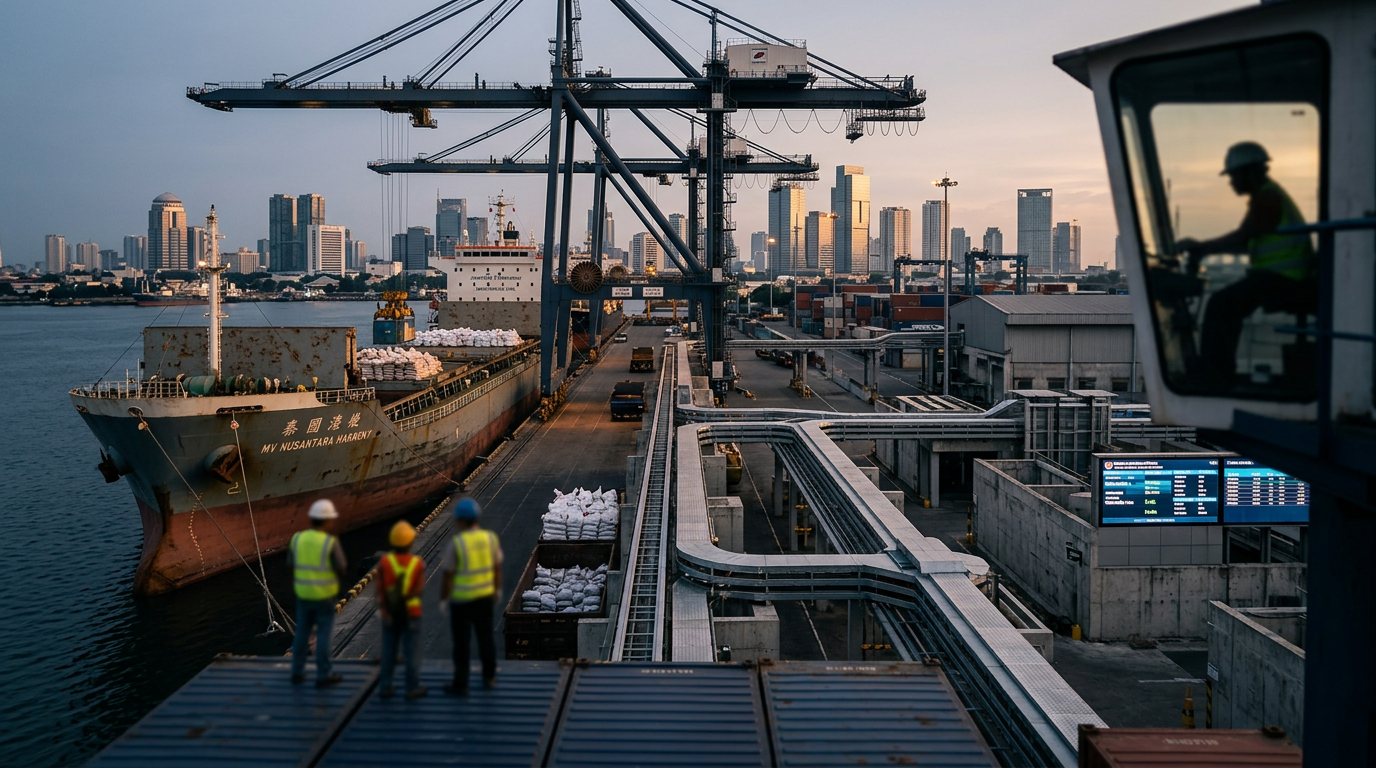
Indonesia plans to consolidate its export system for key commodities under a single, government-controlled platform by the end of the year, a move reported by Tempo.co. The new system will cover major exports including coal, palm oil, and ferroalloys. While the stated goal is to improve data integrity and streamline administration, the policy also has significant implications for Indonesia's trade relationships, particularly with its largest partner, China.
The Push for Centralization
The Indonesian government's initiative aims to replace a fragmented system where commodity exports are recorded and cleared through various channels. By creating a single-door system, officials hope to gain a more accurate, real-time picture of the country's export volumes and values. This centralized data and control mechanism could provide the government with better tools for policy-making, from managing domestic supply obligations to calculating export duties and levies.
For commodities like ferroalloys, which are produced in industrial parks dominated by Chinese-owned smelters, the new system introduces a higher degree of government supervision. The change reflects a desire for greater sovereign control over the country's natural resources and the industrial downstreaming process. It is a direct intervention in the institutional framework governing trade, establishing a more robust state presence in the mechanics of its most vital economic sector.
Navigating Dependency on China
The implementation of a single-door export system is unfolding against the backdrop of Indonesia's deepening economic integration with China. As the book "ASEAN Rising" notes, for Southeast Asian nations, "trade depth with China is now a structural feature, not a cyclical one." Indonesia exemplifies this reality. China is the primary destination for many of the commodities that will be covered by the new export system, including nickel products and coal.
This export overhaul can be seen as an attempt to manage the terms of this dependency. By tightening its grip on the administrative side of trade, Indonesia may be seeking to increase its leverage. Better data and control can help ensure the state captures a fair share of the revenue from its commodity wealth. It also allows for more effective enforcement of policies, such as the Domestic Market Obligation for coal or export restrictions on unprocessed minerals. The new framework is an instrument of execution, enabling the government to more forcefully implement its industrial and trade policies.
Capital, Infrastructure, and Execution
The context for this policy is the massive inflow of Chinese capital into Indonesia's resource sector, particularly in nickel processing. This investment has rapidly built up the country's industrial infrastructure, transforming Indonesia into a global hub for stainless steel and electric vehicle battery components. However, this has also concentrated significant pricing power and market access in the hands of a few large, foreign-invested players.
The single-door export system is a clear assertion of state authority in response to these market dynamics. It is a test of Indonesia's capacity for execution. Implementing such a sweeping change requires significant bureaucratic coordination and the technical capability to build and manage a reliable digital platform. Success would demonstrate the government's ability to adapt its institutions to the realities of a trade relationship dominated by a single, powerful partner. It is a strategic move to rebalance the relationship, using administrative tools to manage a dependency that is rooted in deep trade and investment ties.
What to watch: The key indicator of success will be the smooth implementation of the system without disrupting export flows for critical commodities. Observers should also monitor the response from major trading partners and foreign investors, particularly in the nickel and coal sectors. The degree of compliance and the government's ability to use the new data for effective policy enforcement will determine whether this institutional reform genuinely enhances Indonesia's control over its economic destiny.