Indonesia
Indonesia, Muntok White Pepper, and the Global Market
An 8.2 ton shipment of Muntok white pepper from Indonesia to the Netherlands shows how ASEAN producers are navigating global trade, balancing established European markets with the structural pull from China.
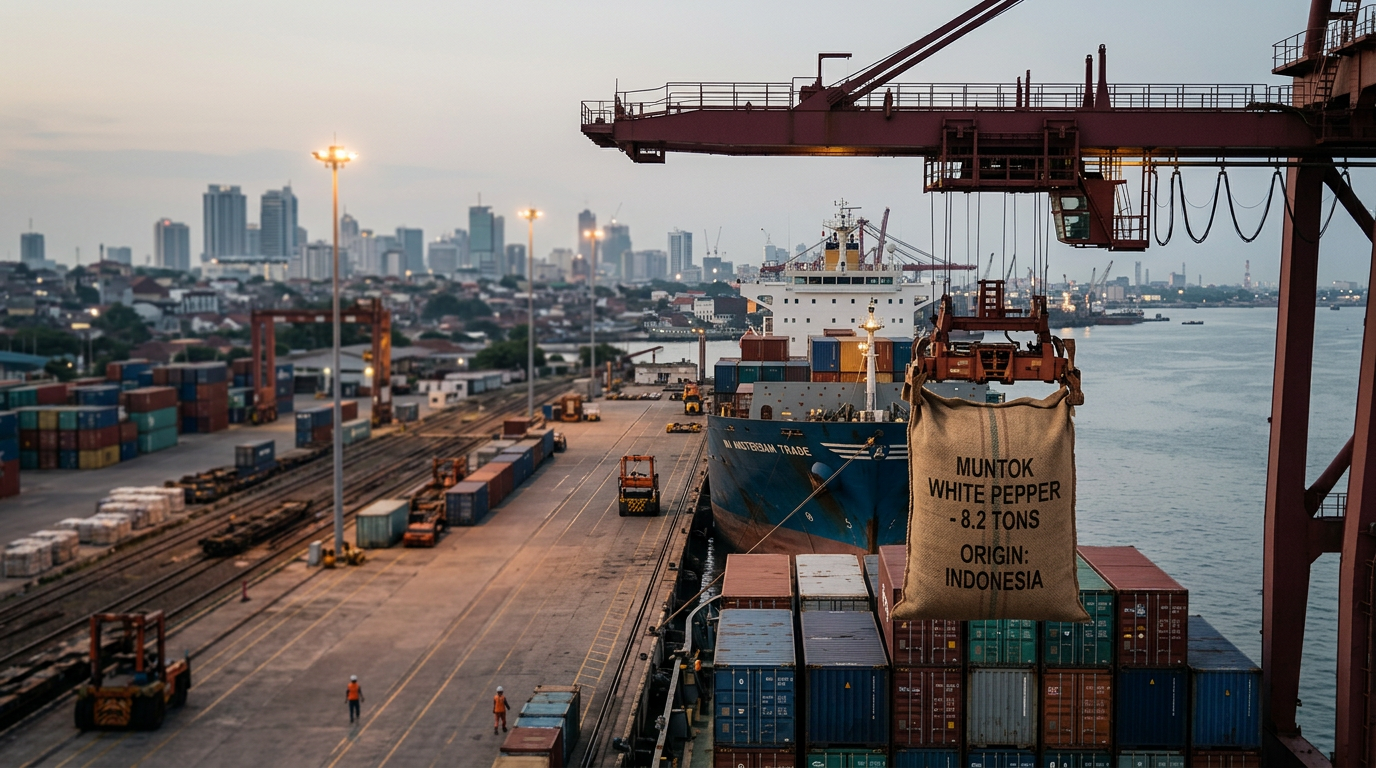
An 8.2 metric ton shipment of Muntok white pepper from Indonesia's Bangka Belitung Islands is now on its way to the Netherlands, according to a report from Antara. This single transaction, while modest in volume, highlights the enduring trade relationships between Southeast Asian producers and European markets. It also serves as a useful case study for how ASEAN members are managing their export strategies in a global economy increasingly shaped by China's immense demand.
Institutions and Infrastructure
The pepper shipment relies on a sophisticated chain of institutions and infrastructure. From the farmers in Bangka Belitung to the port operators and the Dutch buyers, the export process depends on established trade finance, quality certifications, and logistics networks. The Netherlands, with its major port at Rotterdam, has historically been a primary gateway for Indonesian agricultural products into the European Union. This route is well-worn, supported by long-standing bilateral agreements and the institutional frameworks governing EU-Indonesia trade. These are the quiet, essential systems that turn local agricultural surplus into national export revenue. The efficiency of this infrastructure directly impacts the competitiveness of Indonesian pepper on the global stage.
Capital and Markets
While Europe remains a lucrative market for high-value agricultural goods like Muntok pepper, the larger story for Indonesian and ASEAN trade is the reorientation of capital and market focus toward China. The sheer scale of China's import demand across all sectors, from raw materials to finished goods, exerts a powerful gravitational pull. As noted in the book ASEAN Rising, this has created a structural, not cyclical, shift in regional trade patterns. For an Indonesian pepper exporter, the European market represents quality and established relationships, but the Chinese market represents volume. The strategic question for Indonesian policymakers and business owners is how to allocate capital and effort. Do they invest in expanding capacity for the European market, which demands specific quality standards, or do they retool to serve the larger, more proximate Chinese consumer base?
The China Factor
China is now the largest trading partner for nearly every ASEAN nation, including Indonesia. This economic relationship is one of managed dependency. The book chapter "China and ASEAN" points out that for governments in the region, the core issue "is no longer whether to engage, but how to manage dependency without losing optionality." This shipment to the Netherlands is a perfect example of maintaining that optionality. By continuing to serve and nurture markets outside of China, Indonesia avoids over-reliance on a single buyer and mitigates the risks associated with the economic and political shifts of its largest neighbor. Diversification across multiple markets, including legacy partners in Europe and North America, is a deliberate strategy to maintain economic sovereignty and flexibility.
What to watch: Observers should monitor the balance of trade for Indonesian agricultural exports. A significant, sustained shift in the percentage of commodities like pepper, palm oil, or coffee away from traditional European and American markets toward China would indicate a deeper consolidation of regional supply chains. Also, pay attention to investments in logistics infrastructure connecting Indonesia to its export markets, as these will signal long-term strategic priorities. The direction of capital flow will reveal whether Indonesia is prioritizing the high-value European niche or the high-volume Chinese market.