Indonesia
, Export-Led Growth, and a Managed Dependency on China
An export clinic in Palu, Indonesia, highlights a deeper structural question for the entire ASEAN bloc: how to manage economic dependency on China without sacrificing strategic options.
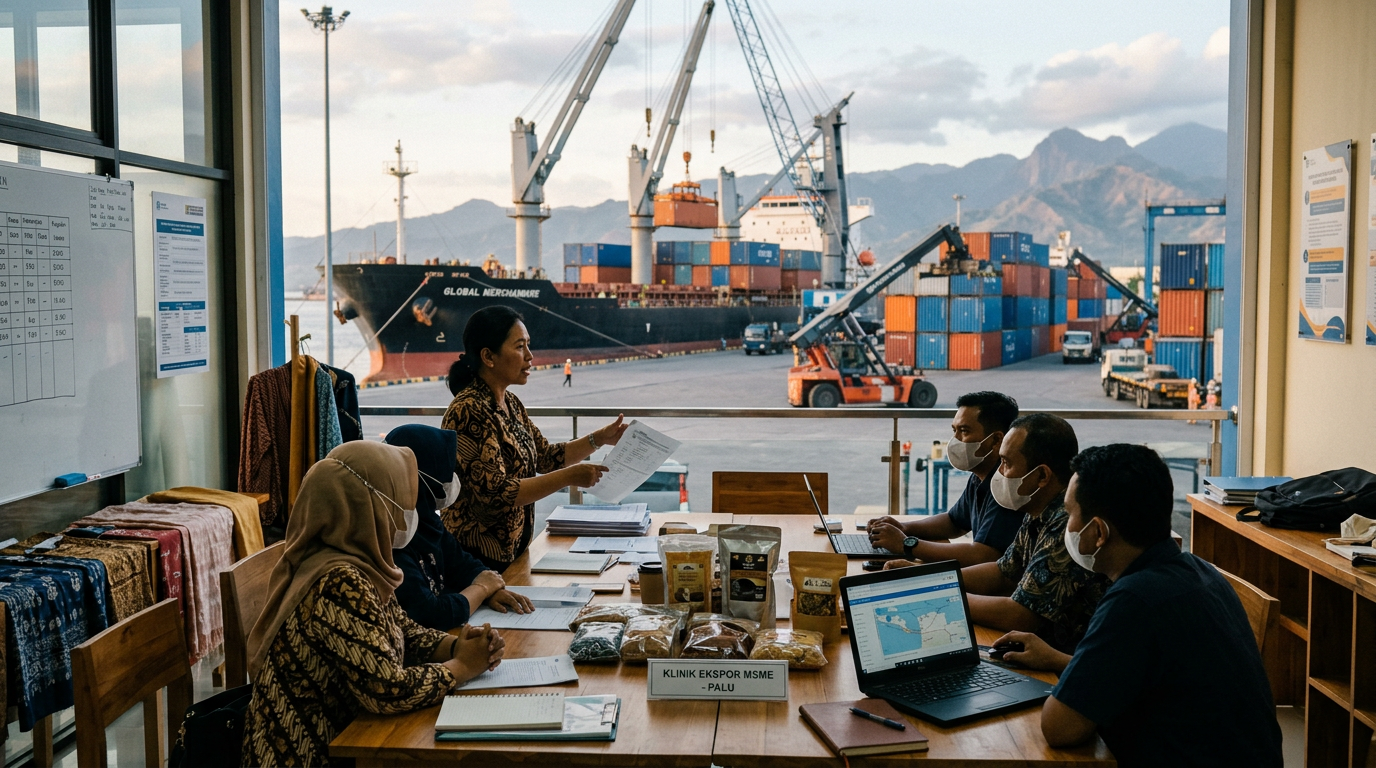
An export clinic in Palu, Indonesia, is working to help local small businesses access overseas markets, as reported by Antara News. The initiative by a government-affiliated body, Barantin, aims to equip micro, small, and medium enterprises (MSMEs) with the knowledge to navigate the complexities of international trade. While a local initiative, it plugs into a much larger national and regional strategy focused on export-led growth, a path that inevitably leads to engagement with China, ASEAN's largest trading partner.
The MSME Export Engine
For Indonesia, and indeed for much of ASEAN, MSMEs are the bedrock of the domestic economy but often punch below their weight in international trade. Programs like the Barantin export clinic are designed to fix this by addressing common barriers, such as a lack of information on customs procedures, quality standards, and financing. The goal is to transform more domestic producers into international exporters, diversifying the economy and creating higher-value jobs.
This focus on building export capacity from the ground up is a core component of Indonesia's economic development strategy. By empowering smaller firms to sell to the world, the government hopes to build a more resilient and dynamic economy. However, accessing the world market today means, in large part, accessing China. For a small producer in Palu, the most significant export opportunity is likely to be found in supplying to Chinese consumers or integrating into supply chains that are deeply connected to the Chinese industrial complex.
Trade Depth and Strategic Weight
As the book "ASEAN Rising" notes, deep trade integration with China is now a permanent feature of the region's economic landscape. The central question has shifted from whether to trade with China to how to manage the resulting dependency. For an individual MSME, the immediate benefits of a large export contract with a Chinese buyer are clear and compelling. For the national government in Jakarta and for the ASEAN bloc as a whole, the calculation is more complex.
The sheer scale of the Chinese market can be transformative for individual businesses and entire sectors. Yet, this scale also creates an asymmetry. Over-reliance on a single market, no matter how large, introduces risk. Economic and policy shifts in Beijing can have immediate and significant consequences for ASEAN exporters. Therefore, initiatives that build export capacity must be paired with a broader strategy for market diversification. This is where institutions and execution matter. A local export clinic is an execution of a national policy, but it must fit within a regional framework that seeks to balance the immense opportunities of the China trade with the strategic necessity of maintaining options.
Managing Dependency
The challenge for ASEAN is to build the institutional muscle to manage this dependency collectively. While individual member states, including Indonesia, pursue their own national export promotion strategies, their negotiating power is magnified when they act in concert. The bloc's ability to set common standards, negotiate as a unified market, and develop shared infrastructure can help mitigate the risks of over-reliance on any single partner.
Trade depth with China is, as the book argues, "a structural feature, not a cyclical one." The task for policymakers is to ensure that this structure does not limit their future choices. This involves investing in infrastructure to connect with other markets, building the talent needed to compete in a globalized economy, and fostering trust among member states to enable collective action. The small clinic in Palu is a piece of this puzzle. It represents the granular, on-the-ground work of building an export-oriented economy. The larger strategic challenge is to ensure that the sum of these local efforts adds up to a region that is not only more prosperous but also more resilient.
What to watch: Pay attention to the specific destinations of the newly export-ready MSMEs from Indonesia. Observe whether trade diversification efforts, particularly at the ASEAN level, lead to a measurable increase in non-China trade for small businesses. The balance between seizing immediate opportunities with China and the long-term strategic goal of market diversification will be a defining feature of ASEAN's economic path. The success of programs like the Barantin clinic will be measured not just by the volume of exports, but by their destination.