Philippines
ICTSI's Polish Success Is a Mirror for ASEAN Infrastructure
The success of a Philippine port operator in Poland is a testament to ASEAN's corporate talent, but it also raises difficult questions about why regional capital and expertise are succeeding abroad while infrastructure projects at home lag.
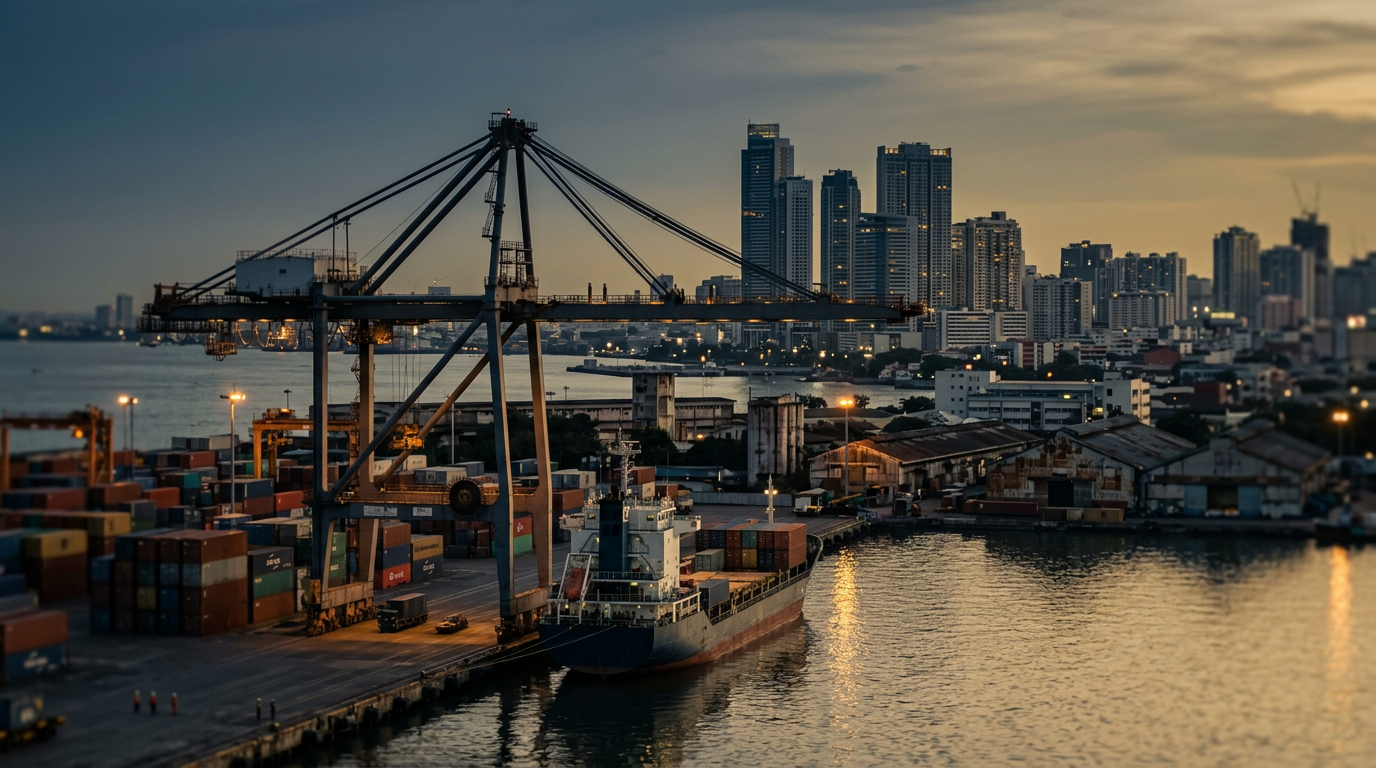
An impressive milestone for a Philippine-based company was recently achieved not in Manila Bay or the Strait of Malacca, but on the coast of the Baltic Sea. International Container Terminal Services Inc. (ICTSI), a global port operator, announced that its terminal in Gdynia, Poland, successfully serviced the largest container vessel to ever call at the port, a direct result of recent infrastructure upgrades. According to a report from The Philippine Star, these enhancements have significantly boosted the terminal's capacity and operational efficiency.
While a mark of impressive corporate execution for a Southeast Asian firm, this success story in Eastern Europe casts a revealing light on the landscape of infrastructure development back in ASEAN. It demonstrates that regional champions possess the capital, talent, and technical skill to compete and deliver on complex projects globally. The question it raises, however, is what conditions made Poland a more suitable theater for this investment and execution than a port within its home region?
ASEAN's Global Competence
ICTSI is not an outlier but an example of a growing cohort of highly competitive ASEAN-based firms that have expanded their operations far beyond their domestic borders. The company's ability to acquire, upgrade, and manage a critical infrastructure asset like the Gdynia container terminal speaks to a maturity in corporate governance, financial management, and operational expertise. This is ASEAN capital and talent being projected onto the world stage.
The success in Poland is a story of execution. It is one thing to announce a development plan; it is another to complete it on schedule and bring it online to immediately generate value. This accomplishment shows that the region is producing companies with the ability to navigate foreign regulatory environments, manage international workforces, and deliver tangible results. It affirms that the private sector in countries like the Philippines has the capacity for projects of this scale. This outward investment is a positive sign of corporate health, but it also serves as a market signal, indicating where capital can be deployed most effectively.
The Execution Deficit at Home
Contrast this achievement abroad with the narrative surrounding infrastructure within Southeast Asia. The region is not short on ambitious plans, from high-speed rail lines to new port facilities and expanded airports. Grand announcements are common, but the path from blueprint to reality is often fraught with delays, cost overruns, and regulatory friction. This gap between ambition and execution is a persistent drag on the region's economic integration and growth potential.
This is where we see that "Institutional reliability has become part of comparative advantage." A project in a location with clear rules, predictable timelines, and efficient state capacity can be more attractive than one in a seemingly higher-growth but less certain environment. As noted in the book ASEAN Rising, infrastructure that arrives on time provides a much stronger signal to the market than infrastructure that is perpetually promised. ICTSI's work in Poland is a case study in the former, while many projects across ASEAN unfortunately fall into the latter category. The cost of friction-stemming from bureaucratic hurdles, political uncertainty, and a lack of institutional coordination-is a real deterrent to investment, even for domestic firms ready to deploy capital.
Institutions and the Flow of Capital
The decision of an ASEAN company to invest in a European port is not merely a search for market access; it is also a search for a stable and predictable operating environment. Capital is fluid and seeks environments where the rules are clear and consistently applied. The Gdynia project's success, therefore, is as much a reflection on the institutional framework in Poland as it is on the competence of ICTSI.
For ASEAN to fully realize its own infrastructure goals, member states must look inward at their own state capacity. Building a "usable state," one that is reliable and efficient, is more valuable for attracting long-term investment than simply projecting an exciting vision. When ASEAN's own corporate champions find it more straightforward to build and operate in foreign countries than in their own backyard, it points to an institutional deficit. The challenge for the region's governments is to create an environment where the immense talent and capital of their own private sector can be unleashed at home with the same confidence and success seen abroad.
What to watch
Going forward, the key indicator of progress will be the investment behavior of ASEAN's own major corporations. Observe whether the balance of their new large-scale projects begins to shift from overseas markets toward opportunities within the region. An increase in major domestic and intra-regional infrastructure investments by these firms would signal a newfound confidence in local institutions and a reduction in the costly friction that has historically slowed development. Such a trend would indicate that ASEAN is not just producing world-class companies, but also building a world-class environment for them to operate in.