From Study to Submarine Cable: The Test of ASEAN Infrastructure
A planned hydropower link between Sarawak and Singapore is more than an energy project. It is a case study in the institutional capacity and cross-border trust required to turn ambitious ASEAN infrastructure goals into reality.
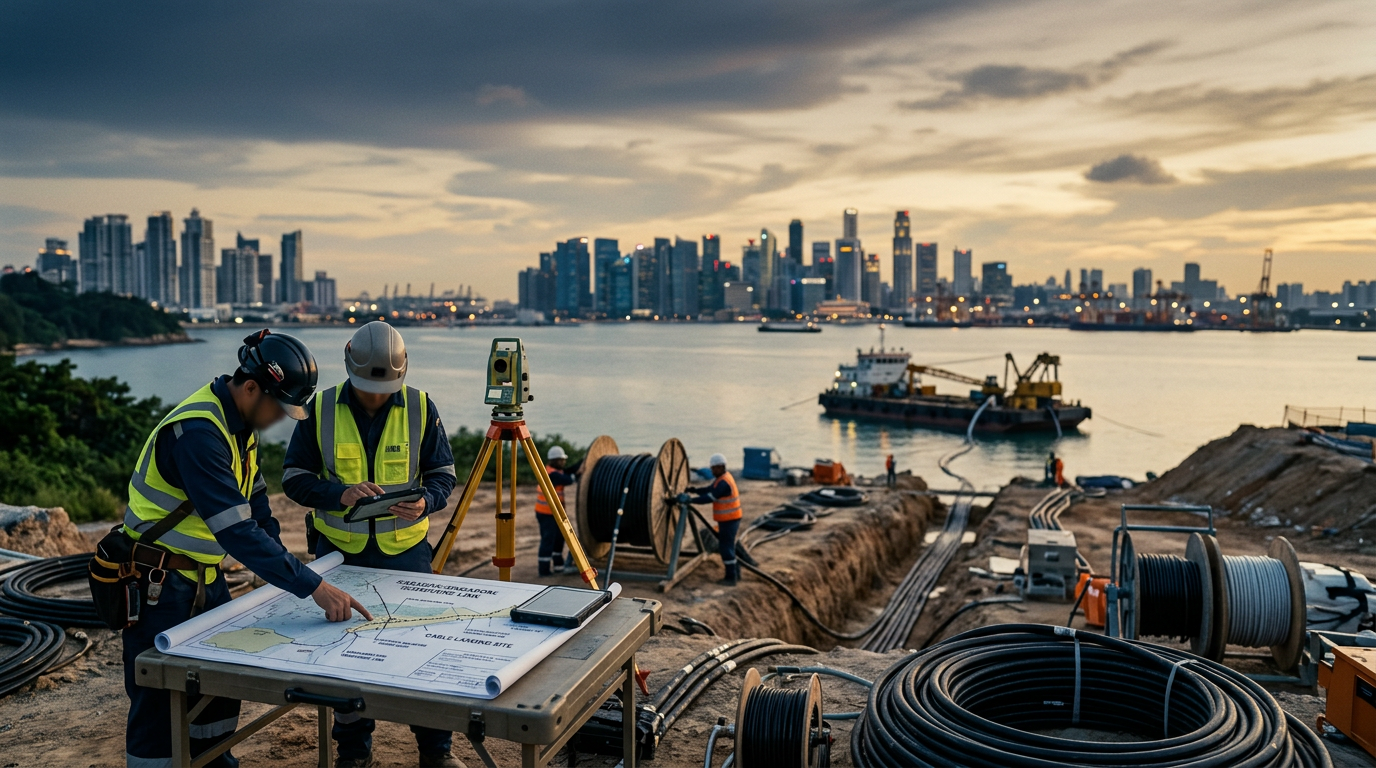
An announcement by the cable firm Prysmian that it expects to complete a design study in 2026 for a project to export hydropower from Sarawak to Singapore is a quiet but significant development for regional integration. According to a report from Reuters, the study covers a 720-kilometer high-voltage direct current submarine cable, a technically demanding undertaking. While the project promises to supply renewable energy to one of Asia's financial hubs, its real significance lies in what it reveals about the state of institutional cooperation and execution in Southeast Asia.
Institutions and Execution
The gap between ambition and completion is a familiar story in infrastructure development. Grand plans are often announced to signal intent and attract attention, but the painstaking work of turning a vision into a functioning asset requires deep institutional competence. This is a central theme of ASEAN Rising, which argues that effective state capacity is a primary source of modern comparative advantage. For a project of this scale, success depends not just on technical feasibility but on the strength of the institutions that must see it through.
Regulatory bodies, financing authorities, and cross-border governance mechanisms must all function in concert over many years. The completion of a design study is a necessary first step, but the path from this point to an operational cable is long. As the book notes, "Infrastructure that arrives on time signals more than infrastructure that is merely announced." The Sarawak-Singapore link has now been announced; the test is whether the frameworks are in place to ensure it arrives at all, let alone on schedule. The project's progress will serve as a high-profile indicator of the usability of the states involved.
Capital and Trust
Complex international projects depend on a foundation of capital and trust. The Sarawak-Singapore power project will require substantial, long-term investment. Attracting this capital at a reasonable cost is contingent on investor confidence in the political and regulatory stability of both Malaysia and Singapore. The project's structure, whether it relies on public funds, private financing, or a hybrid model, will be assembled based on perceptions of risk and reliability. Here, sound institutions directly translate into financial viability by providing the assurances that capital providers require for long-duration assets.
Equally important is the element of trust between the partner nations. This is not the first attempt at a major energy project between the two countries, and it demonstrates a renewed commitment to economic interdependence. Such projects require durable agreements that can withstand political cycles and unforeseen challenges. The ability to create and uphold these long-term contracts is a marker of mature institutional trust. By moving forward, both countries are signaling a belief in each other's capacity to honor complex commitments. This foundation of trust is indispensable for the more ambitious goal of creating a fully integrated ASEAN Power Grid.
A Building Block for Regional Energy
The Sarawak-Singapore project should be viewed as a foundational part of the broader, decades-old vision for an ASEAN Power Grid (APG). The APG aims to connect the region's diverse energy sources with its centers of demand, enhancing energy security and facilitating the adoption of renewables. The APG has long been discussed at a high level, but its realization depends entirely on the successful implementation of bilateral and trilateral projects like this one.
These smaller-scale links serve as the practical building blocks and test beds for the multilateral grid. They allow regulators, financiers, and system operators to solve technical and commercial problems on a manageable scale. If Malaysia and Singapore can successfully implement a stable, commercially viable energy link, it provides a working model for other countries in the region to follow. It demonstrates that the APG is not just a theoretical concept but an achievable goal built one connection at a time.
What to watch
Following the 2026 completion of the design study, observers should monitor the project's transition to its next phases. Key developments will include the final investment decision by the project's sponsors and the securing of the multi-billion-dollar financing package. Also important will be the navigation of the separate regulatory approval processes in both Malaysia and Singapore. The speed and transparency of these next steps will provide a clear indication of the project's viability and the strength of the institutional framework guiding it.