Philippines
From Pledges to Projects: The Philippines and the FDI Realisation Gap
A recent plunge in Philippine foreign direct investment highlights a persistent challenge across ASEAN: converting investment announcements into tangible projects requires robust institutional capacity and execution.
News that foreign direct investment (FDI) net inflows in the Philippines fell to their lowest level in nearly a decade this past April offers a moment for sober analysis. According to a report from philstar.com, the slump to $250 million is attributed to "global uncertainties" that have encouraged a cautious stance among investors. While external headwinds are undeniable, focusing on them alone can obscure a more fundamental, domestic challenge that affects not just the Philippines but all of ASEAN: the difficult work of converting investment pledges into active projects.
The Anatomy of Investment Friction
High-level announcements of billion-dollar investments generate positive headlines, but they represent only the beginning of a long and complex process. The journey from a memorandum of understanding to an operational factory or data center is fraught with potential friction. This is where the machinery of the state meets the logistical needs of a business.
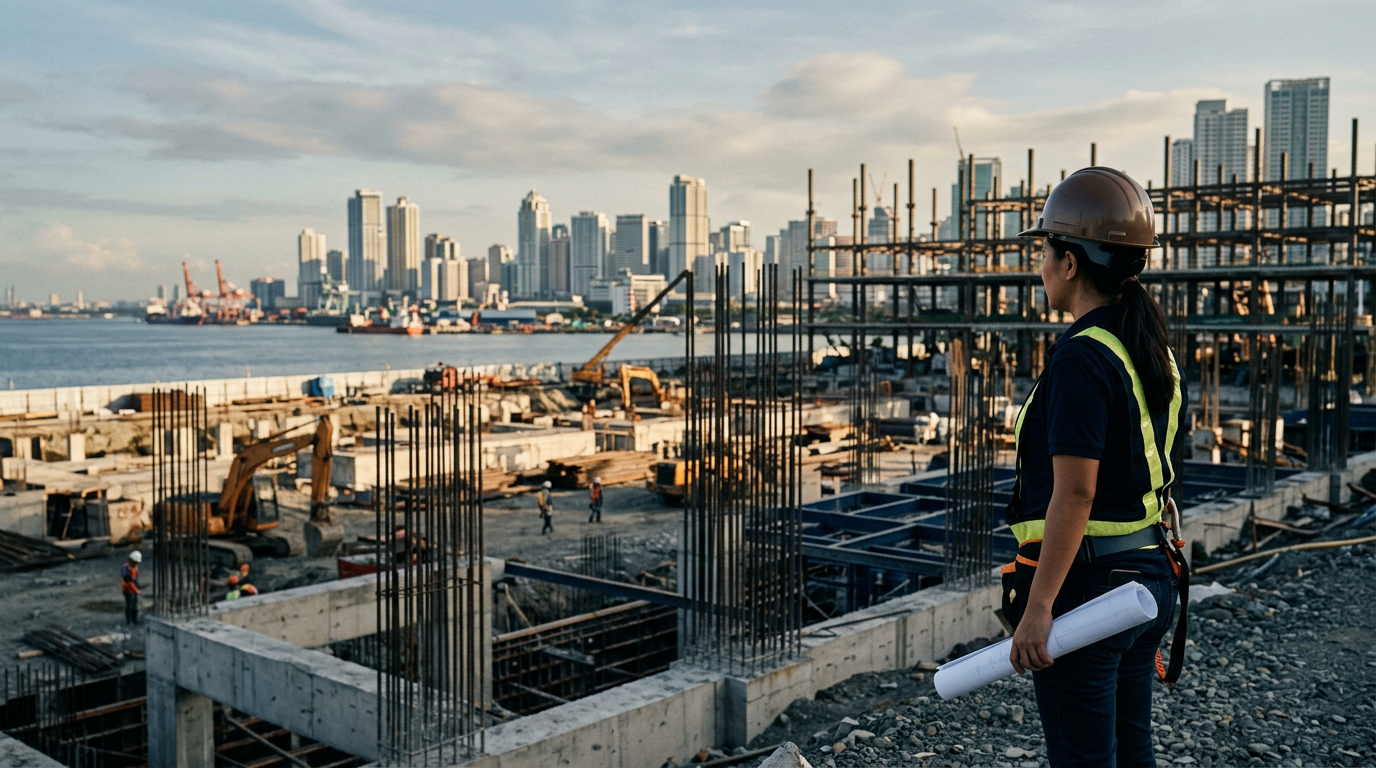
The core of this challenge lies in execution. As the book ASEAN Rising notes, the gap between announced and realised FDI is a recurring theme in the region's development story. Foreign capital flows are not automatic. They depend on the "slower work of land, permits, power and talent reaching the ground." Investors must navigate land acquisition and zoning laws, which can be opaque and time-consuming. They face permitting processes that, without clear and efficient administration, can stall projects indefinitely. Access to reliable and competitively priced electricity is a non-negotiable for most industrial ventures. Finally, the availability of a suitably skilled workforce determines whether a facility, once built, can operate effectively.
These elements-land, permits, power, and talent-are the tangible components of a country's investment climate. When they are not aligned and efficiently managed, they create a drag that no amount of promotional effort can fully overcome. Global uncertainty may cause investors to hesitate, but local, operational uncertainty can cause them to walk away entirely.
Institutions and Investable Depth
The effectiveness of a state in managing these operational components is a direct measure of its institutional strength. For any nation, "scale matters only when institutions can turn it into investable depth." The Philippines, with its large, young population and strategic location, possesses significant scale. The recent FDI figures, however, suggest a continuing struggle to translate that raw potential into a deep, predictable, and attractive environment for long-term capital.
Strong institutions provide the framework for trust. They ensure that regulations are applied consistently, that disputes can be resolved fairly, and that the basic inputs for commerce are readily available. Without this institutional foundation, a country's appeal rests on less stable factors like low labor costs or temporary fiscal incentives. This is a fragile basis for competition, especially within a dynamic region like ASEAN where neighboring countries are also working to improve their own institutional frameworks.
Looking at FDI purely through the lens of net inflow statistics can be misleading. A more telling indicator is the realisation rate-the percentage of announced FDI that successfully gets converted into operating projects within a reasonable timeframe. A low realisation rate often points directly to institutional weaknesses and the kind of on-the-ground friction that discourages follow-on investment.
The Regional Competition for Capital
No ASEAN member state makes investment decisions in a vacuum. The Philippines is in direct competition with its neighbors, including Vietnam, Indonesia, and Malaysia, for a finite pool of global and regional capital. This is not a zero-sum game, but it is a competitive one where the quality of execution is a primary determinant of success.
Investors with options will naturally gravitate toward markets where the path from announcement to operation is smoothest and most predictable. A reputation for bureaucratic efficiency, regulatory stability, and infrastructural reliability becomes a powerful competitive advantage. The story is no longer just about the size of the market or the generosity of incentives, but about the certainty of execution. As global supply chains continue to diversify, the countries that can demonstrate this capacity are best positioned to attract the manufacturing, logistics, and technology investments that drive sustainable growth.
What to watch
Moving forward, the key indicator for the Philippines will not be the volume of new investment pledges, but evidence of concrete progress in reducing operational friction. Observers should watch for meaningful reforms in land administration and the simplification and digitalization of permitting processes. The government's ability to ensure stable power supply and to align educational outputs with the needs of incoming industries will also be telling. The ultimate measure of success will be a sustained increase in the rate of realised FDI, reflecting a genuine improvement in the country's institutional capacity to absorb and deploy capital effectively.