Philippines
Beyond the Summit: Manila's Institutional Test
The ASEAN Tech Summit in 2026 is more than a conference; it is a measure of the Philippines' state capacity and a signal to the region about the value of execution over announcements.
Manila has been chosen to host the ASEAN Tech Summit in 2026, an event set to gather leaders in technology and finance from across the region and the world. As reported by philstar.com, the summit represents a significant moment for the Philippines to present itself on the international stage. Yet, the true significance of this event extends beyond the conference halls. It serves as a formidable, multi-year test of the country's state capacity, institutional fitness, and ability to translate ambition into reality.
Institutions on Display
Hosting a major international summit is a practical examination of a nation's institutional competence. The smooth execution of such an event requires immense coordination between numerous government bodies, encompassing everything from immigration and customs to transportation, security, and digital infrastructure. The experience of the thousands of attendees-delegates, investors, and media-will serve as a direct report card on the effectiveness of these public institutions.
This is a real-world application of the principle that a usable state is often more valuable than an exciting one. While grand pronouncements about technological futures will be made at the summit, the underlying measure of success will be found in the mundane: the efficiency of airport arrivals, the predictability of local transport, the reliability of internet services, and the quiet competence of event security. These elements are not merely logistics; they are tangible outputs of a country's governing capacity and its ability to manage complexity.
From Announcement to Execution
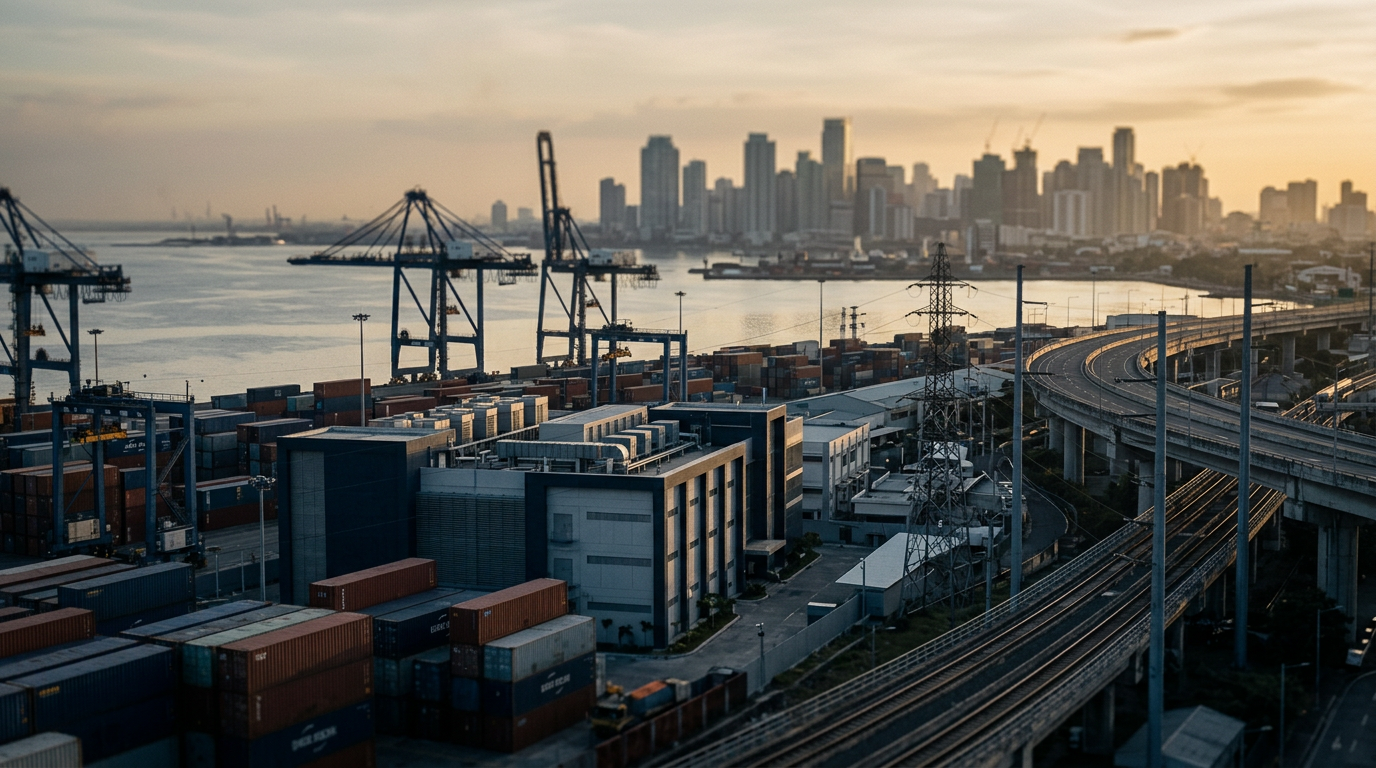
The 2026 deadline imposes a clear timeline on the Philippines, particularly for the completion of supporting infrastructure in Metro Manila. The global spotlight that accompanies the summit will illuminate not only the finished product but also the process of getting there. The core challenge is one of execution, a theme central to building national credibility.
As the book ASEAN Rising notes, the ability to follow through on commitments is a distinct economic advantage in a competitive global environment. For governments, "Infrastructure that arrives on time signals more than infrastructure that is merely announced." The announcement of the summit is the first step; the true test lies in the disciplined, timely, and transparent delivery of all the necessary components. Success in this regard builds a foundation of trust with international partners and private capital, demonstrating that the government is a reliable counterparty. Failure to meet deadlines or standards reinforces perceptions of risk and bureaucratic friction.
A Bellwether for the Region
The Philippines' performance will also be interpreted as a signal about the wider ASEAN environment. International investors and multinational corporations often assess Southeast Asia with a regional lens, and the successes or failures of one member state can influence perceptions of the whole. A well-executed summit in Manila can bolster confidence in ASEAN's collective capacity to host high-value industries and events.
This is where the framework of trust and capital intersect. Capital flows toward predictability and away from uncertainty. A government that demonstrates it can effectively manage a complex, high-profile international event sends a powerful message that it possesses the institutional framework necessary to support long-term investment. It shows that the machinery of the state works. This tangible proof of capability can be more persuasive to an investment committee than any promotional roadshow or policy paper.
What to watch
In the period leading up to 2026, observers should focus less on the summit's prospective agenda and more on the groundwork of its preparation. The key indicators of the Philippines' institutional health will be the progress reports on associated infrastructure projects, the establishment of clear and efficient administrative processes for organizers, and the initial experiences of advance delegations. The ultimate verdict on Manila's effort will not be the déclarations made during the event, but the quiet consensus among attendees that the country has the capacity to deliver.