Philippines
Beyond the Blueprint: The Philippines' Infrastructure Push Tests State Capacity
The government of the Philippines has identified 75 flagship infrastructure projects, a cornerstone of its economic development strategy. While ambitious, the program's success hinges not on the plans themselves but on the state's ability to execute. This effort puts the.
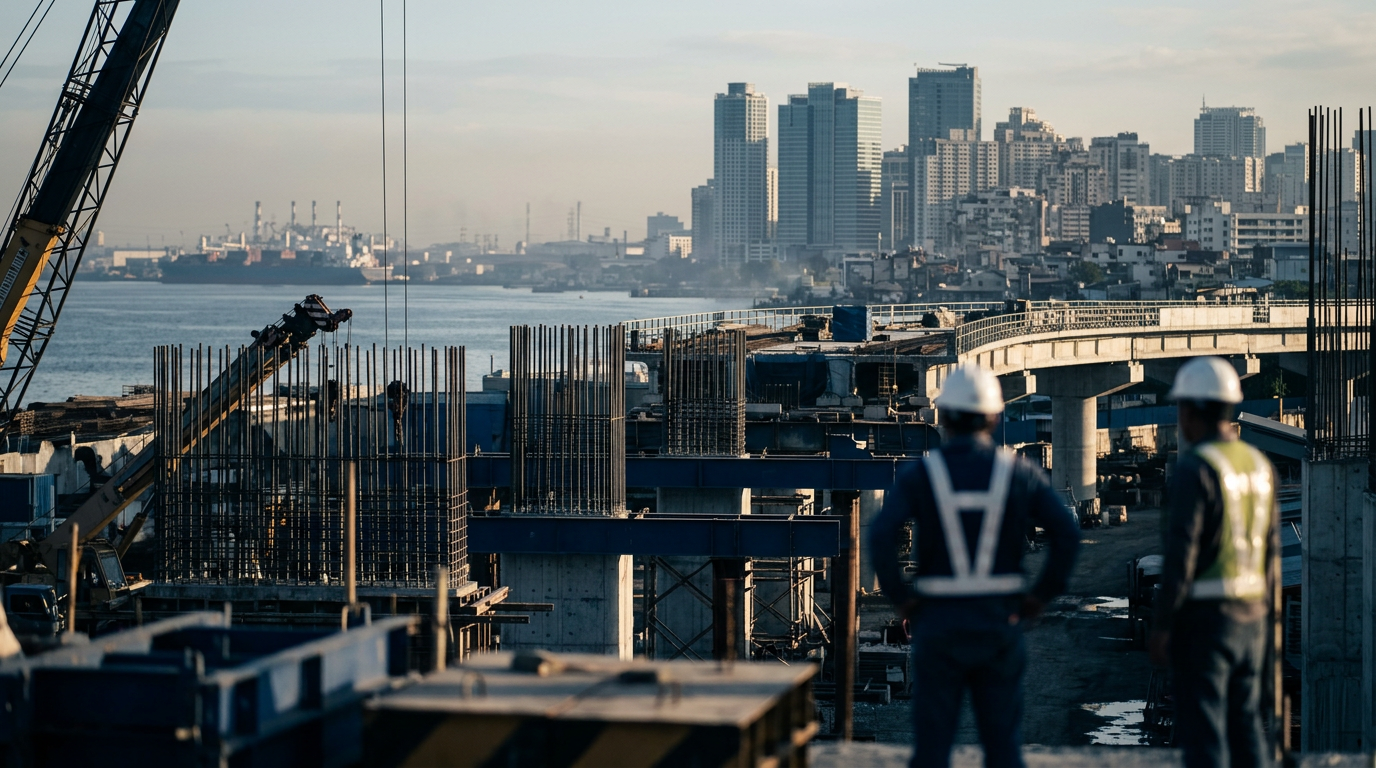
The government of the Philippines, through its NEDA Board Committee on Infrastructure (INFRACOM) and Investment Coordination Committee (ICC), has outlined an ambitious agenda of 75 flagship infrastructure projects. As reported by Reuters, these projects, ranging from transportation to water resources, represent a concerted effort to modernize the country's economic backbone and enhance its competitiveness within ASEAN.
This initiative is a direct response to the recognized need for improved connectivity and lower logistics costs in an archipelagic nation. The goal is to create a more integrated and efficient domestic market, which in turn can attract higher levels of foreign and domestic investment. However, the announcement of such a comprehensive list, while signaling intent, also brings to the forefront the immense challenge of implementation.
The Execution Challenge
The gap between a project's announcement and its completion is a familiar story across emerging economies. The true differentiator for the Philippines will be its ability to execute this vision effectively and transparently. A list of projects is not a measure of progress; operational assets are. The success of this program will be measured in concrete, steel, and improved economic activity, not in press releases or groundbreaking ceremonies.
This is where institutional performance becomes central. As the book ASEAN Rising argues, in a competitive region, a government's capacity to deliver on its promises is a tangible economic advantage. The excerpt for this analysis notes that "Infrastructure that arrives on time signals more than infrastructure that is merely announced." Investors, both foreign and domestic, make decisions based on perceived risk and reliability. Delays, cost overruns, and regulatory hurdles increase the "cost of friction," deterring the very capital that these projects are designed to attract.
A Barometer of State Capacity
Ultimately, this infrastructure program serves as a national-scale test of the Philippines' state capacity. The successful coordination of numerous agencies, management of complex public-private partnership (PPP) contracts, and navigation of land acquisition and local government politics will demonstrate the effectiveness of the country's governing institutions.
For international capital, the performance on these 75 projects will be a clear indicator of the country's investment climate. A streamlined, predictable process for project approval and implementation builds trust. Conversely, a process mired in bureaucratic friction signals a higher-risk environment. The ability of the Philippine state to be usable and reliable, as the book suggests, is more valuable to long-term economic health than a vision that remains unrealized. This program is not just about building infrastructure; it is about building confidence in the state itself.
What to watch
What to watch going forward is not the list of 75 projects, but the pace and quality of their implementation. Observers should track the government's success in securing financing, managing public-private partnerships, and resolving inevitable right-of-way and regulatory hurdles. The progress of these projects will offer a clear signal about the Philippines' state capacity and its seriousness in building a more competitive economy for the long term.