Vietnam
Beyond the Announcement: Samsung's Vietnam Plan and the FDI Litmus Test
A potential Samsung semiconductor facility in Vietnam puts the spotlight on a familiar ASEAN challenge: converting foreign direct investment announcements into operating realities. Success depends less on the initial headlines and more on the difficult work of improving.
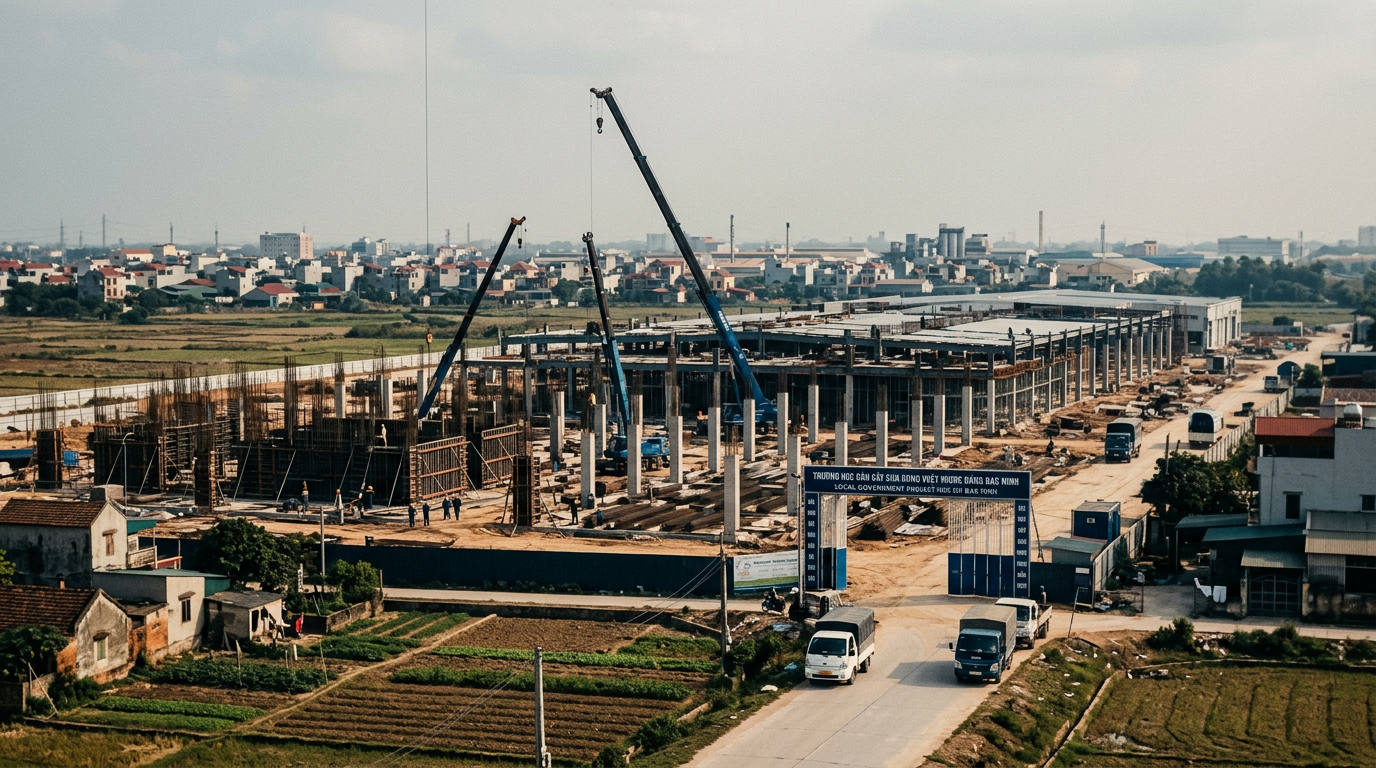
Samsung Electronics is exploring the establishment of a semiconductor testing facility in Vietnam, as reported by Digitimes. The discussions with the Vietnamese government, if successful, could represent a significant step for the country's aspirations in the global technology supply chain. While any new investment from a manufacturing giant like Samsung is a vote of confidence, it also brings into focus the persistent gap between foreign direct investment (FDI) announcements and their successful implementation on the ground.
Vietnam's Pull
Vietnam has firmly established itself as a favored destination for electronics manufacturing and assembly. The country's appeal is built on a combination of factors, including competitive labor costs, a growing domestic market, and a government keen on attracting foreign capital with investment incentives. This has made it a central node in the "China+1" strategy for many global firms seeking to diversify their supply chains.
Samsung is already Vietnam's single largest foreign investor, with massive facilities for smartphone and consumer electronics production. An expansion into semiconductor packaging and testing would represent a move up the value chain, from assembly to a more technologically intensive part of the production process. This aligns perfectly with Hanoi's strategic goals. The inflow of capital is a clear indicator of investor interest, but the true test lies in the capacity to absorb and operationalize such technologically advanced projects.
The Execution Challenge
High-profile investment announcements generate positive headlines, but their translation into tangible economic activity is a slower, more complex process. As the book "ASEAN Rising" notes, the ability of a country to absorb large-scale investment is a function of its institutional strength. Scale alone does not guarantee success; it must be matched by an ability to provide investable depth.
The distinction between announced and realized FDI is a recurring theme across Southeast Asia. The journey from a memorandum of understanding to a fully functioning factory is fraught with practical hurdles. The chapter on Indonesia's experience is relevant regionally, observing that "Realised flows depend on the slower work of land, permits, power and talent reaching the ground."
In Vietnam, these challenges are apparent. Securing appropriate land for large industrial facilities can be a complicated process. Navigating the administrative requirements for permits and licenses demands patience and local expertise. More pointedly, recent history has shown the strain on the country's infrastructure. In 2023, significant power shortages during a summer heatwave led to rolling blackouts, disrupting factory operations across northern Vietnam and casting doubt on the grid's ability to support sustained industrial expansion, especially for energy-hungry semiconductor facilities.
Building a Deeper Foundation
For Vietnam to capitalize on its moment and secure investments like the one Samsung is contemplating, the focus must be on strengthening the underlying framework that supports industrial operations. This goes beyond one-off incentives for a specific project. It is about building a foundation of trust with long-term investors.
This means a sustained focus on institutional reform to make bureaucratic processes more transparent and efficient. It requires massive, forward-looking investment in infrastructure, particularly in energy generation and grid stability, to ensure that power is reliable and plentiful. Without a dependable power supply, the country's manufacturing ambitions will face a low ceiling.
Furthermore, the talent pipeline is a serious consideration. While Vietnam has a large and diligent workforce, specialized fields like semiconductor engineering require advanced, specific skills. A move into backend semiconductor processes will demand a significant expansion of technical training and university programs to cultivate the necessary engineering and technician talent pool. Competing with established hubs in the region for this talent will require a concerted national effort. What to watch The progress of Samsung's discussions with the Vietnamese government will be a telling indicator. Observers should watch whether these talks mature into a concrete investment with a clear timeline and budget. Just as important will be the Vietnamese government's concurrent actions to address its well-documented infrastructure and power-grid deficits. The success or failure of turning this single announcement into an operational facility will serve as a barometer for Vietnam's capacity to move up the technology ladder and fulfill its economic ambitions. The groundwork laid now on power, permits, and people will determine if the capital follows.