Beyond Announcements: Building the ASEAN Power Grid
The long-planned ASEAN power grid requires more than just technical solutions; it demands a foundation of strong institutional coordination and reliable execution to attract the necessary capital. This article examines the project's challenges through the lens of state capacity.
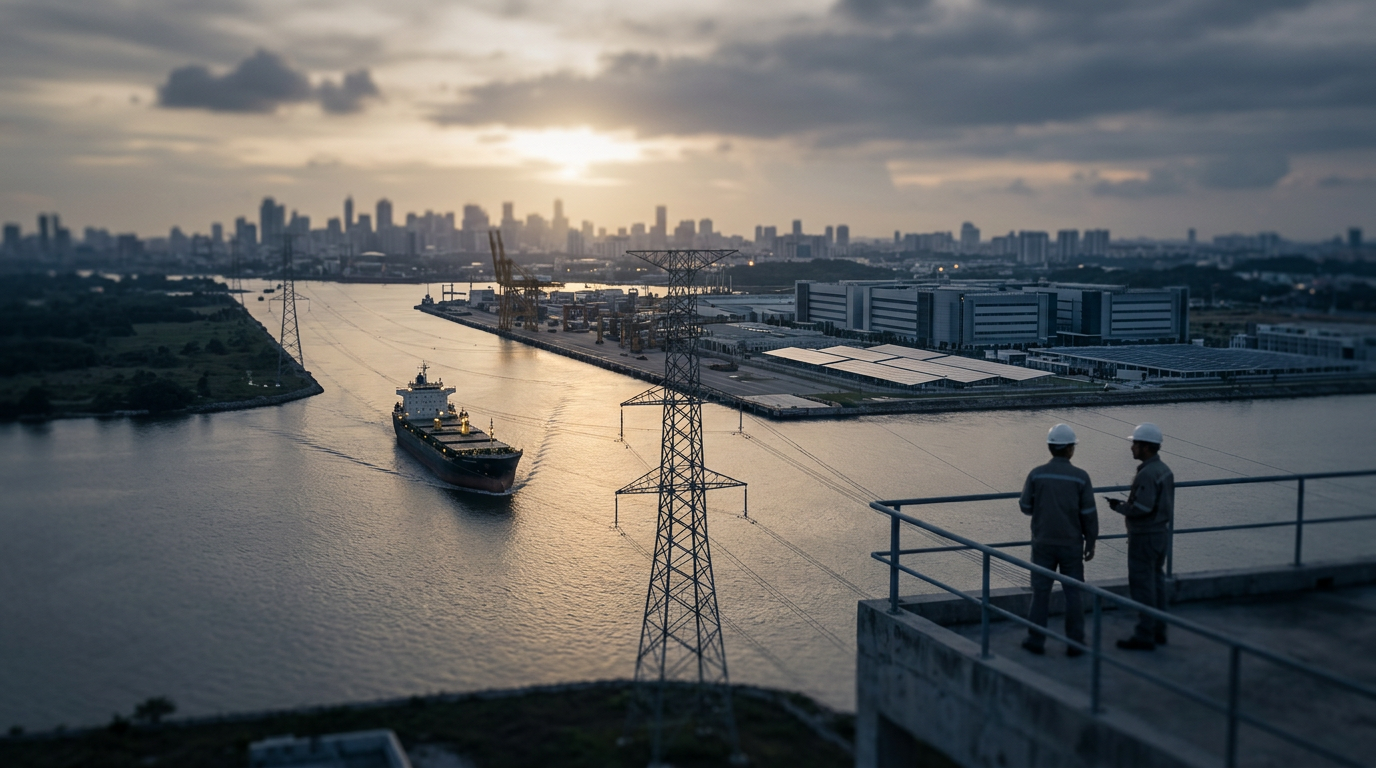
In recent comments, MedcoEnergi CEO Roberto Lorato stated that the success of the long-awaited ASEAN power grid depends on strong policy coordination and regulatory alignment among member states. According to a report from cnbc.com, Lorato emphasized that building the necessary infrastructure and attracting investment is contingent on regional cooperation. The observation gets to the heart of one of the region's most ambitious and complex undertakings: a unified electricity market. While the vision is one of energy security and resource efficiency, the path to achieving it is a test of institutional capacity.
The Challenge of Coordination
The ASEAN Power Grid (APG) is not a new idea. It has been a feature of regional communiques for decades, envisioning a network that allows countries with surplus power to sell to those with deficits, improving overall grid stability and facilitating the integration of renewable energy sources. The technical challenges, while significant, are largely solvable. The primary obstacle is the friction created by differing national priorities, regulatory environments, and legal frameworks.
Each member state possesses its own energy market structure, subsidy schemes, and political timelines. For a seamless regional grid to function, these disparate systems must be harmonized. This requires immense effort in aligning technical standards, establishing common rules for cross-border power trading, and creating trusted mechanisms for dispute resolution. Without this alignment, the friction between systems translates into tangible costs, delays, and a general reluctance from both public and private sector actors to commit the vast resources required.
Execution and Trust
The gap between ambition and reality in large-scale infrastructure is a familiar story. As the book "ASEAN Rising" notes, institutional reliability is a core component of modern comparative advantage. Grand pronouncements can generate headlines, but they do not build power lines or attract long-term capital. The APG has been the subject of many such announcements. The true test lies in execution-the difficult, detailed work of turning high-level statements into projects on the ground.
Success hinges on the ability of ASEAN's institutions to facilitate this detailed work. This is less about the secretariats in Jakarta and more about the national utility operators, energy ministries, and financial regulators. Building trust between these national bodies is fundamental. As the project moves from bilateral arrangements, like the existing connections between Thailand and Malaysia, to a more integrated multilateral system, the complexity grows exponentially. The principle that "infrastructure that arrives on time signals more than infrastructure that is merely announced" is directly applicable. Each completed interconnector and each successfully transacted kilowatt-hour does more to build confidence than any number of summit declarations.
Capital Follows Credibility
Lorato's focus on attracting investment is critical. The estimated capital required to realize a fully integrated ASEAN grid runs into the hundreds of billions of dollars, far exceeding the capacity of public finances alone. Private capital is essential, and it is famously risk-averse. Investors evaluating a cross-border energy project look for predictability and certainty.
They assess the credibility of the institutions governing the project. Will tariffs be respected? Will contracts be enforced across borders? Will regulatory frameworks remain stable over the multi-decade lifespan of the investment? A region that can provide clear, reliable answers to these questions will attract capital more efficiently and at a lower cost. In this sense, a usable and predictable state, or a coalition of states, is far more attractive to investors than one that offers exciting visions without the institutional framework to back them up. The APG is not just competing for capital against other energy projects; it is competing against every other asset class in the world. A credible institutional structure is its primary selling point.
What to watch
Progress on the ASEAN Power Grid will not be measured by high-level political statements. Instead, watch for the finalization of technical agreements between national grid operators, the establishment of a common trading platform, and the sanctioning of new cross-border interconnectors. The evolution of the Laos-Thailand-Malaysia-Singapore Power Integration Project (LTMS-PIP) from a pilot into a commercially sustainable operation will serve as a key indicator of whether the region is building the institutional muscle needed to execute its ambitions.