Indonesia
Batam's Data Center Ambitions Test Indonesia's Execution Capacity
As data center investments flow from Singapore to Batam, the island's ability to coordinate power, water, and connectivity will determine if it can become a true hyperscale hub.
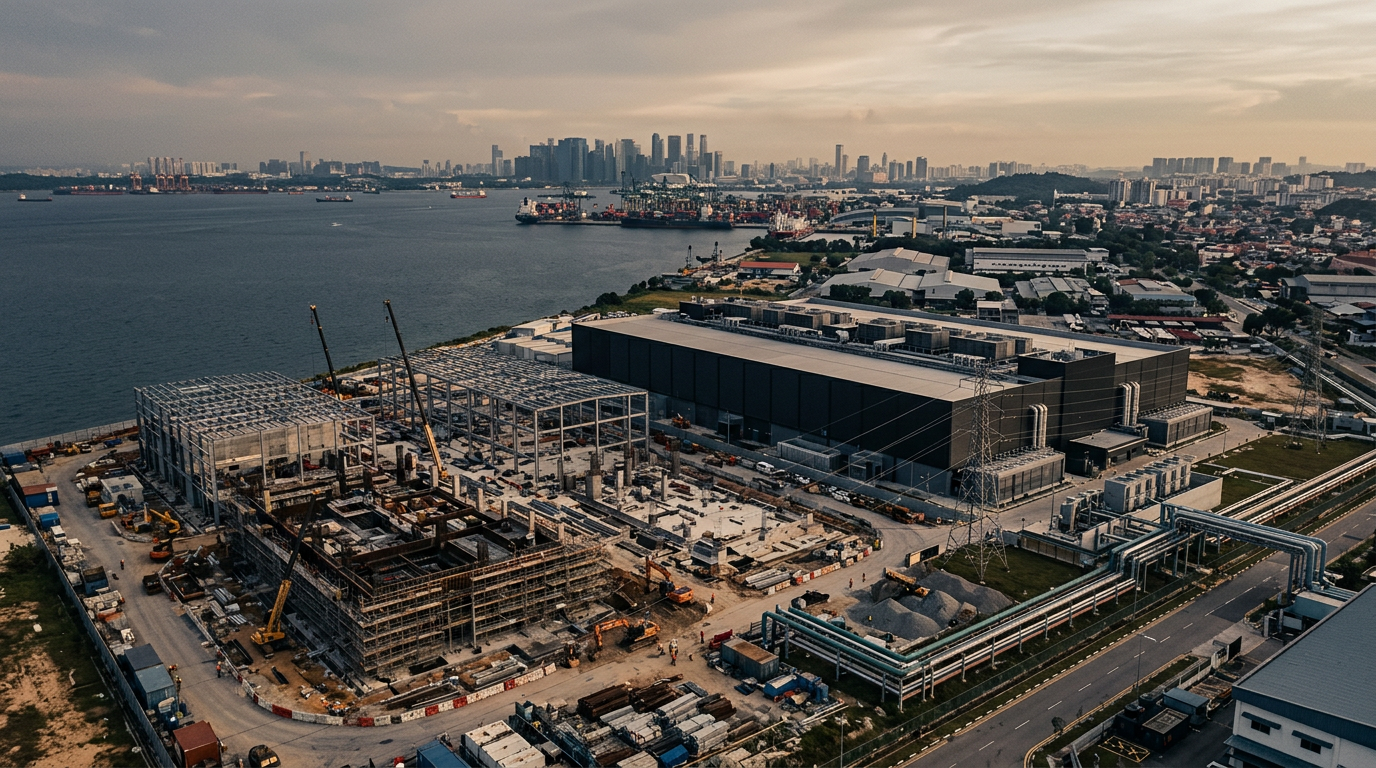
A recent report from the Business Times highlights the next phase of ASEAN's data center expansion, with BW Digital developing a 144-megawatt (MW) facility in Batam, Indonesia. The project points to the island's rising prominence as a destination for digital infrastructure investment, driven by its proximity to Singapore. Yet, it also brings to the surface the island's underlying infrastructural and institutional tests.
The Singapore Spillover
For years, Singapore was the undisputed data center hub for Southeast Asia, offering a stable political environment, robust fiber connectivity, and reliable power. However, a government moratorium on new data center projects imposed in 2019, driven by environmental concerns over power and water consumption, created a regional supply shortage. While the moratorium has since been conditionally lifted, the tight constraints and high costs in Singapore have pushed developers to seek alternatives in nearby Johor, Malaysia, and now, increasingly, Batam.
Batam, part of the Riau Islands province, is geographically well-positioned to serve Singapore-based clients. Its proximity allows for low-latency connections, a prerequisite for many financial services and cloud computing customers. For developers, Batam offers available land and the promise of lower operating costs. This has created a significant pipeline of projects, with multiple developers announcing plans to build facilities on the island, aiming to capture the demand spilling over from the Singapore market.
Infrastructure as the Main Constraint
While the opportunity is clear, the primary challenge is execution, particularly around infrastructure. As the book ASEAN Rising notes, successful industrial development requires deep coordination between public utilities and private investment. For data centers, which are immense consumers of power and water, this is especially true. The book argues that "Capital coordination is itself an industrial input." Where planning, power, and connectivity are aligned, large-scale projects can thrive. Where they are not, even abundant land or the promise of cheap power is insufficient.
The BW Digital project in Batam is a case in point. The developer is proactively addressing water scarcity concerns by planning for modern cooling systems that are more water-efficient. This is a necessary step, but it also highlights a systemic issue. The long-term viability of Batam as a data center hub will not depend on the ingenuity of individual developers but on the capacity of local authorities and state-owned enterprises to provide reliable, scalable infrastructure.
From Blueprint to Reality
Translating Batam's potential into a sustainable data center market requires a focus on the foundational elements of power, water, and connectivity. The current power capacity on the island is not sufficient to meet the multi-gigawatt demand that the announced projects represent. New power generation, ideally from renewable sources to meet the sustainability goals of global clients, must be brought online. This involves complex planning, regulatory approvals, and significant capital investment in generation and grid infrastructure.
Similarly, while new subsea fiber optic cables are being laid to connect Batam directly to Singapore and beyond, ensuring route diversity and network resilience is a constant task. A single point of failure can disrupt services for an entire region. Success in Batam will be defined not just by the construction of data center buildings, but by the parallel execution of these unglamorous but essential public infrastructure projects. The challenge for Indonesian authorities is to demonstrate the institutional capacity to deliver these inputs reliably and transparently, building trust with global investors and operators.
What to watch
As the first wave of data centers begins construction, the key indicator to watch will be the progress of Batam's public infrastructure development. Observers should monitor announcements from Indonesia's state electricity company, PLN, regarding new power generation projects and grid upgrades for the island. The ability of local authorities to ensure adequate water supply for both industrial and public needs will also be a determining factor. The success or failure of these initial projects will send a strong signal about whether Batam can move beyond being an overflow location and establish itself as a durable hub for digital infrastructure in Southeast Asia.