Indonesia
Bali FDI Blockage Highlights Indonesia's Execution Challenge
Bali has blocked foreign investment in 18 business categories, a move that illustrates the persistent gap between announced FDI and realized investment flows in Indonesia.
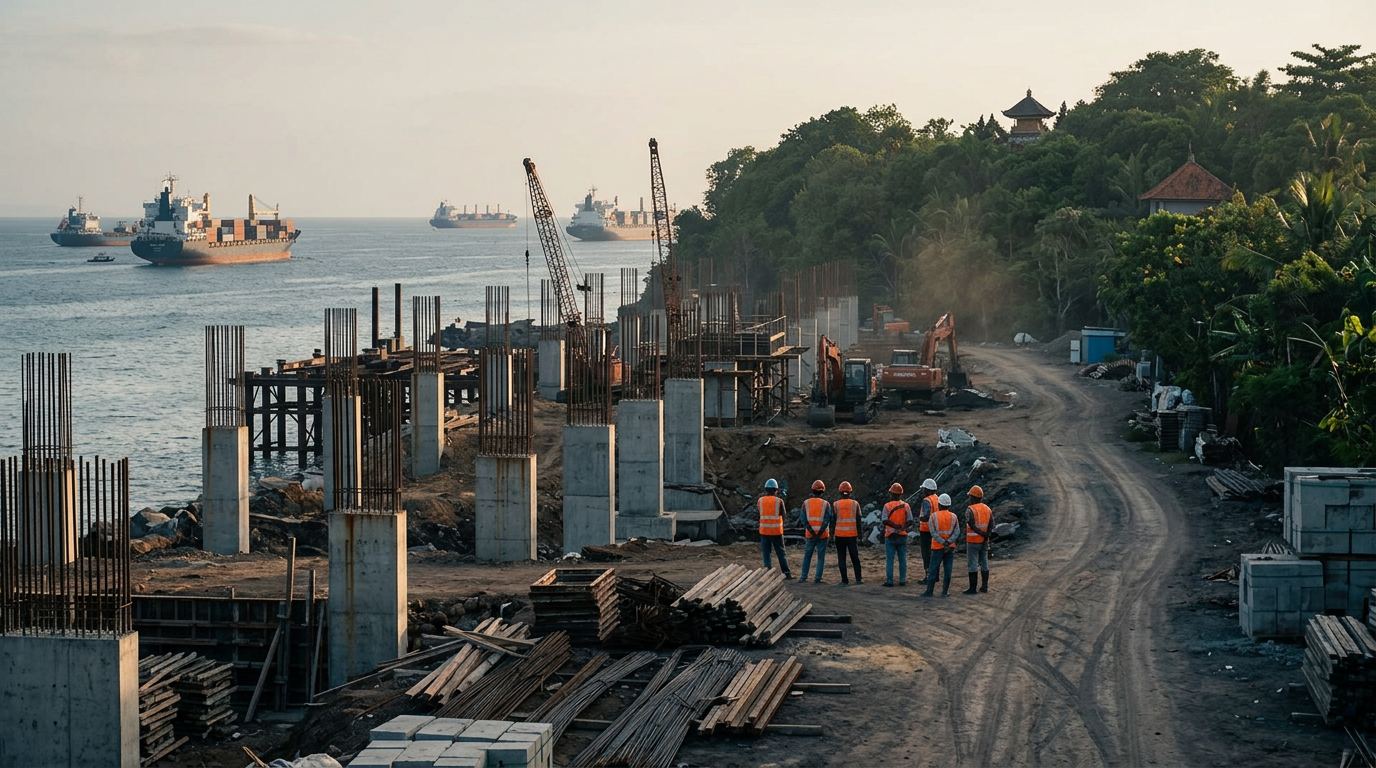
Bali's administration has blocked foreign investors from accessing Indonesia's online licensing system for 18 specific business categories, citing regulatory and cultural concerns. The move, reported by Antara, has drawn attention to the ongoing friction between national investment targets and sub-national execution, a central theme in Indonesia's economic development narrative.
The Sovereignty of a Permit
Indonesia has made significant strides in attracting foreign direct investment (FDI) at the national level, simplifying processes through its Online Single Submission (OSS) system. However, the Bali case shows how local government actions can override national frameworks. The provincial government has cited the need to protect local small and medium enterprises (SMEs) and cultural integrity as the basis for its decision. This reflects a deep-seated tension in Indonesia: the drive for foreign capital versus the assertion of local sovereignty and economic protectionism.
This is not a new phenomenon. As detailed in the book ASEAN Rising, the country's vast scale presents both its greatest opportunity and its most complex problem. The central government may announce large FDI figures, but the reality on the ground is often determined by a patchwork of local regulations and enforcement capabilities. The Bali administration's ability to effectively gatekeep market access in these sectors demonstrates that ultimate authority often rests with those who control the final permit, not those who design the national portal.
From Announcement to Reality
For foreign investors, the Bali blockage is a tangible example of the execution risk inherent in the Indonesian market. The national government has worked to present a unified, welcoming front for investment. Yet, these 18 categories, which include tour activities, restaurants, and certain types of construction services, are now off-limits in one of the country's most popular investment destinations. This creates uncertainty and complicates investment planning.
The core issue is the gap between policy and implementation. "Realised flows depend on the slower work of land, permits, power and talent reaching the ground." While the OSS system is a significant institutional improvement, its effectiveness is only as strong as the compliance of the local authorities meant to implement it. When provincial or regency-level governments diverge from national strategy, it is the investor who is caught in the middle, unable to turn an approved investment plan into an operational business. This undermines trust in the predictability of the regulatory environment.
Capital and Local Capacity
The Bali government's action points to a need for a more integrated approach to investment promotion. Attracting capital requires more than just a streamlined online system. It requires aligning the interests and building the capacity of local governments to absorb and manage that investment in a way that benefits the local economy without displacing it. The concerns in Bali over unfair competition and the preservation of cultural heritage are legitimate political and social issues that cannot be ignored in the pursuit of raw investment numbers. For Jakarta, the challenge is to ensure that its national FDI targets are matched by a strategy that empowers, rather than alienates, regional administrations.
What to watch: Observers should monitor whether this move by Bali signals a broader trend of sub-national resistance to Jakarta's open investment policies. The central government's response will be telling-whether it enforces the primacy of the national OSS system or allows for a greater degree of local deviation. The resolution of this specific case will set a precedent for how institutional conflicts between national ambition and local sovereignty are managed across the archipelago.