Australia AI Rules Put Focus on ASEAN Data Center Infrastructure
Canberra's plan to regulate the power and water consumption of AI data centers puts a spotlight on Southeast Asia. The region's own data center boom requires a similar focus on coordinated planning to ensure that digital growth is sustainable.
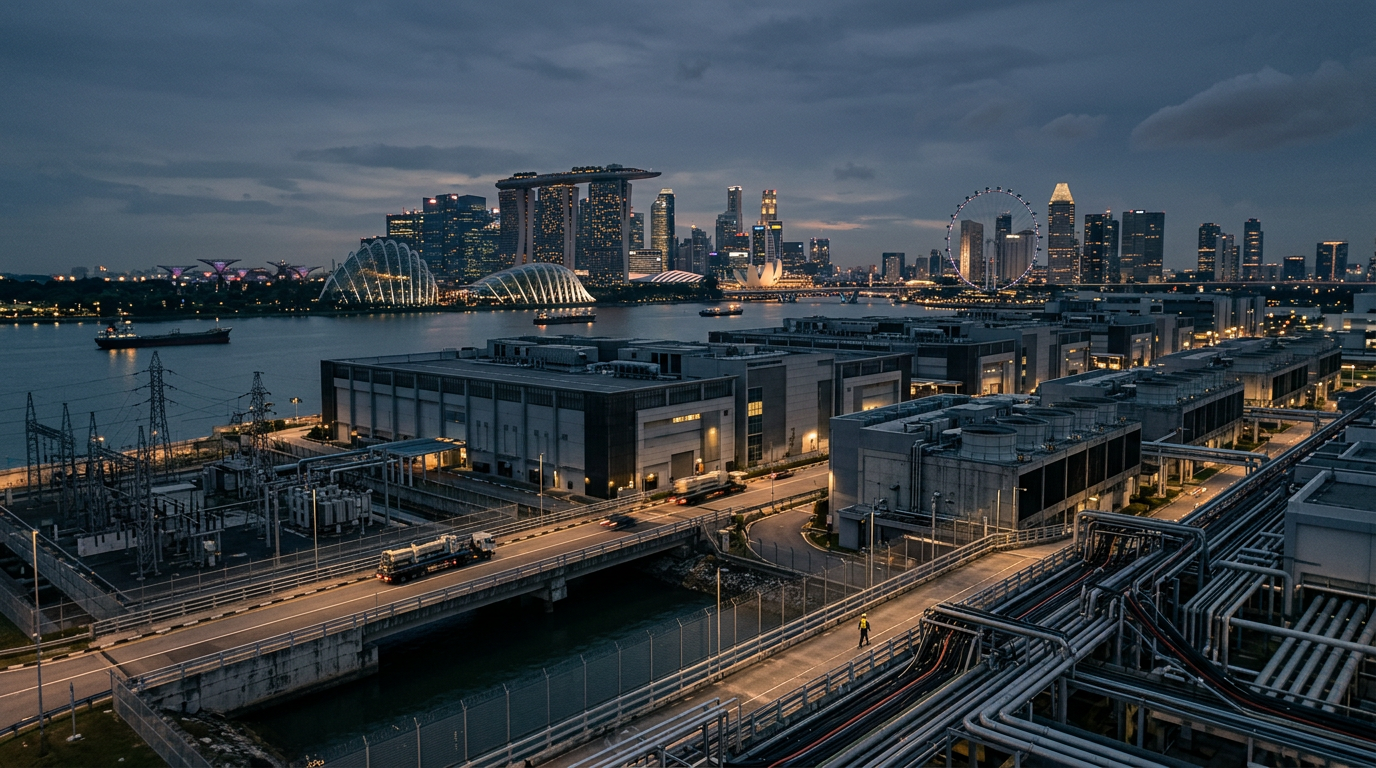
Australia plans to enact laws to regulate the power and water consumption of artificial intelligence data centers, Prime Minister Anthony Albanese announced, according to a report from The Star. The move, which also includes measures to safeguard creative copyrights from AI models, signals a growing recognition by governments of the substantial physical-world inputs required by the digital economy.
This development in a major Pacific partner casts a light on Southeast Asia's own data center construction boom and the accompanying pressures on its infrastructure. As global technology firms expand their cloud and AI footprints in the region, the core challenge is not merely attracting investment, but managing its considerable demands on national resources. Success or failure will depend on the quality of state-level planning and execution.
The Infrastructure Imperative
The immense appetite of AI for electricity and water is a defining feature of the modern technology industry. Training a single large language model can consume gigawatt-hours of electricity, and the cooling systems for the specialized processors involved require millions of liters of water. This is a new category of industrial demand being placed on national grids and water systems that were not designed for such concentrated loads.
Australia's proposed legislation is a direct institutional response to this physical reality. By moving to govern how these facilities consume power and water, the government is treating their resource needs as a matter of national policy, not simply a commercial negotiation between a technology firm and a local utility. This approach acknowledges that the build-out of digital infrastructure has serious consequences for energy security, resource management, and the public good. Without such a framework, a rush of data center construction can strain grids, raise electricity prices for other users, and create new vulnerabilities.
ASEAN's Data Rush
Southeast Asia is a primary global destination for data center investment, a trend accelerated by Singapore's recent moratorium on new projects. Neighboring markets, especially in Johor, Malaysia, and Batam, Indonesia, have received a wave of new projects from firms seeking land and power. This has been presented as a straightforward economic win, bringing capital and construction jobs to these areas.
However, the speed of this expansion raises questions about the preparedness of the underlying infrastructure. As detailed in the book ASEAN Rising, true industrial capacity is built not just on the availability of one input, like cheap land, but on the integrated provision of all necessary components. The text makes it clear that "Capital coordination is itself an industrial input." Where a jurisdiction can smoothly bring together power, water, fiber optic connectivity, and regulatory approvals, it creates a durable advantage. Where these elements are pursued in a piecemeal fashion, even a promising project can face significant delays and operational risk.
The risk for some parts of ASEAN is that the current boom is outpacing the capacity for this essential coordination. If new data centers are approved without a corresponding, integrated plan for expanding the power grid and water supply, it can lead to instability and create a development model that is not sustainable. The influx of capital is welcome, but it must be met with a commensurate increase in the quality and execution of public-sector planning.
The Singaporean Model of Control
Singapore's approach to data centers is instructive. The city-state was an early hub for data centers in Asia due to its superb connectivity, stable institutions, and reliable infrastructure. The government's 2019 decision to pause new data center construction was a sign of a mature governing philosophy. Officials recognized that the sector's unchecked growth-at that point consuming around 7% of the nation's total electricity-was on a trajectory that threatened national climate goals and energy stability.
The moratorium was not a rejection of the industry but a deliberate effort to re-align its growth with a new set of national priorities centered on efficiency and sustainability. When the government began approving new projects again, it did so under new standards that required operators to meet higher efficiency and renewable energy targets. This illustrates a government using its regulatory power to shape an industry's development, ensuring it aligns with the country's long-term strategic interests. It is a real-world application of treating planning and coordination as a strategic input, not as a barrier to business.
What to watch
What to watch is how ASEAN governments evolve from simply attracting data center investment to actively managing it. The Australian example provides a model for a more interventionist approach based on resource security. The key indicators of progress in Southeast Asia will not be project announcements or investment figures alone, but the release of national energy, water, and grid-modernization strategies that explicitly account for the heavy demands of hyperscale data centers. This will show which countries are building the institutional capacity to support a durable and sustainable digital economy.