
ASEAN Analysis & Commentary
Every analysis published on ASEAN Rising is sourced, datestamped and signed. We're more interested in being right in 12 months than first in 12 minutes.
Foundation pieces
Start here. The three pieces below set out the lens ASEAN Rising uses to read every story.
ASEAN Rising's core lens. Execution Economics is the study of whether countries, companies and institutions can convert obvious potential into delivered outcomes - and which six pillars decide the answer.
The region has capital, demographics, location and policy ambition. None of that has ever been the binding constraint. The next decade is an execution test, not a potential test - and it is already being scored.
Malaysia is the test case for whether ASEAN's middle powers can turn FDI, semiconductors and data centres into compounding domestic capability. Read the live coverage and execution scorecard.
Analysis tagged #transport

 Vietnam
Vietnam is seeking private capital for its ambitious expressway expansion. Success will depend on more than just announcements; it will require demonstrating institutional reliability to secure the necessary investment.
 Malaysia
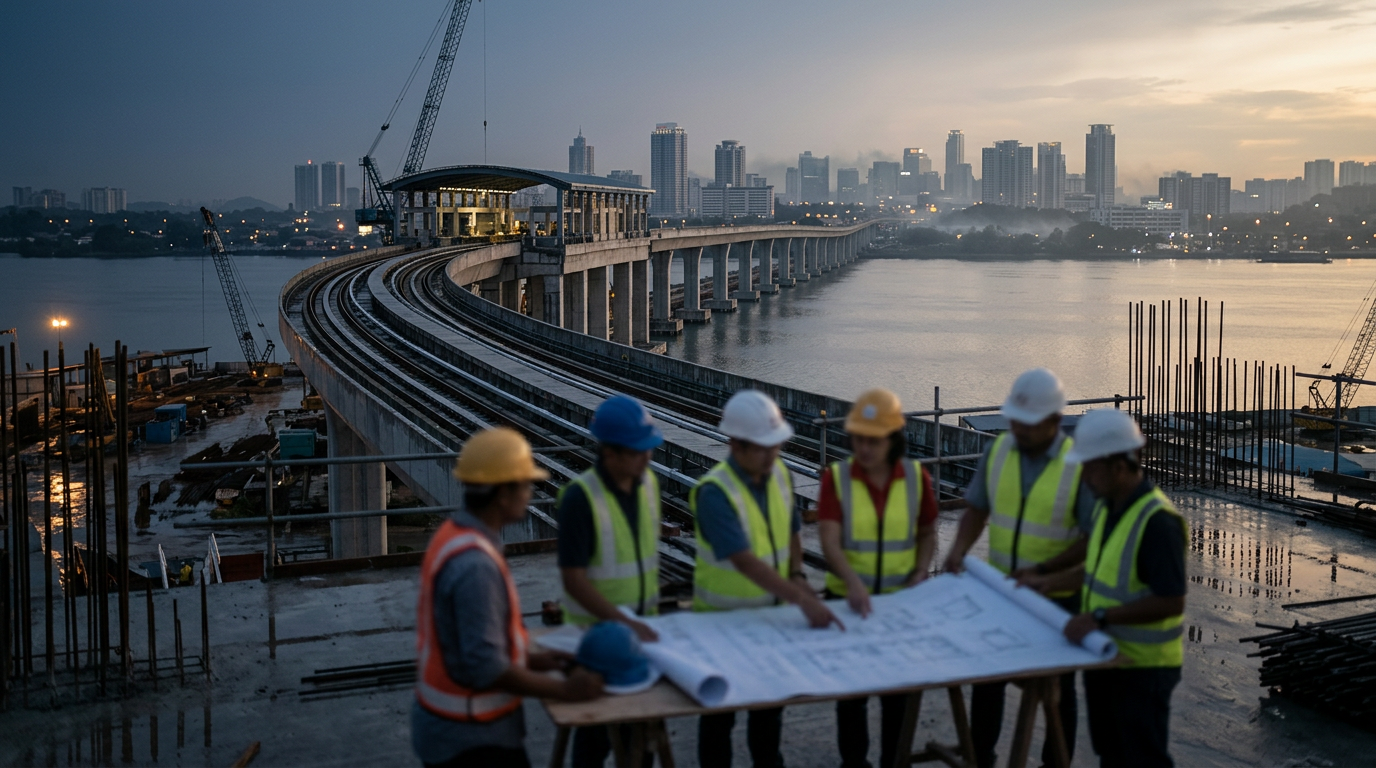
-Singapore RTS Link: More Than Concrete and Steel
The delay in the Johor Bahru-Singapore RTS Link highlights a familiar challenge in regional infrastructure projects: turning ambitious plans into operational reality. Success depends on aligning institutions, regulations, and talent, not just pouring concrete.

 Singapore
's COE System Tests Institutional Reliability
High Certificate of Entitlement premiums in Singapore are a recurring test of the country's institutional capacity. The Land Transport Authority must balance market signals with the long-term needs of a usable state.
 Malaysia
Penang LRT Signals a Bet on Infrastructure-Led Growth
The construction of Penang's LRT Mutiara Line, despite causing temporary road closures, highlights Malaysia's commitment to infrastructure development as a core component of its economic strategy. The project underscores the idea that predictable execution and state capacity.
 Malaysia
's MRT Corp Gets a New Chairman. What Does It Signal?
The recent appointment of a new chairman at Malaysia's MRT Corp underscores the critical link between state capacity and investor confidence in large-scale infrastructure projects.
 Malaysia
's Mutiara Line LRT: A Test of Institutional Capacity
The Mutiara Line LRT project in Penang is a major test of Malaysia's institutional capacity. The project's success hinges on the government's ability to deliver complex infrastructure on time and on budget, which in turn signals a reliable environment for capital.