Singapore
US Tariffs on Singapore Test ASEAN's China Strategy
A new US tariff on Singaporean goods is more than a trade dispute; it is a signal of ASEAN's difficult position between the US and China, forcing a re-evaluation of the region's managed dependency on Chinese supply chains.
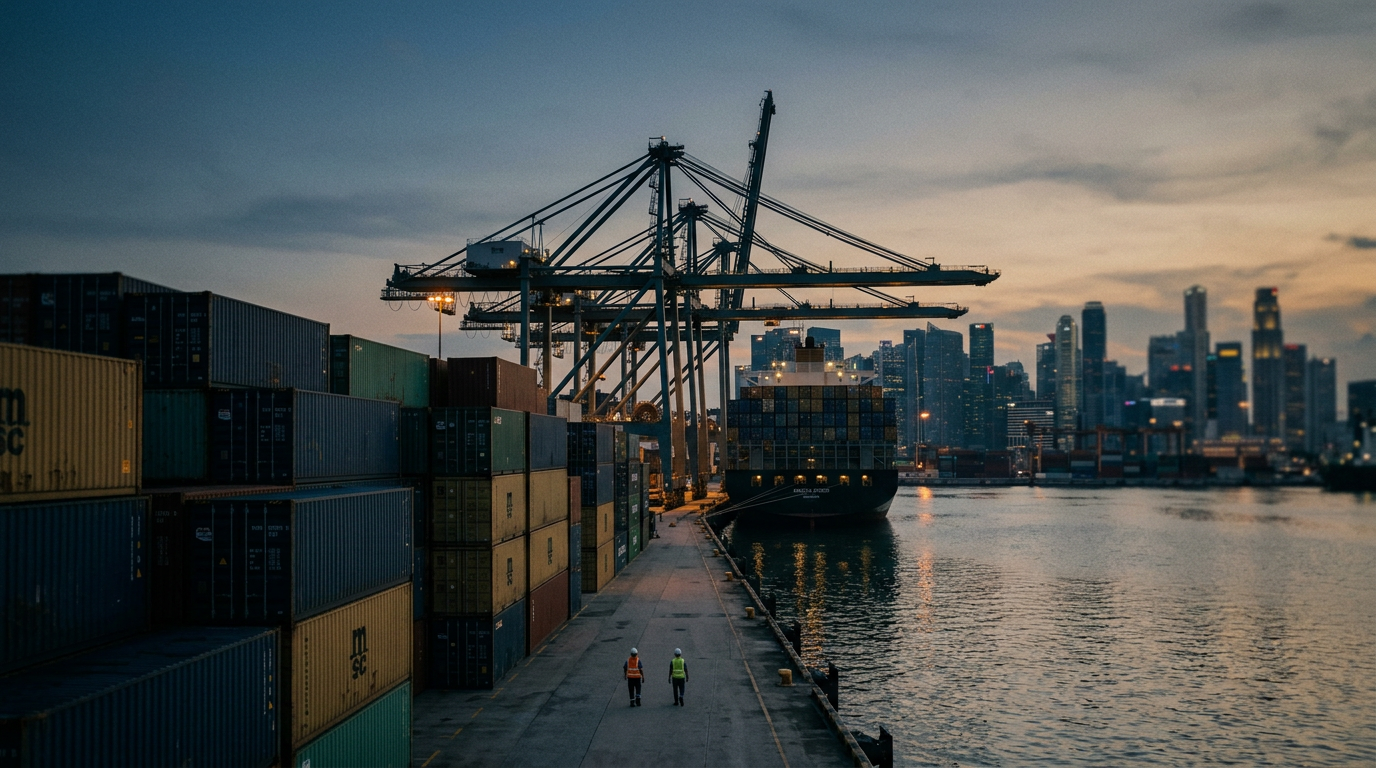
Recent US trade policy has sent a direct shockwave into one of Southeast Asia's most trade-reliant economies. Citing a new 12.5% tariff, Singaporean businesses are expressing concern over the impact on their exports to the United States, according to a report from The Straits Times. While seemingly a bilateral issue, this tariff, part of the broader Section 301 measures aimed at China, illuminates a structural vulnerability for all of ASEAN: deep integration with China's economy makes the region susceptible to fallout from US-China strategic competition. Singapore's pain is a symptom of a much larger regional bind.
A Structural Dependency
The tariffs affecting Singaporean exporters are not arbitrary. They are a direct consequence of the island-state's role within global supply chains that are heavily centered on China. For decades, this position has been a source of immense prosperity, allowing ASEAN nations to become workshops for the world. Capital flowed in, infrastructure was built to support manufacturing, and a generation of talent learned to operate within these complex production networks. However, what was once a pure economic asset now carries significant geopolitical risk. The dense web of trade and investment with China is not a temporary or cyclical phenomenon that will recede.
As the book ASEAN Rising notes, this economic relationship is a permanent feature of the regional landscape. The challenge for governments is not about whether to decouple from China- a prospect that is neither feasible nor desirable for most- but about how to handle the resulting dependency. The US tariffs show how this dependency can be weaponized by third parties, placing ASEAN firms in the direct line of fire. Hedging strategies that once seemed sufficient, like maintaining strong diplomatic ties with both Washington and Beijing, offer little protection when trade rules are rewritten overnight.
The Limits of Institutions
This situation also raises questions about the strength of the institutions that govern global and regional trade. Frameworks like the World Trade Organization, the Comprehensive and Progressive Agreement for Trans-Pacific Partnership (CPTPP), and the Regional Comprehensive Economic Partnership (RCEP) were designed to create stable, predictable environments for commerce. Yet, the unilateral application of tariffs by the US demonstrates that geopolitical interests can override these institutional safeguards. ASEAN's investment in these frameworks is a testament to its commitment to a rules-based order, but their effectiveness diminishes when major powers choose to operate outside of them.
For businesses, this creates an environment of profound uncertainty that chills investment and disrupts planning. For governments, it complicates the core task of economic management. The central question for ASEAN is one of execution: how to build resilience in an era where the old rules no longer seem to apply. As one analysis puts it, "The question for ASEAN governments is no longer whether to engage, but how to manage dependency without losing optionality." This requires a level of statecraft that goes beyond trade negotiations and into the harder work of building deep-seated trust with a more diverse set of partners and cultivating the domestic talent to navigate these new, contested waters.
What to watch
Looking ahead, the primary indicator to watch is how ASEAN governments, individually and collectively, react to this pressure. Observe whether they lobby Washington for exemptions, accelerate efforts to diversify supply chains away from over-reliance on single markets, or deepen their engagement with regional frameworks like RCEP as a defensive measure. The response will signal the region's evolving strategy for maintaining its economic health and autonomy while positioned between two contending global powers.