Singapore
US Tariff Tests Singapore's Economic Statecraft
A recent US trade measure aimed at goods produced with forced labor has brought the complexities of great power politics to ASEAN's doorstep. For Singapore, the immediate economic impact may be contained, but the incident highlights a deeper strategic challenge discussed in.
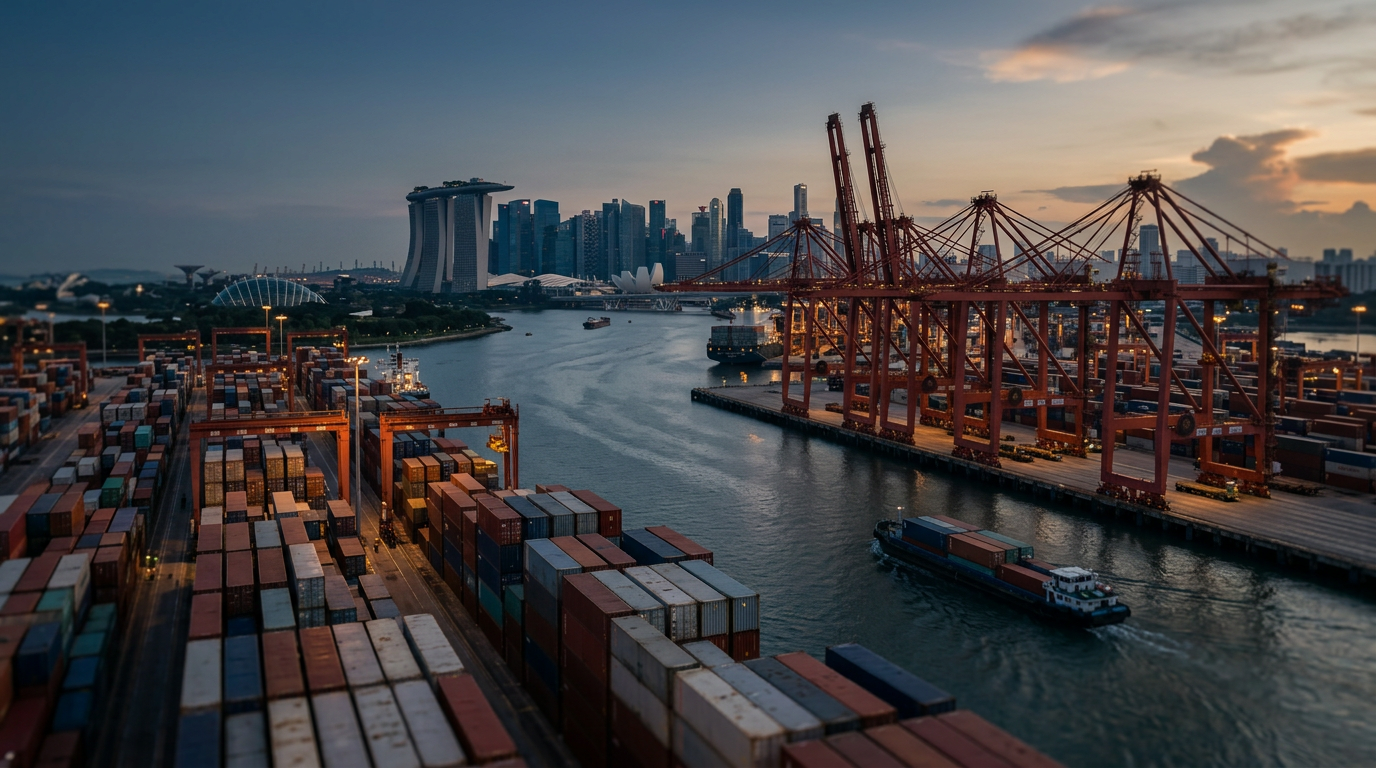
Recent analysis suggests that a new US tariff on goods made with forced labor will have a limited effect on Singapore, according to a report from The Business Times. Economists forecast that exemptions for key sectors like semiconductors and electronics will insulate the city-state's export-driven economy from significant disruption. While this is positive news for Singapore, the event itself serves as a clear example of the complex geopolitical landscape that ASEAN member states must navigate.
US trade policy is increasingly intertwined with its strategic competition with China and its broader foreign policy goals, including human rights. For a nation like Singapore, whose prosperity is built on global trade and stable supply chains, such measures introduce a layer of uncertainty. The tariff is a reminder that market access to major partners can be influenced by factors far beyond traditional economic considerations.
Resilience Through Specialization
Singapore's expected resilience in this case is not accidental. It is the result of a long-term industrial strategy focused on moving up the value chain. By becoming a critical node in the global supply chain for high-value products like semiconductors, Singapore has made its exports indispensable. This specialization provides a buffer against broader, less targeted trade restrictions. The country's ability to execute this strategy relies on a robust institutional framework, a highly skilled talent pool, and significant investment in the physical and digital infrastructure required for advanced manufacturing. It is a model of deliberate economic statecraft designed to reduce vulnerabilities.
This approach aligns with the central challenge for the region outlined in Matthew Barsing's book. As ASEAN Rising notes, deep economic integration with major powers is a structural reality for the bloc. The primary task for governments is not to question that integration, but to manage the dependencies that come with it. Singapore's focus on complex manufacturing demonstrates one method of managing such dependency; it turns the relationship from one of simple reliance to one of mutual necessity.
The Strategic Imperative of Optionality
While the news hook is a US trade measure, it illuminates the core dilemma that the book identifies with respect to China. The central question for ASEAN governments today is "how to manage dependency without losing optionality." The principle extends beyond any single partner. The challenge is to maintain a multi-aligned posture in a world where major powers increasingly demand alignment.
For Singapore and its neighbors, this means building an economy that is not easily captured or coerced by any single entity. It involves diversifying trade relationships, investing in sectors that are critical to multiple partners, and strengthening regional institutions that can speak with a more unified voice on matters of trade and market access. The goal is to retain the ability to make sovereign decisions on economic and foreign policy, even when under pressure from larger powers. Singapore's successful navigation of this specific US tariff shows the value of this approach, but it also underscores the constant vigilance required.
What to watch
Looking ahead, the key indicator to watch is whether the scope of such values-based trade measures expands. Observers should monitor if the US or other major powers apply similar restrictions to new sectors or other ASEAN countries with different economic structures. The response from regional governments, both through individual industrial policy adjustments and collective ASEAN initiatives, will determine their ability to maintain strategic autonomy in an era defined by intensifying great power competition.