Malaysia
The Unseen Infrastructure: State Capacity and Friction in Penang
Minor roadworks in Penang are a small-scale test of state capacity. The real measure of infrastructure is not the announcement, but the execution.
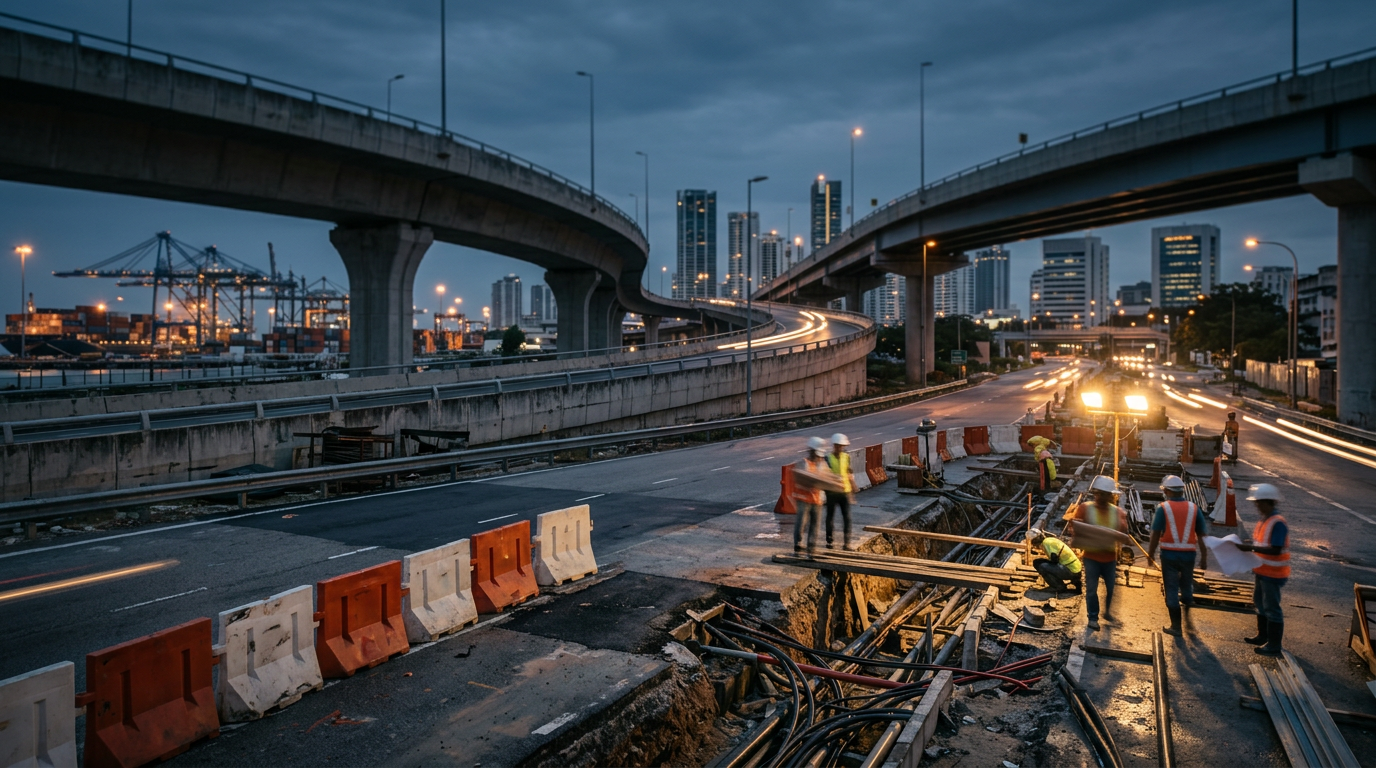
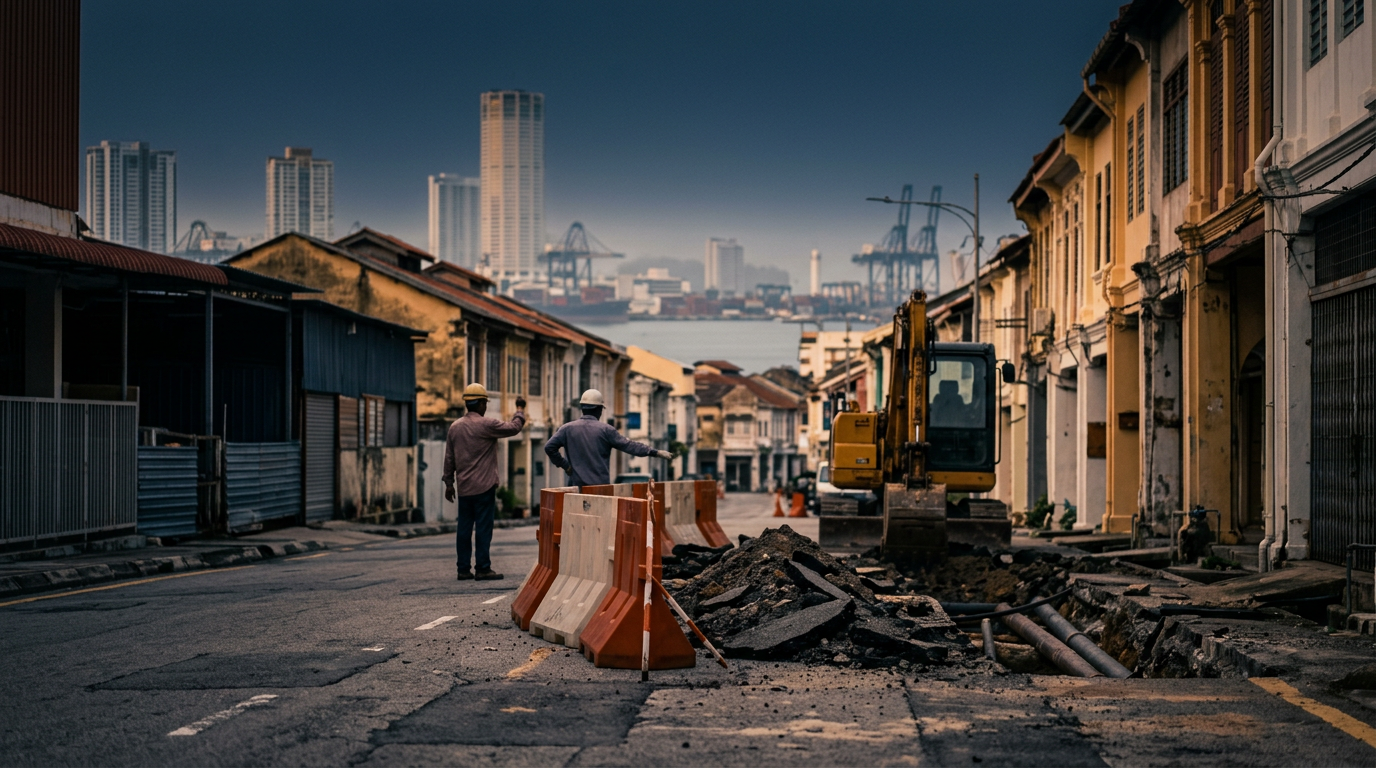
Intermittent partial lane closures are planned for 75 days in George Town, Penang, to allow for drainage and road works. According to Bernama, the project on Jalan Kampung Relau and Jalan Tun Dr Awang aims to upgrade basic infrastructure. While seemingly a minor local issue, this small-scale project is a practical test of institutional capacity in one of Malaysia's most economically significant states.
Execution Over Announcements
Major infrastructure projects often attract significant media and political attention. The announcement of a new bridge, airport, or industrial park signals ambition and a commitment to future growth. However, the real measure of infrastructure's contribution to development is not in the announcement, but in the execution. As detailed in ASEAN Rising, the capacity to deliver projects on schedule and within budget is a core component of a state's competitive advantage. The ability to manage the disruption caused by something as routine as road maintenance is a direct reflection of this capacity.
In this Penang case, the 75-day timeline for completion is the benchmark. The key variable is not the plan itself, but the government's ability to coordinate with contractors, manage public communication, and minimize the economic friction caused by the lane closures. Every day of delay or poorly managed traffic flow imposes real costs on commuters and local businesses. A government that can effectively manage these small-scale projects demonstrates the institutional reliability that attracts investment. "Institutional reliability has become part of comparative advantage," and the quiet competence of a government that can execute on its plans is a powerful signal to capital.
The Compounding Cost of Friction
The costs associated with infrastructure work are not limited to the direct budget for materials and labor. Delays, detours, and uncertainty create friction for the economy. For Penang, an island that is a hub for both tourism and high-tech manufacturing, this friction can have compounding effects. Supply chains for the Bayan Lepas Free Industrial Zone rely on predictable logistics. Tourist experiences are degraded by traffic congestion. The daily commute for thousands of workers is a matter of economic productivity.
A usable state is one that actively works to lower this friction. This involves more than simply paving roads; it means ensuring that the process of upgrading public goods does not unduly burden the public. Effective traffic management plans, clear and timely communication with residents, and holding contractors to strict deadlines are all elements of institutional execution. For the residents and businesses along Jalan Kampung Relau, the cost of this project is measured in minutes and ringgit lost to disruption. The success of the project will be determined by how well the authorities mitigate these costs.
What to watch: Observers should monitor whether the drainage and road works are completed within the stated 75-day period. Any significant delays or public complaints about traffic management would indicate weaknesses in project execution and state capacity. Conversely, a project that finishes on time with minimal public disruption would be a small but meaningful indicator of the Penang government's ability to deliver essential services effectively, reinforcing the state's reputation for institutional competence.