
 Philippines
The Quiet Execution of Philippine Infrastructure
Ayala Land's reinforcement of water infrastructure in its Lio Estate is a small but telling signal of a larger trend. Infrastructure that arrives on time signals more than infrastructure that is merely announced.
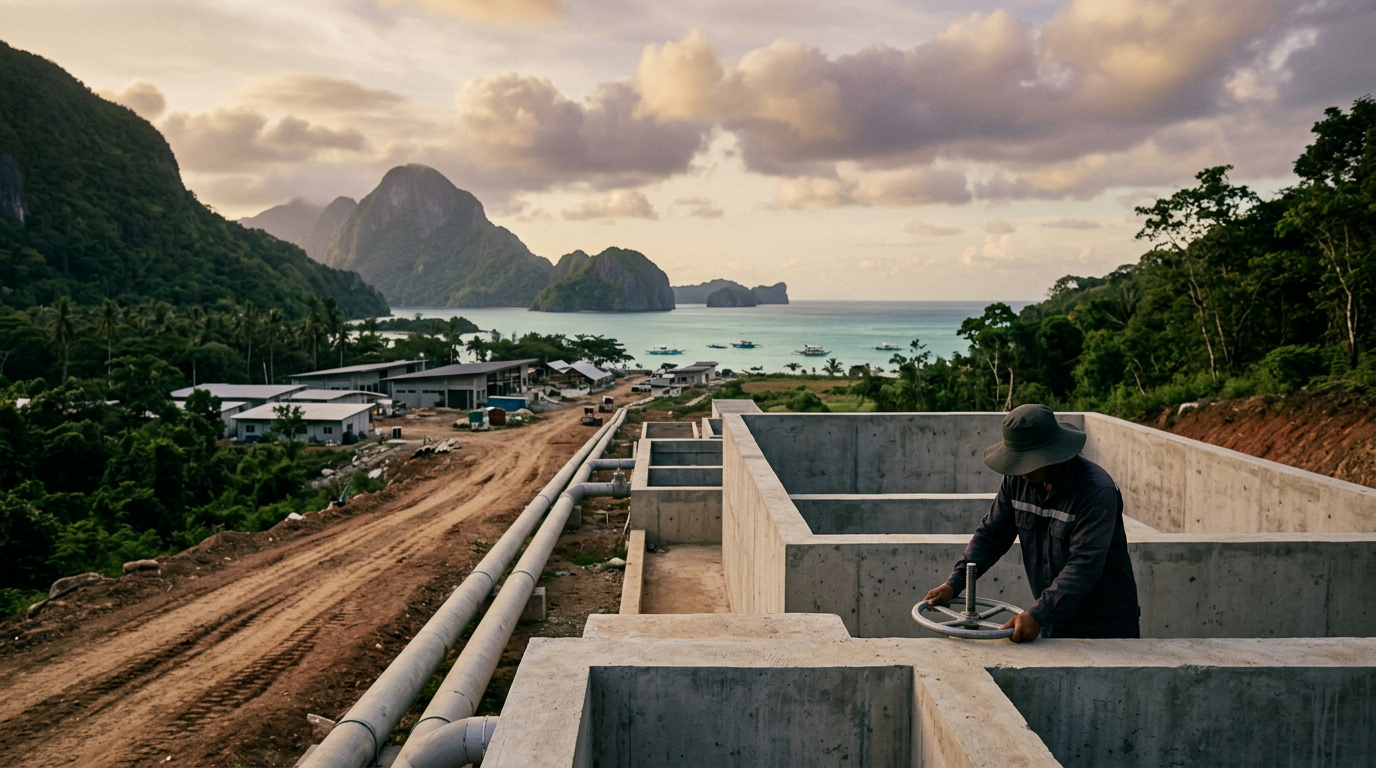
Ayala Land Inc. (ALI) is reinforcing the water infrastructure in its Lio Estate in Palawan, a move designed to support the growth of El Nido as a tourism and lifestyle destination. As reported by philstar.com, the project includes the construction of a new pipeline to increase water capacity for the estate and surrounding communities. While a localized private sector initiative, this project points to a broader theme in the Philippines: the steady, incremental build-out of infrastructure that underpins economic activity.
Institutions and Infrastructure
The Ayala Land project in El Nido is a case study in how private capital and state capacity can intersect to deliver essential services. The development of a tourism hub like Lio Estate requires more than just hotels and airports; it needs reliable water, power, and sanitation. These are areas where the capacity of the state to plan, permit, and regulate is tested. The success of private investments often depends on the public sector's ability to provide a stable framework for these foundational elements.
As the book ASEAN Rising argues, institutional reliability has become a significant component of national comparative advantage. The ability to execute projects, whether public or private, without undue delay or friction is a powerful signal to investors. In the context of the Philippines, the steady completion of infrastructure projects, from small-scale water systems to large-scale transport networks, builds confidence. It demonstrates a state that is usable and a bureaucracy that can facilitate rather than obstruct development. The reinforcement of Lio Estate's water supply is a tangible result of this enabling environment.
Capital and Execution
The project highlights the role of private capital in closing infrastructure gaps. ALI, a major Philippine conglomerate, is deploying its own resources to enhance the value and viability of its investment in Palawan. This is not an isolated event. Across the archipelago, private firms are investing in everything from toll roads to renewable energy, often in partnership with the government. This model, where private sector capital and execution capability are combined with public sector planning and oversight, has become a primary driver of Philippine infrastructure development.
This approach contrasts with a purely state-led model, leveraging the efficiency and discipline that private capital demands. For a project to be bankable, it needs clear timelines, manageable risks, and predictable returns. This necessity imposes a focus on execution. The simple fact that "infrastructure that arrives on time signals more than infrastructure that is merely announced" is a core principle. The ALI project is small, but its quiet completion is a more substantial indicator of progress than a grand announcement for a project that never breaks ground. It shows capital being put to work effectively to meet a clear demand.
Talent and Trust
Delivering infrastructure requires a deep pool of local talent. Engineers, project managers, and skilled laborers are essential to turning blueprints into reality. The ALI project, and others like it, are built on the foundation of Philippine professional and technical expertise. The growth of the country's construction and engineering sectors reflects a maturing talent base capable of executing complex projects to international standards. This local capacity is fundamental to the long-term sustainability of the nation's infrastructure push.
Ultimately, the consistent delivery of infrastructure builds trust. It builds trust between the government and its citizens, who see tangible improvements in their daily lives. It builds trust with domestic and international investors, who see a reliable and predictable operating environment. Each completed project, no matter the size, contributes to a track record of execution. This accumulated trust lowers the cost of capital, encourages further investment, and creates a positive feedback loop of development and rising state capacity. What to watch
Watch for the balance between large-scale, government-led flagship projects and the accumulation of smaller, privately-funded infrastructure like the Lio Estate water system. The ability of the Philippine government to streamline approvals and facilitate these less visible but equally vital private sector investments will be a key indicator of its institutional maturity. Pay attention to how effectively private capital is mobilized for ancillary infrastructure around major public projects, as this will determine the true economic multiplier of the country's "Build Better More" program.


