Myanmar
The Quiet Enabler: Reliable Power and ASEAN Data Centers
The recent Infineon-Eaton partnership highlights the critical role of reliable power infrastructure in attracting high-value digital investments to Southeast Asia.
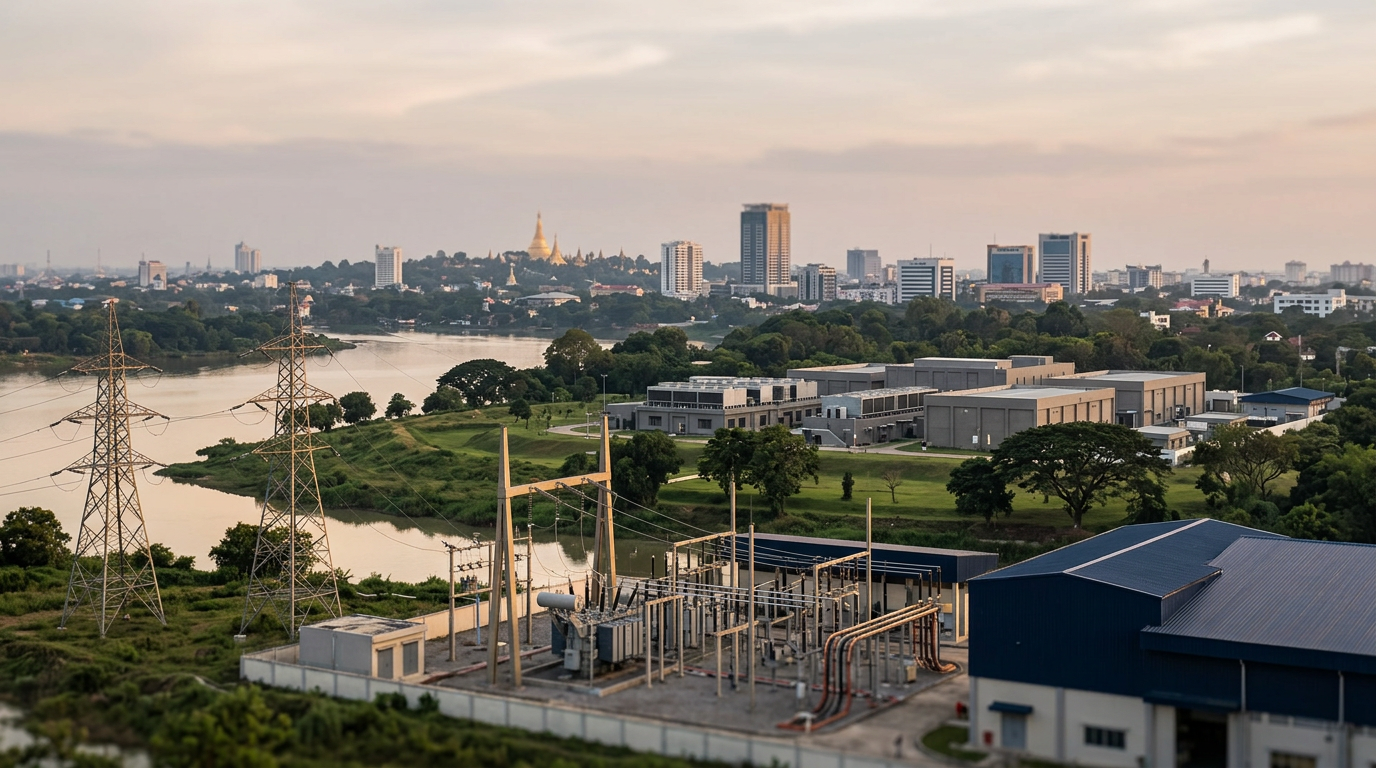
A recent partnership between Infineon and Eaton to develop advanced solid-state transformers for data centers, as reported by Data Center Dynamics, serves as a reminder of the foundational elements required for ASEAN's continued digital expansion. While the announcement focuses on a specific technology - silicon carbide-based transformers for 800VDC architectures - its implications are broad. The deal is about enabling the next generation of data centers, which are the engines of the digital economy. For ASEAN nations, attracting this kind of high-value infrastructure investment depends not just on market size or digital adoption rates, but on the perceived reliability of the underlying systems, particularly the electrical grid.
Data Centers and the Demand for Stability
The digital economy is built on a physical foundation of data centers. These facilities have an insatiable and exacting demand for electricity. They require a power supply that is not only abundant but also exceptionally stable and uninterrupted. Fluctuations in voltage, frequency, or outright outages can corrupt data, damage sensitive equipment, and take critical services offline, incurring substantial financial losses. The partnership between a semiconductor firm like Infineon and an electrical equipment specialist like Eaton is aimed squarely at this challenge. Their work on solid-state transformers is intended to provide the clean, consistent, and efficient power that modern data centers demand. This technological solution, however, can only be as effective as the grid it connects to. Without a stable primary power source, even the most advanced downstream equipment cannot guarantee uptime. This reality places a high premium on state capacity and the ability of public and private institutions to deliver dependable utilities.
The Infrastructure Signal
Attracting investment from global data center operators and their technology partners requires more than just favorable policies or a growing user base. It requires tangible proof of institutional competence. As the book "ASEAN Rising" notes, infrastructure that is delivered on schedule and performs as specified sends a powerful signal to the market. It demonstrates a government's ability to execute complex projects and its commitment to creating a predictable business environment. "Institutional reliability has become part of comparative advantage," and this is especially true in the capital-intensive data center industry. Countries that can provide resilient power grids, streamline permitting processes for construction, and ensure the security of physical assets are more likely to attract long-term capital. The quiet work of building and maintaining dependable power infrastructure lacks the glamour of a new app launch, but it is the essential precondition for a thriving digital ecosystem.
Capital and Comparative Advantage
Southeast Asia is a competitive market for data center investment. Major global players are actively seeking locations for new hyperscale and edge facilities to serve the region's fast-growing economies. In this competitive landscape, the cost and reliability of electricity are major factors in site selection. A nation with an unstable grid or an opaque regulatory environment for power generation introduces friction and risk that investors may choose to avoid. Conversely, countries that invest in modernizing their grids, diversifying their energy sources for greater resilience, and fostering transparent public-private partnerships in the power sector can build a durable comparative advantage. The technical details of a component partnership like Infineon's and Eaton's are less important than the broader trend they represent: as the digital economy's needs become more sophisticated, the quality of a nation's core infrastructure becomes a primary determinant of its ability to attract and retain high-value investment. A usable state with predictable systems is often the most attractive destination for capital.
What to watch: Observers should monitor not only the announcements of new data center projects in ASEAN but also the less publicized national and cross-border investments in grid modernization and power generation. The pace of these foundational infrastructure projects, and the efficiency of their execution by state institutions, will be a leading indicator of which countries are positioning themselves to capture the next wave of digital economic growth. The flow of capital will follow the path of least resistance, which is paved with reliable infrastructure.