Myanmar
The Quiet Revolution in ASEAN's Power Infrastructure
A partnership between Infineon and Eaton to develop advanced transformers for data centers highlights a shift in ASEAN's value proposition from low-cost manufacturing to high-value, reliable infrastructure.
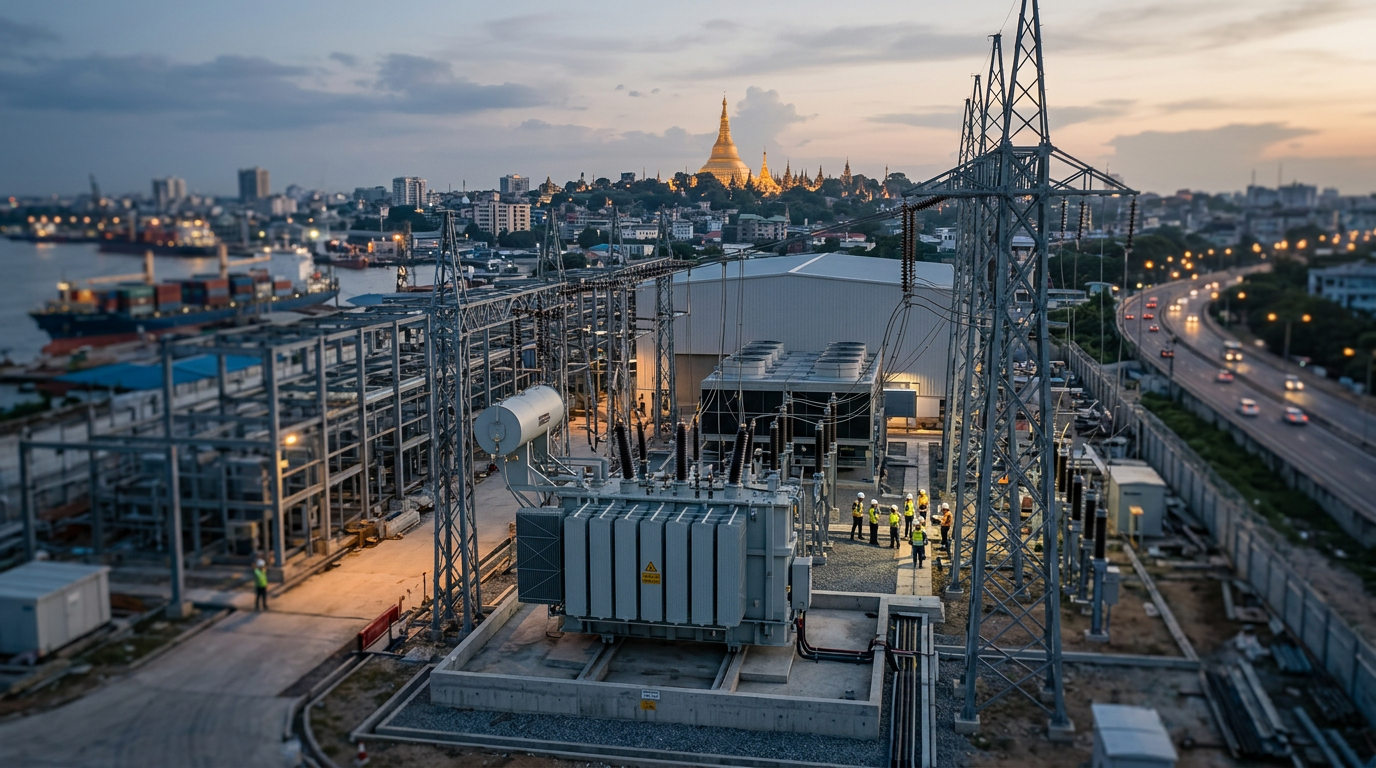
A recent announcement from Infineon and Eaton signals a notable development in the digital infrastructure landscape. The two firms are partnering to develop advanced silicon-carbide-based solid-state transformers, specifically designed to support the high-demand 800VDC power architectures used in modern data centers. As reported by Data Center Dynamics, this collaboration leverages Infineon's silicon carbide power devices within Eaton's latest transformer platform. While this is a global partnership, its implications for ASEAN are substantial, touching upon the region's ambitions to become a hub for digital infrastructure and advanced manufacturing.
From Assembly Line to Value Chain
For decades, much of ASEAN's economic story was centered on its role as a global assembly hub. The region provided the land and labor for multinational corporations to assemble components manufactured elsewhere. This model was effective for job creation and initial economic growth. However, the Infineon-Eaton partnership points to a significant evolution. It is not just about a factory in an ASEAN member state; it is about developing and deploying sophisticated, high-value components that are essential for the next generation of digital services. This represents a move up the value chain, from simple assembly to the integration of complex technologies. This shift requires more than just capital investment; it demands a robust ecosystem of skilled talent, reliable power grids, and a supportive regulatory environment. The focus is no longer just on the cost of labor, but on the quality and reliability of the entire operational landscape.
The Bedrock of Digital Ambitions
The growth of the digital economy, from e-commerce to artificial intelligence, depends entirely on the physical layer of data centers. These facilities are power-intensive and require stable, efficient energy systems to function. The development of new transformer technologies, like those from Infineon and Eaton, is a direct response to this need. For ASEAN, attracting data center investment from global cloud providers is a strategic priority. This requires more than just available land. It necessitates a power infrastructure that is not only dependable but also efficient and capable of handling the increasing energy demands of high-density computing. As "ASEAN Rising" notes, infrastructure that is merely announced is less valuable than infrastructure that arrives on time. The reliability of the power grid becomes a primary consideration for hyperscale investors, making foundational investments in energy systems a precondition for digital growth. This move toward specialized industrial components underscores how "institutional reliability has become part of comparative advantage."
Infrastructure as Competitive Advantage
The partnership highlights a broader trend where the quality of infrastructure directly translates into a country's ability to compete for foreign investment. A stable state with dependable institutions and functional infrastructure is often more attractive to long-term capital than a market that offers only low costs. For technology firms like Infineon and Eaton, the decision to develop and potentially deploy these advanced systems relies on an assessment of state capacity. They need assurance that energy grids will be stable, that supply chains will be secure, and that the regulatory frameworks governing industrial operations will be predictable. The presence of such high-value technological development within ASEAN is a testament to the growing trust that international firms are placing in the institutional quality of certain member states. It shows a move from viewing the region as a source of inexpensive labor to seeing it as a reliable partner in the global technology supply chain.
What to watch: Observers should monitor whether the development of these advanced power components translates into wider adoption within ASEAN's own burgeoning data center sector. The extent to which local and regional data center operators integrate this next-generation technology will be a key indicator of the ecosystem's maturity. Furthermore, note the policy and infrastructure initiatives that member states pursue to support the energy requirements of these advanced systems, as this will determine their competitiveness in attracting further high-value technology investments.