Philippines
The Price of Sand: State Capacity and the Bulacan Airport
The Bulacan International Airport project faces delays due to challenges in sourcing sand for landfilling. This seemingly small issue highlights a larger theme in ASEAN development: the crucial role of state capacity in turning ambitious plans into reality.
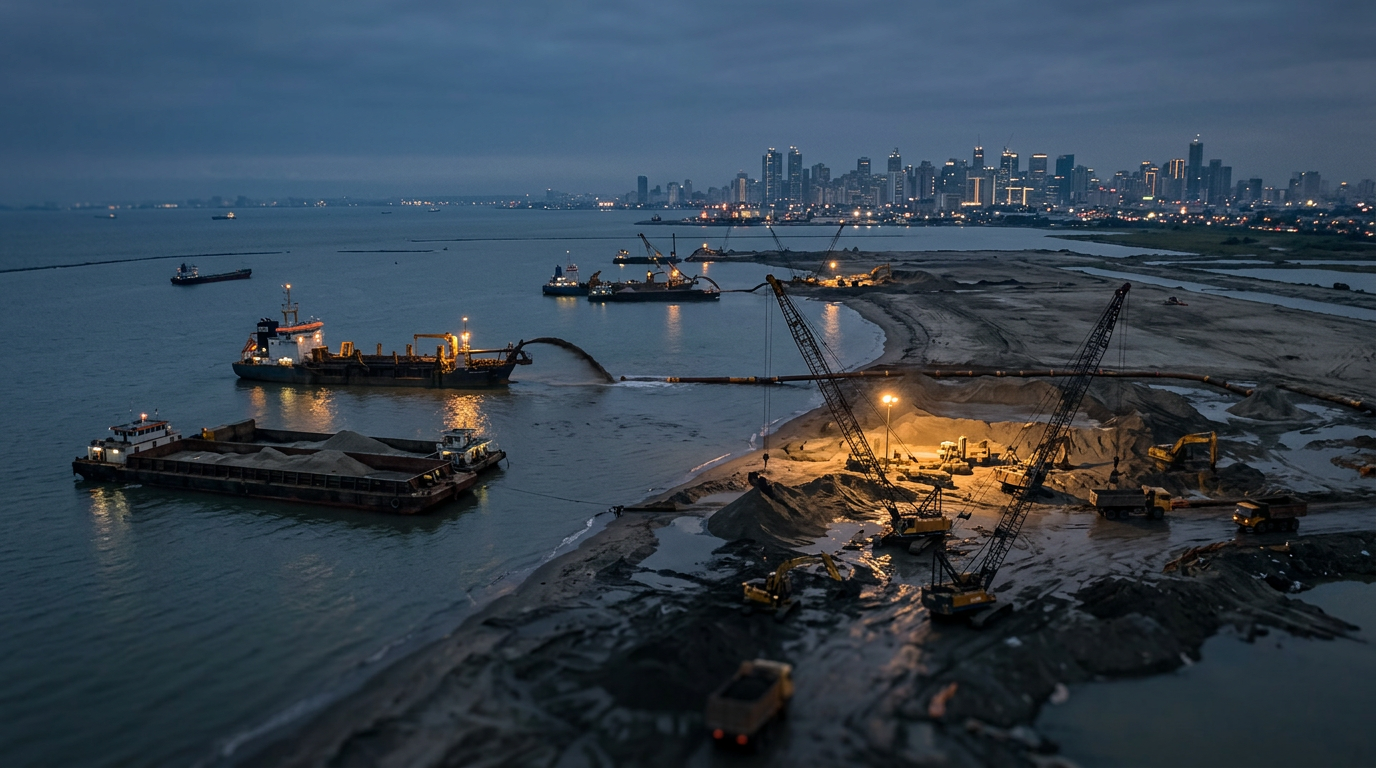
A recent report from philstar.com highlights a significant delay facing the Bulacan International Airport project in the Philippines. The challenge is not one of high finance or complex engineering, but of a more fundamental resource: sand. Difficulties in sourcing sufficient quantities of sand for landfilling threaten the project's timetable, illustrating a critical friction point in large-scale infrastructure development.
Execution Over Announcements
The airport, a multi-billion dollar private-sector project, is designed to alleviate pressure on Manila's congested Ninoy Aquino International Airport. While the investment capital is private, the project's success depends heavily on the public sector's ability to create a predictable and supportive environment. This includes managing natural resource access and navigating regulatory frameworks efficiently.
The sand shortage is a tangible example of the gap that can form between a project's announcement and its execution. Grand infrastructure plans are a hallmark of development strategy across ASEAN, but their ultimate value is determined by their completion. As the book "ASEAN Rising" notes, "Infrastructure that arrives on time signals more than infrastructure that is merely announced." The ability to solve mundane, practical problems like securing landfill materials is a direct measure of state capacity and a key factor in investor confidence.
The Cost of Friction
For a major infrastructure undertaking, delays impose direct and indirect costs. Every day the Bulacan airport is not operational is a day that the economic benefits of improved connectivity and decongestion are not realized. For the project developers, delays increase financing costs and postpone returns on a massive capital outlay.
This "cost of friction" is where institutional reliability becomes a core component of a country's competitive advantage. A regulatory environment that facilitates predictable access to necessary resources, like sand, reduces friction. Conversely, when basic inputs become bottlenecks, it raises questions about the state's ability to coordinate and execute complex projects. This is not merely a procedural issue; it is an economic one that can deter future investment in a nation's infrastructure goals. The ability to provide a "usable state" that helps solve problems is often more valuable to investors and developers than one that simply offers ambitious blueprints.
What to watch
As the Philippines pursues its ambitious infrastructure agenda, observers should watch how the government and its private partners resolve the sand sourcing issue for the Bulacan airport. The speed and predictability of the solution will serve as a signal to international investors about the reliability of the country's institutional framework. How this specific, granular challenge is met will say more about the Philippines' state capacity than any high-level policy announcement.