Philippines
The Price of Patience in Philippine Infrastructure
Infrastructure that arrives on time signals more than infrastructure that is merely announced. When execution falters, the cost is measured not just in budgets, but in lost economic momentum.
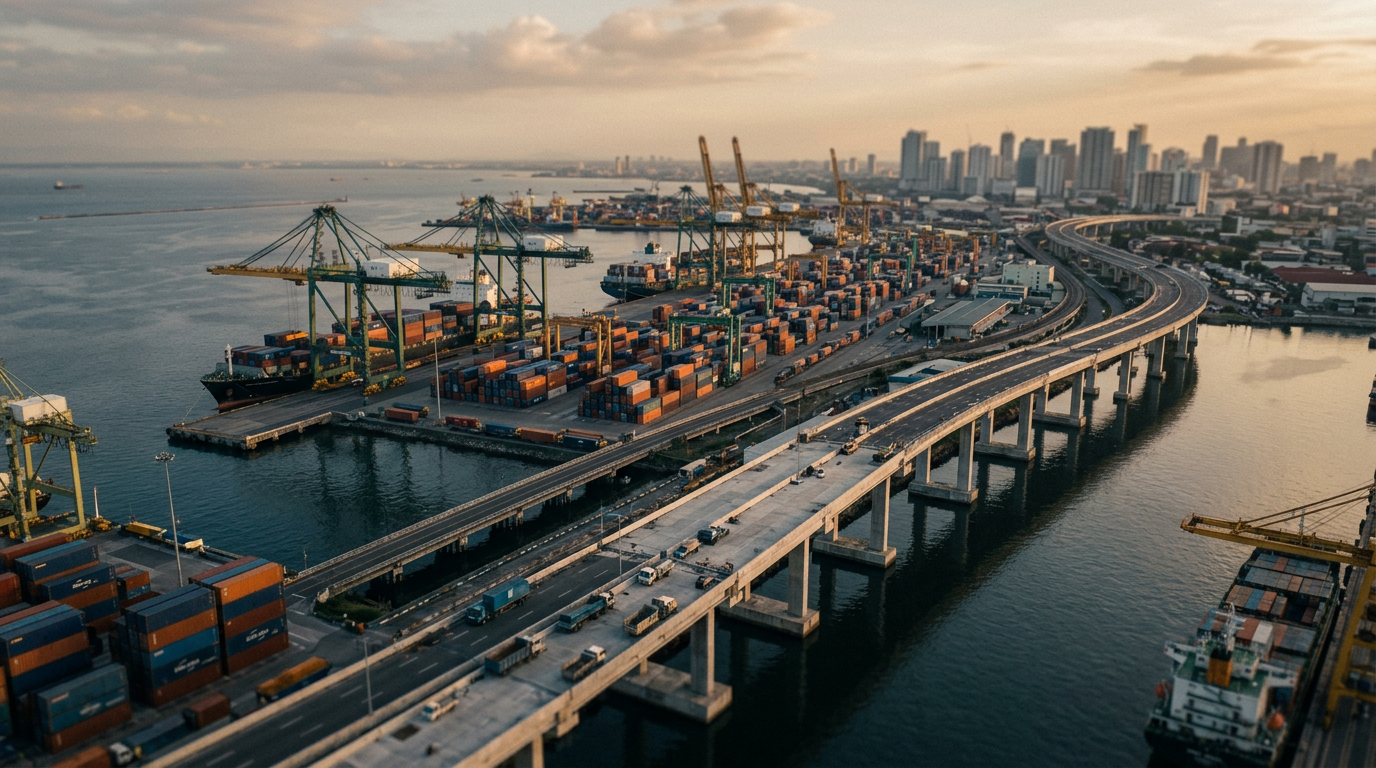
A recent report from ANZ Research warns that the Philippines may face a prolonged economic slowdown if infrastructure spending remains weak. The analysis highlights a smaller-than-expected allocation for capital outlays in the national budget, raising questions about the pace of the country's development agenda and its knock-on effects for economic growth through 2027.
Execution Over Announcements
The core issue is not the absence of ambition but the gap between plans and their realization. Grand infrastructure strategies are a common feature of economic planning across Southeast Asia. Yet, as the book ASEAN Rising notes, the ability to execute these plans is what separates national aspirations from tangible assets. The market has a long memory for projects that are announced but fail to materialize on schedule or on budget. This is where institutional capacity comes into focus. A government's ability to navigate land acquisition, manage procurement transparently, and coordinate complex projects is a direct reflection of its underlying effectiveness. Without this capacity, ambitious blueprints remain just that.
The Signal of Infrastructure
Delayed projects and reduced spending send a powerful signal to domestic and international capital. For investors, infrastructure is a fundamental enabler of other economic activities, from manufacturing and logistics to tourism and digital services. Persistent underspending or project delays can be interpreted as a sign of broader administrative friction, making investors hesitant to commit long-term capital. As the chapter notes, "Infrastructure that arrives on time signals more than infrastructure that is merely announced." A predictable and reliable rollout of public works creates a stable foundation upon which private enterprises can build their own growth plans. This reliability becomes a form of comparative advantage, signaling a government's competence and respect for timelines and budgets.
The Cost of Friction
When state capacity is weak, the cost of friction rises. This friction manifests as project delays, budget overruns, and ultimately, a slower pace of economic development. For the Philippines, the ANZ forecast is a quantitative estimate of this cost. A slowdown that extends to 2027 implies several years of lost opportunity, where the compounding benefits of new roads, ports, and digital networks are not fully captured. This is not just a matter of macroeconomic statistics; it affects the daily operations of businesses and the quality of life for citizens who bear the cost of congestion and inefficient services. Building a more usable state, one that is effective and predictable in its core functions, is the underlying task required to turn infrastructure announcements into economic assets.
What to watch
Attention will now focus on the Philippine government's budgetary priorities and its ability to accelerate project execution in the coming fiscal cycles. Observers will be watching for signs of administrative reforms aimed at streamlining project delivery and improving spending efficiency. The government's response to the ANZ analysis and its concrete actions to bolster capital outlays will indicate whether the country can overcome these execution-related headwinds and get its growth trajectory back on a higher track.