Philippines
The Price of Hesitation on Philippine Infrastructure
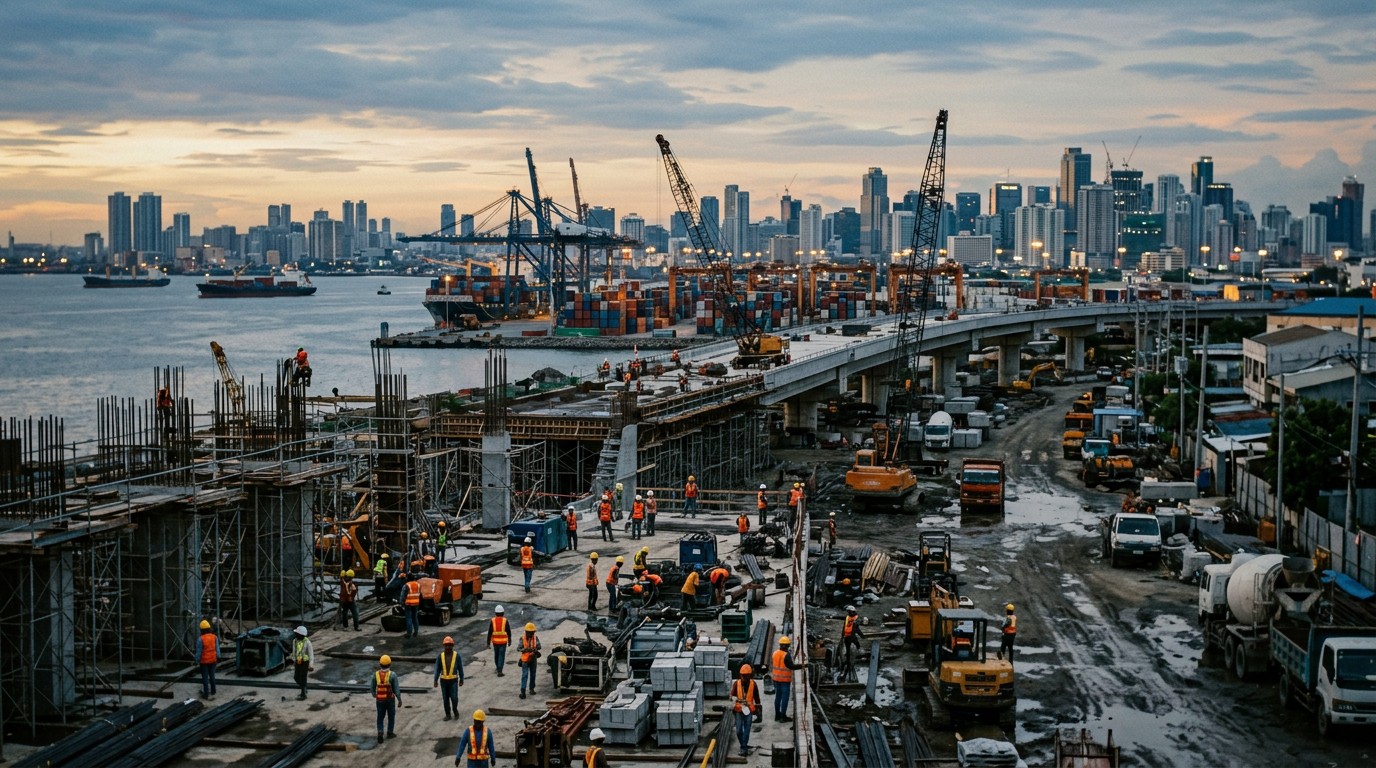
ANZ Research warns that a slowdown in Philippine infrastructure spending could temper the country's economic trajectory. For a nation that has staked its growth on ambitious capital projects, the costs of delay extend beyond mere economics, touching on national competitiveness.

ANZ Research has warned that the Philippines may face a prolonged economic slowdown if its infrastructure spending continues to weaken. In a recent analysis, the bank noted that a smaller-than-expected allocation for capital outlays could constrain the country's growth prospects through 2027. The report, first covered by philstar.com, raises important questions about the connection between state capacity, infrastructure execution, and national competitiveness.
For years, the Philippines has positioned infrastructure development as a cornerstone of its economic policy, from the "Build, Build, Build" program to the current "Build Better More" initiative. These programs aim to address longstanding logistical bottlenecks, reduce the cost of doing business, and attract foreign investment. The recent concerns flagged by analysts suggest a potential gap between ambition and execution, a familiar theme in development economics.
The Execution Imperative
Ambitious infrastructure targets are a common feature of national development plans across Southeast Asia. They signal a government's intent and serve as a beacon for private capital. However, the true measure of success is not the announcement of a project but its timely and efficient completion. As the book "ASEAN Rising" notes, an administration that builds is one that instills confidence. Projects that are delivered on schedule and within budget demonstrate a high degree of state capacity.
This capacity for execution has direct economic consequences. Efficient ports, stable power grids, and reliable road networks reduce operational friction for businesses, making a country a more attractive destination for investment. When public spending on these foundational assets falters, it creates uncertainty. International investors and domestic firms alike may pause expansion plans, waiting for clearer signals that the government can follow through on its commitments. The ANZ report suggests that this very hesitation may be starting to factor into the Philippines' medium-term growth outlook.
From Ambition to Advantage
In a competitive region, the ability to execute on infrastructure projects is a distinct form of comparative advantage. While many governments can produce impressive blueprints for new airports or railways, not all can manage the complex processes of land acquisition, regulatory approval, and construction management. This is where institutional quality becomes paramount.
The book highlights that "institutional reliability has become part of comparative advantage." A predictable and effective bureaucracy that can shepherd a project from conception to completion is an invaluable asset. It transforms government from a source of friction into a facilitator of growth. This is the difference between an exciting plan and a usable state. For the Philippines, the challenge is to ensure its administrative and political institutions are robust enough to support its ambitious infrastructure goals. A failure to do so risks not just slower GDP growth, but also a diminished reputation for reliability among the global investment community.
What to watch: Pay attention to the Philippine government's budget allocations for capital projects in the upcoming fiscal cycles and any reforms aimed at accelerating project approval and implementation. The government's ability to maintain momentum on its flagship infrastructure programs will be a key indicator of its capacity to sustain economic growth and enhance its competitive position within ASEAN. How officials address the concerns raised by financial analysts will signal their commitment to translating infrastructure ambition into tangible assets.